18 Genius Ways to Organize a Small Pantry With Deep Shelves

Deep pantry shelves are a blessing and a curse: they hold so much, yet the back two-thirds seem to swallow food whole. If you’re wondering how to organize small pantry deep shelves so nothing gets lost or forgotten, you’re in the right place — this is one of the most common kitchen frustrations, and it’s completely fixable.
Below you’ll find 18 genius, practical ideas that bring the back of every shelf into view and reach. No full kitchen remodel needed — most of these use affordable organizers and a single afternoon of effort. Let’s turn that dark cave of a pantry into a space that actually works for you.
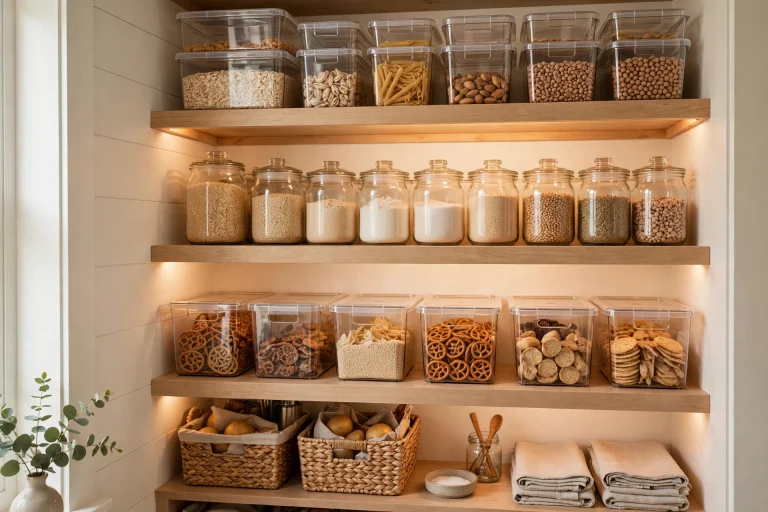
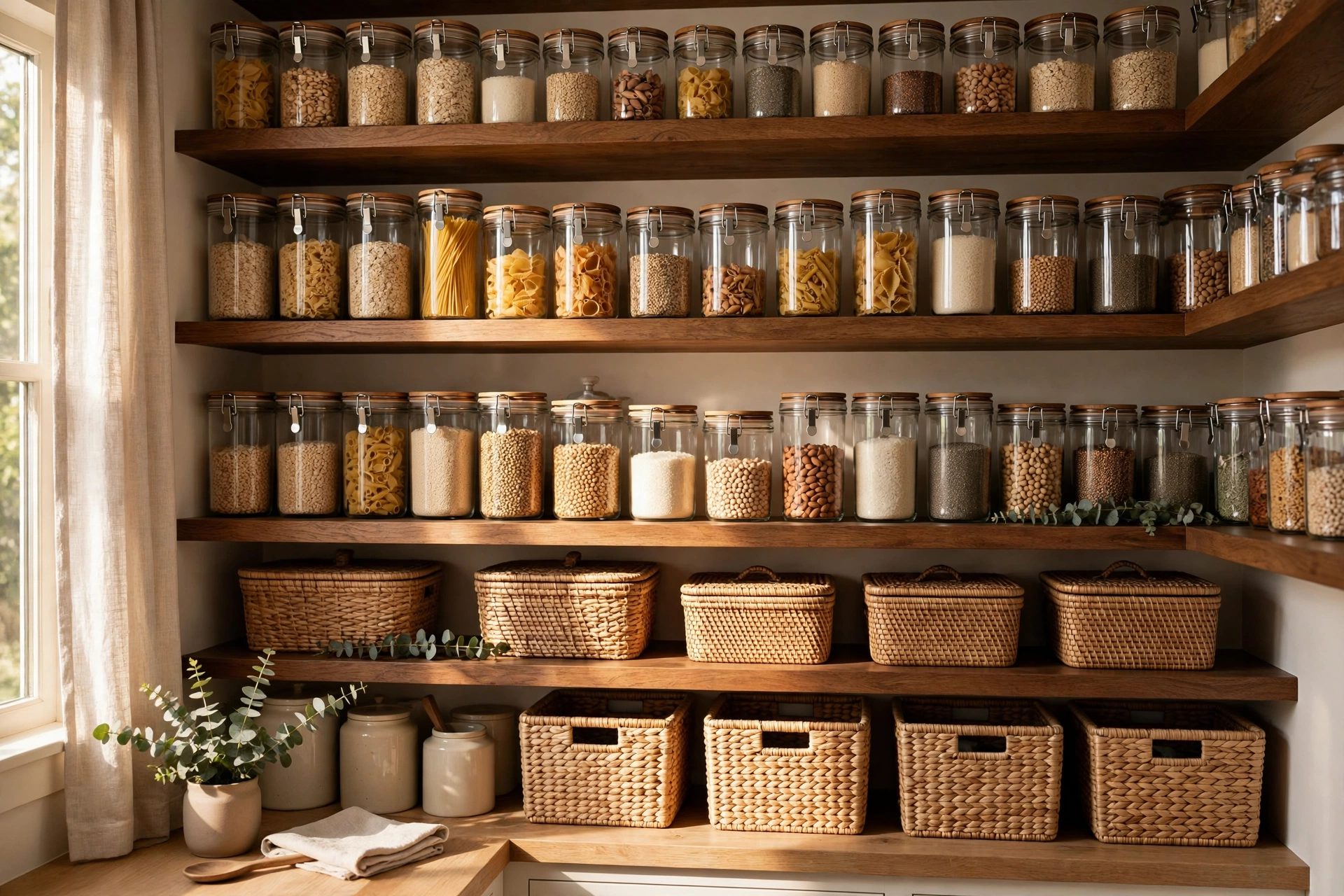
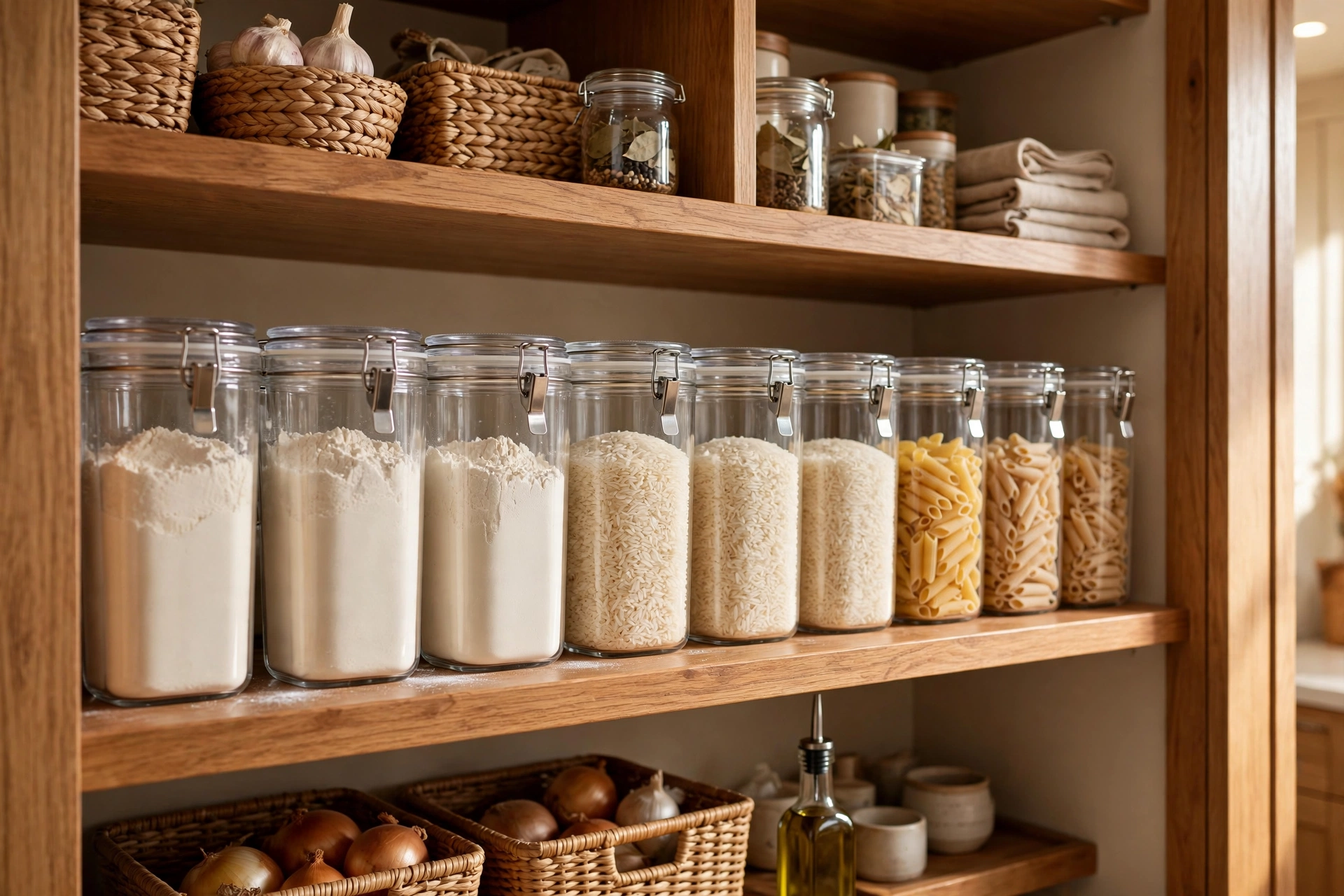
1. Decant Dry Goods into Clear Containers
Ditch the bulky boxes and bags and pour flour, rice, pasta, and snacks into clear airtight containers. When you can see exactly what you have, nothing gets forgotten in the back of a deep shelf.
Tip: Choose one container style in two or three sizes — uniformity instantly makes a small pantry look bigger and tidier.
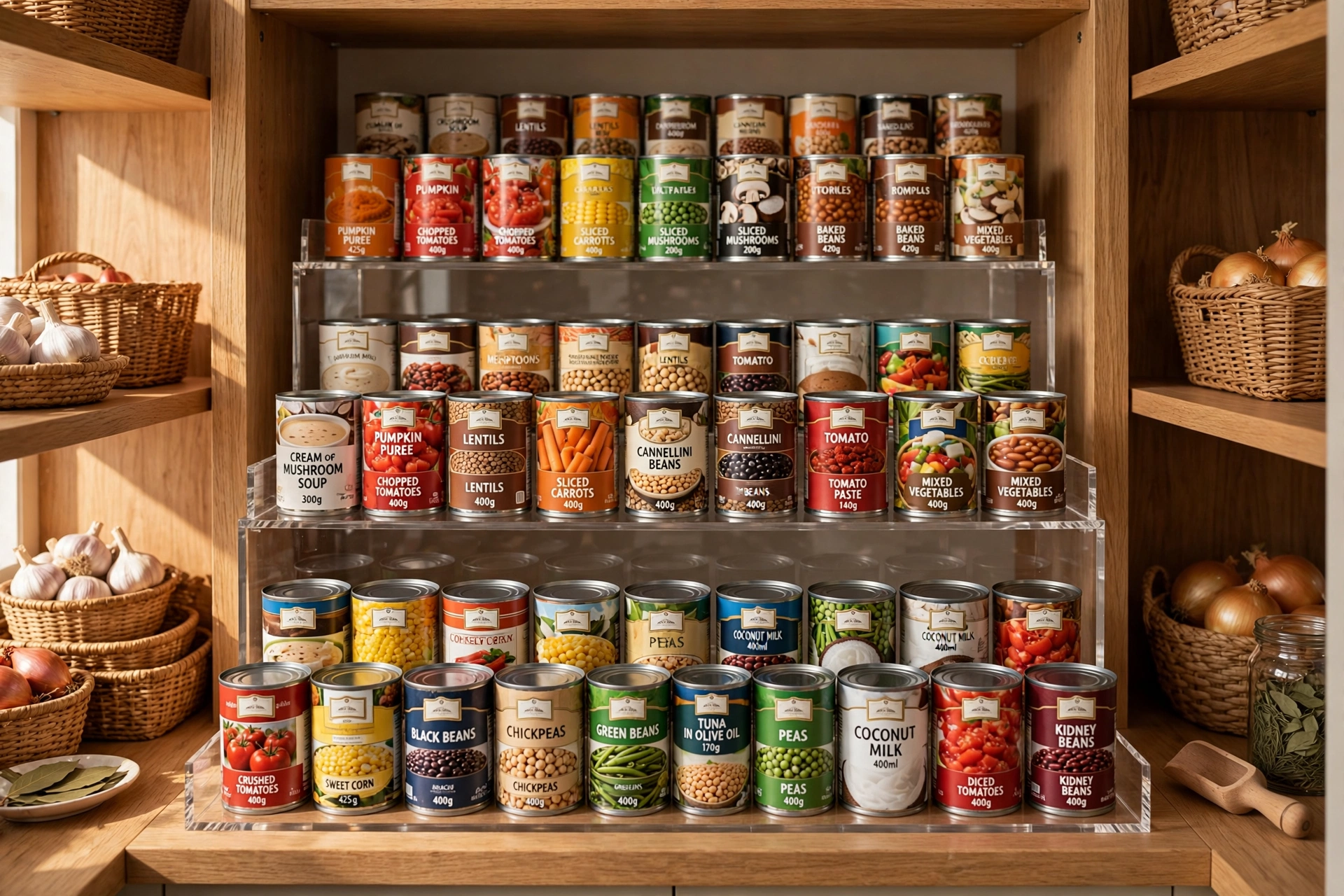
2. Add Tiered Risers for Canned Goods
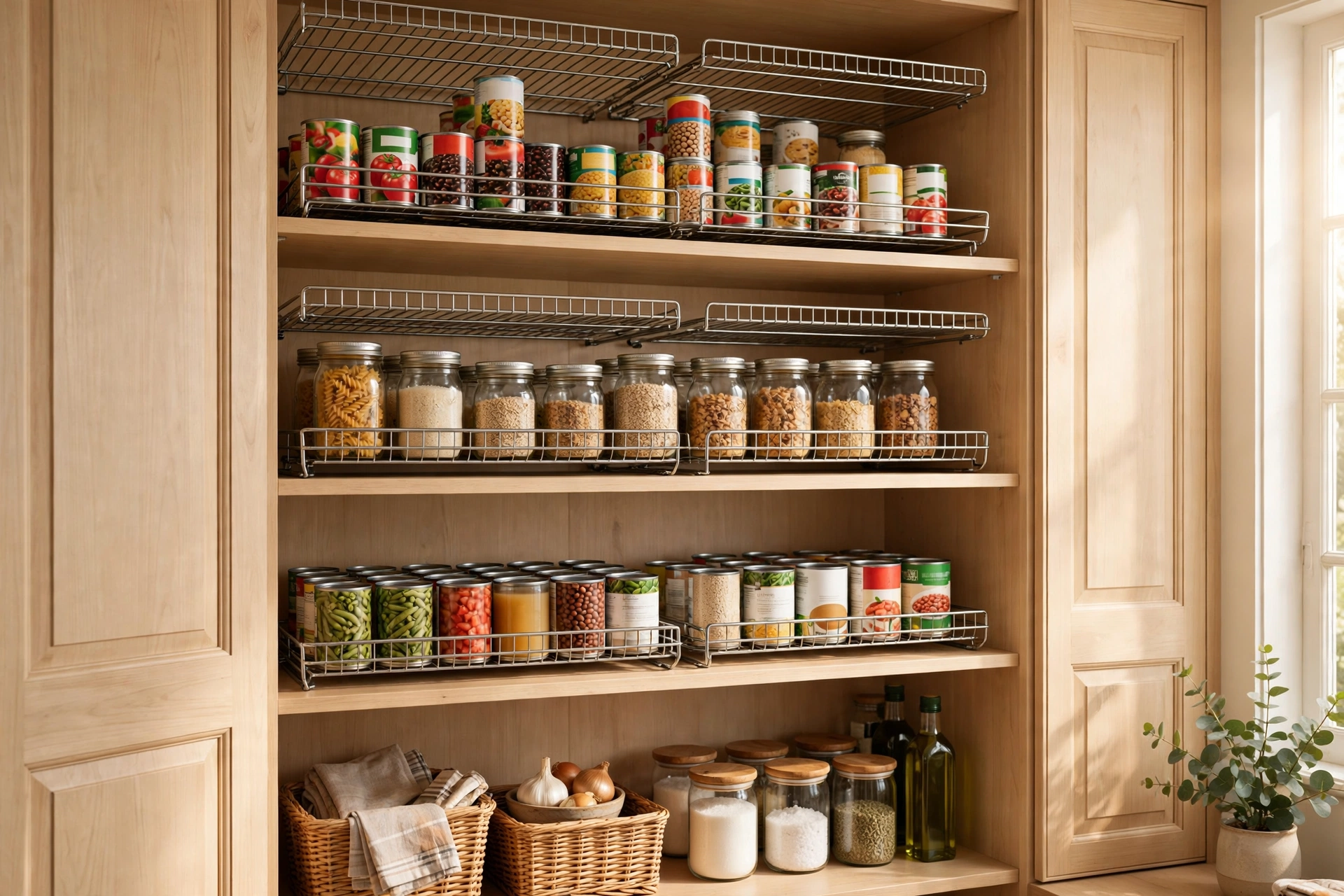
Tiered shelf risers lift each back row higher than the one in front, like stadium seating for your cans and jars. Every label stays visible, even on a deep shelf.
Tip: Expandable tiered risers adjust to your shelf’s exact width, so you use every inch.
3. Use Lazy Susans in Deep Corners
A lazy Susan turntable means the back of the shelf comes to you — just spin it. They’re perfect for oils, vinegars, spices, and condiments that tend to migrate to the back.
Tip: Use two smaller turntables side by side instead of one oversized one for a snug fit.
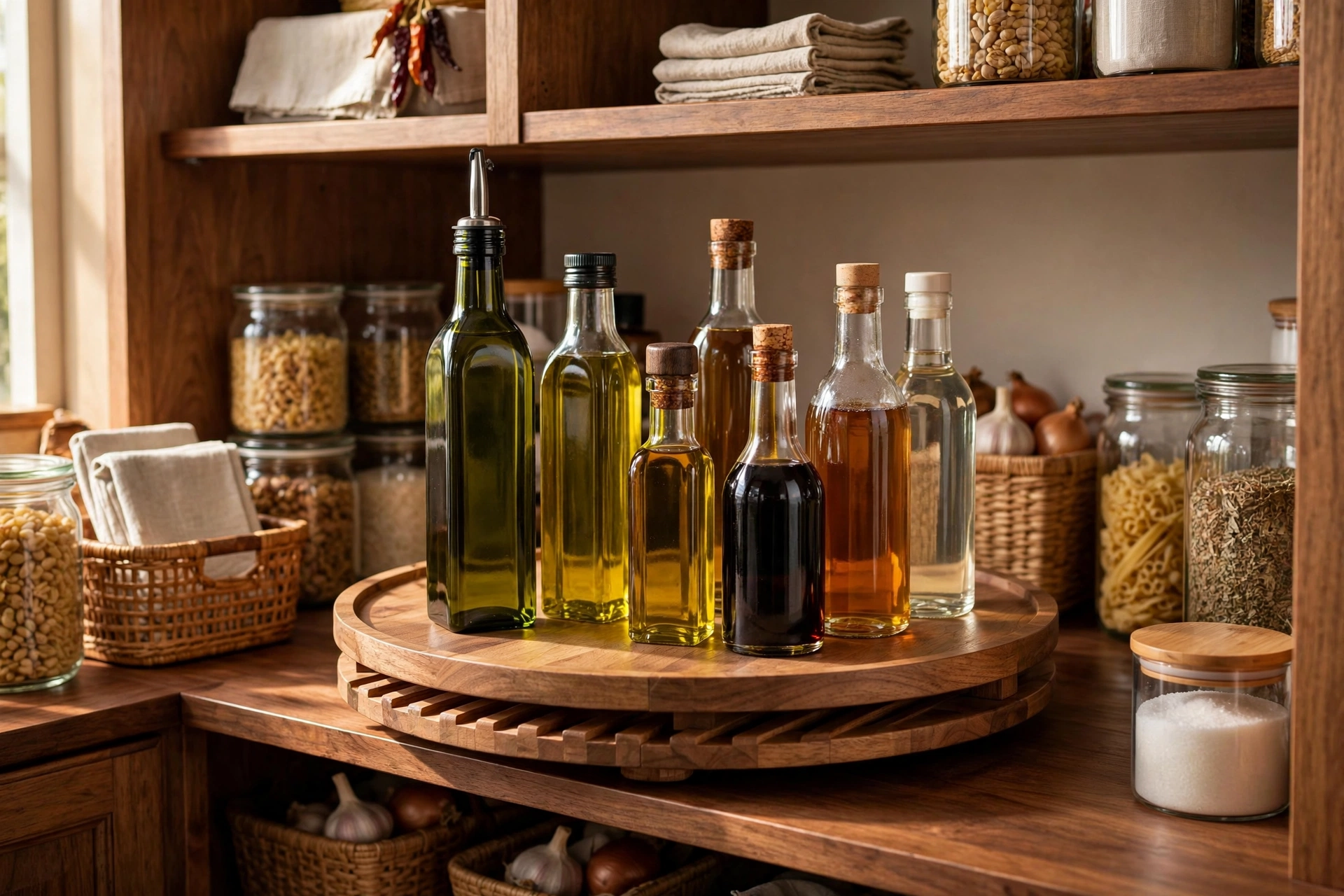
4. Install Pull-Out Wire Baskets
Sliding wire baskets turn a deep shelf into a drawer you can pull toward you. Suddenly the “lost back zone” becomes just as easy to reach as the front.
Tip: Measure your shelf height first — baskets come in low and tall profiles, and you want the right clearance.
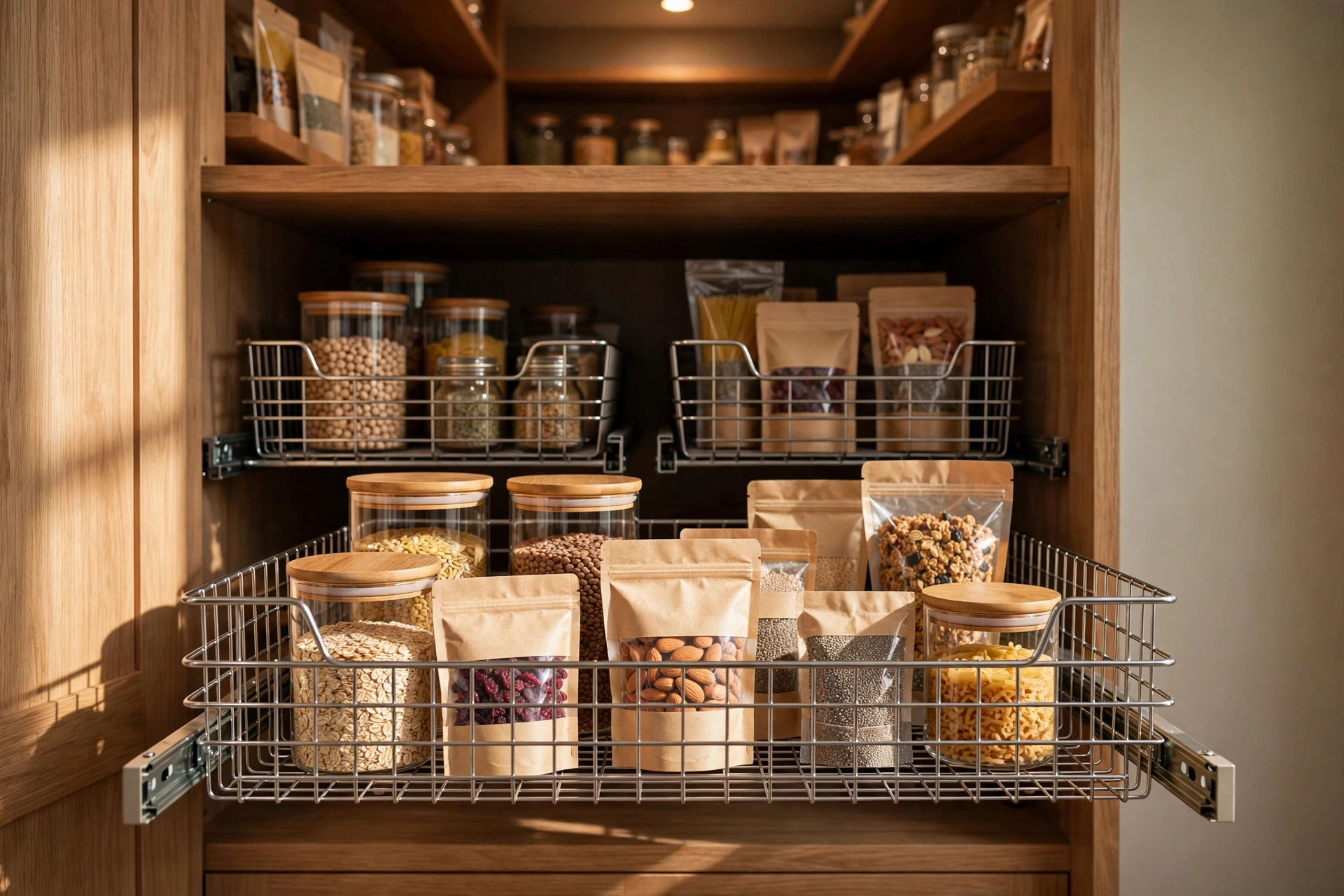
5. Label Everything You Can See
Labels aren’t just cute; on deep shelves they’re how you find things without excavating. Label bins, containers, and even shelf edges with what’s stored where.
Tip: Reusable chalk labels let you rewrite zones as your pantry needs change.
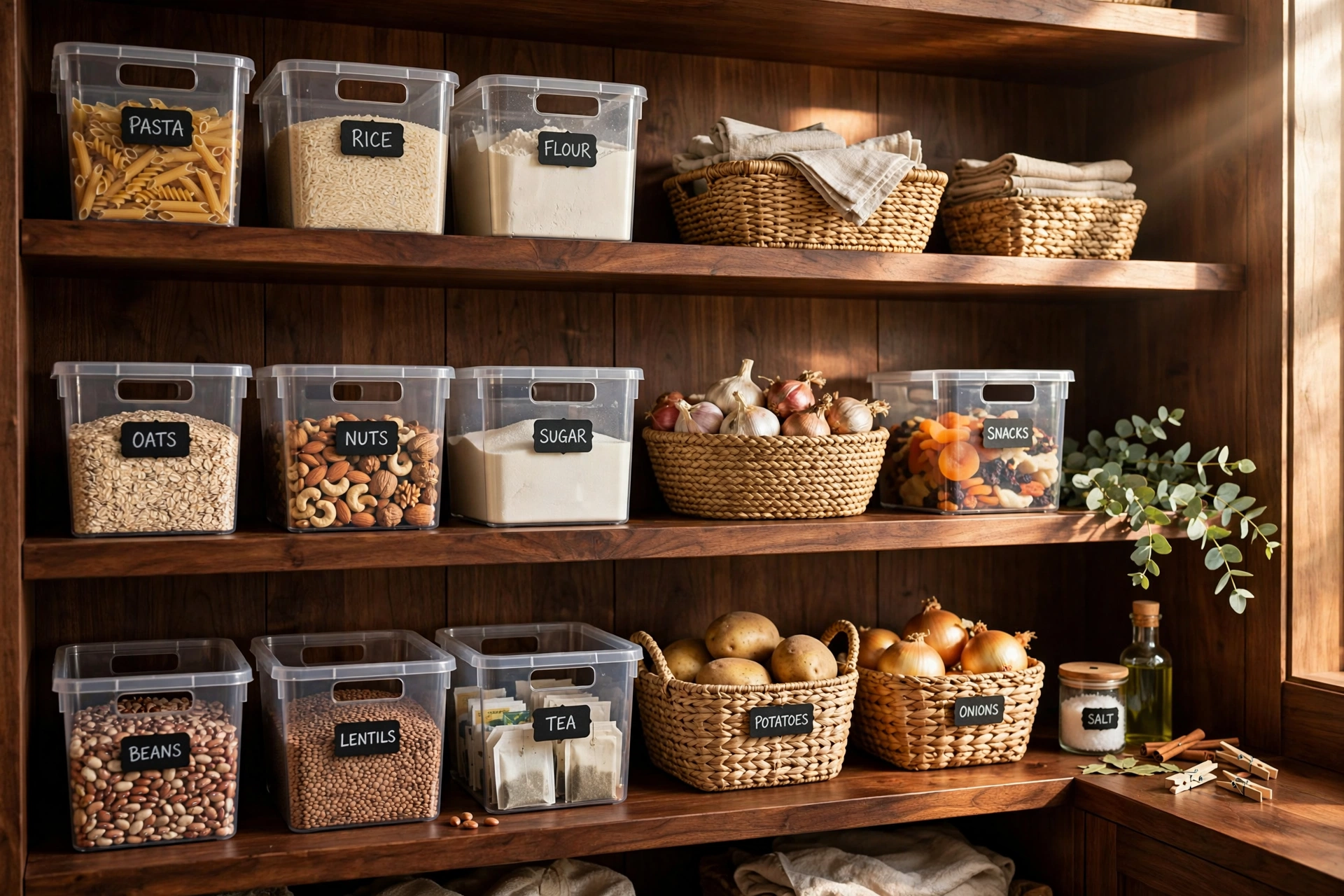
6. Create Clear Zones by Category
Group like with like — baking supplies together, snacks together, canned goods together. On a deep shelf, categories stop you from shoving random items into the nearest dark gap.
Tip: Give each zone its own bin or basket so the system holds even when you’re in a hurry.
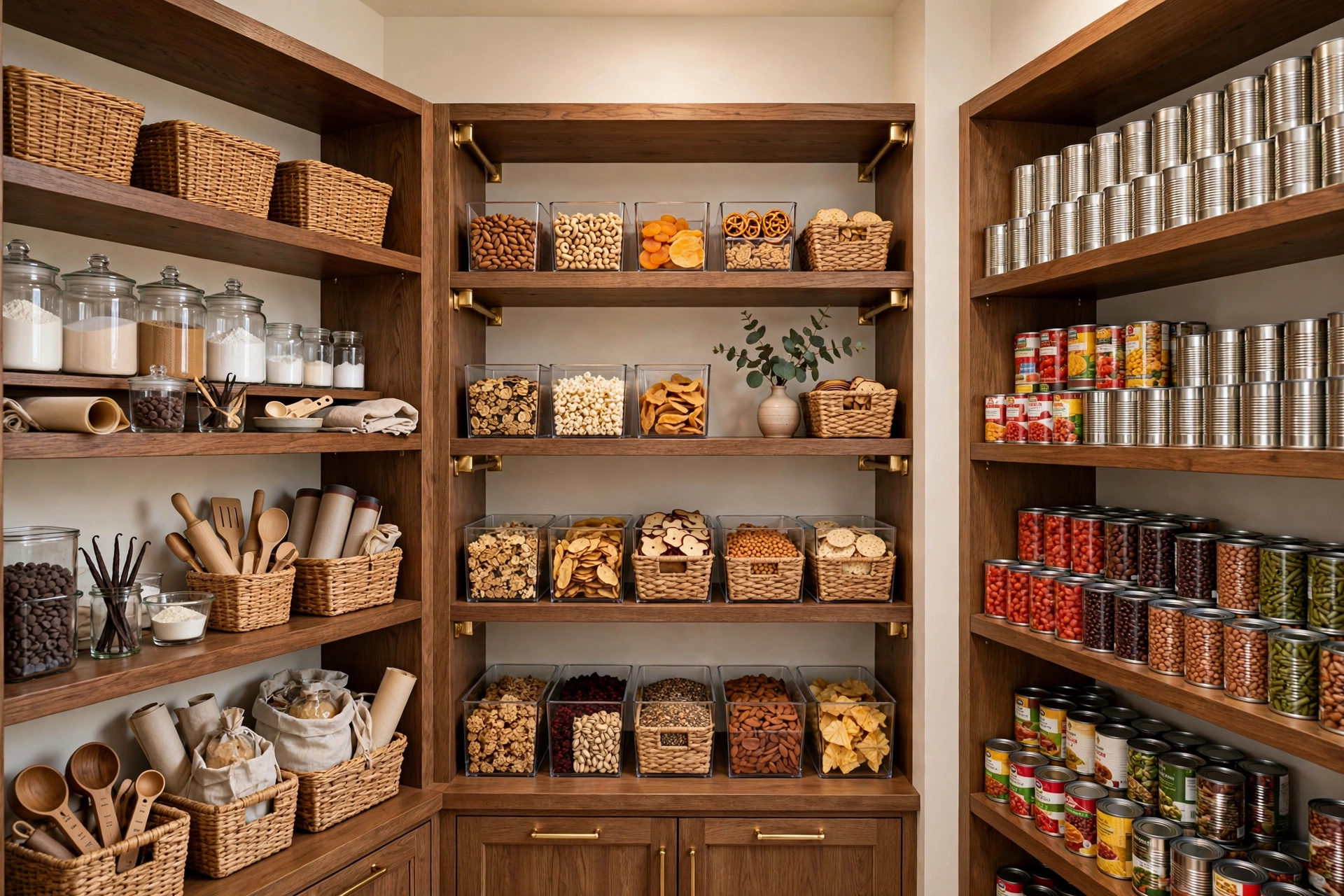
7. Hang Shallow Storage on the Door
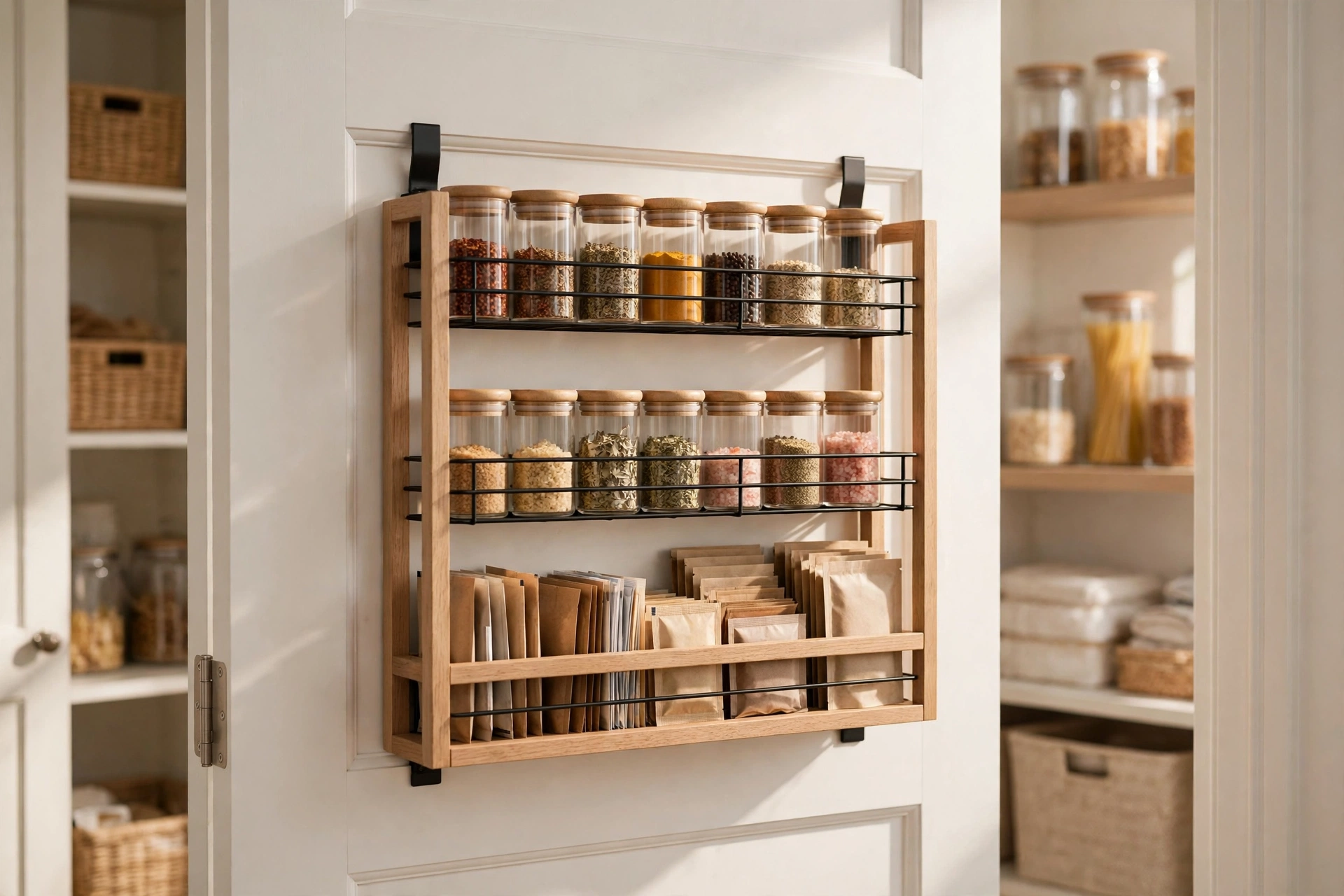
The inside of the pantry door is free real estate. A mounted rack holds spices, packets, and wraps in a single shallow layer — nothing hides behind anything else.
Tip: Keep heavier items on the shelves, not the door, so the hinges never strain.
8. Reserve the Deep Back for Backstock
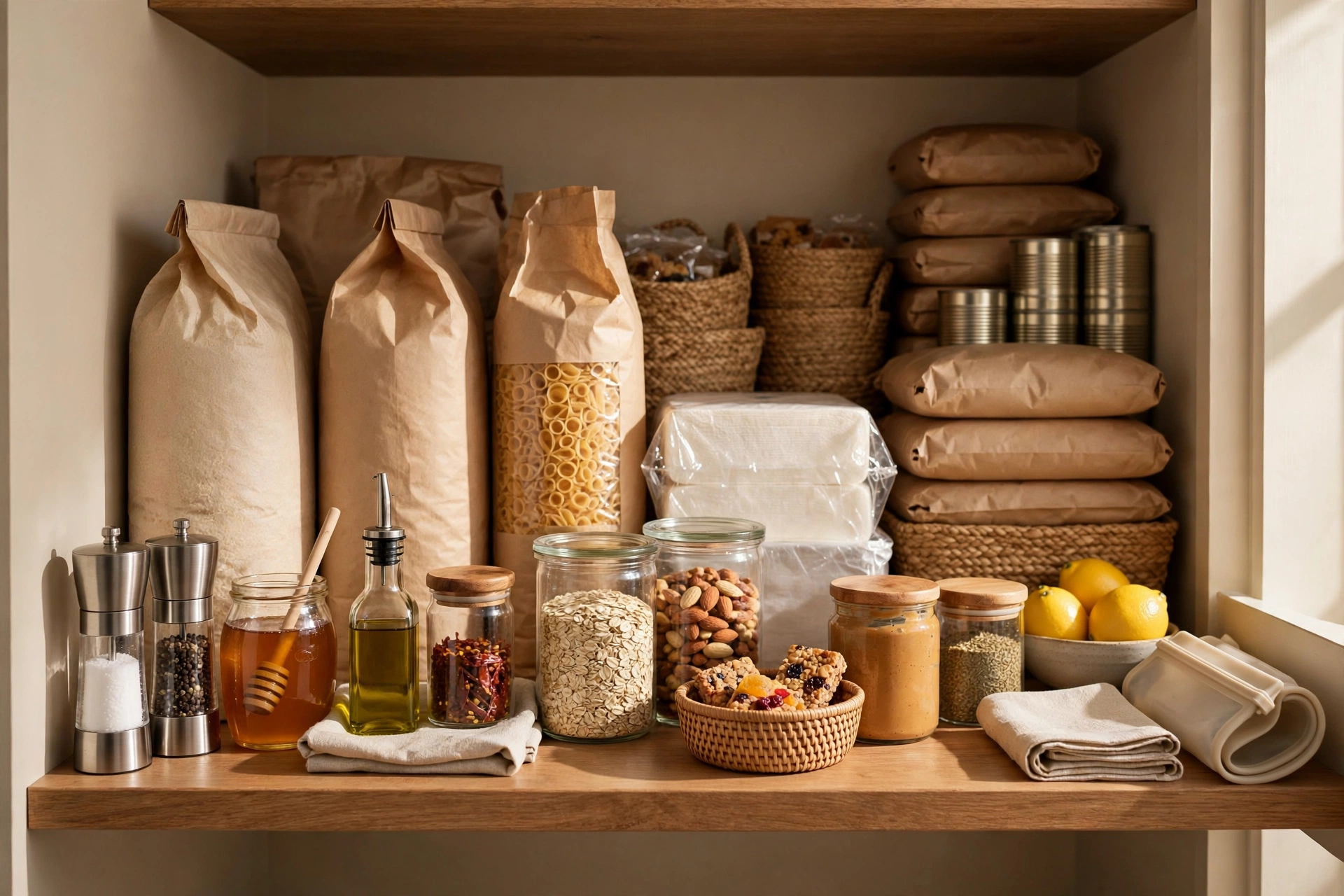
Flip the problem around: store bulk extras and rarely used items in the deepest part on purpose, and keep daily items near the front. The back becomes the stockroom, not a graveyard.
Tip: Keep one small “restock” basket at the front so you always know when backstock needs refilling.
9. Add Extra Shelves to Adjust Heights
Most pantries have fewer shelves than they need, leaving tall empty gaps where small items stack up and disappear. Adding even one shelf cuts depth chaos dramatically.
Tip: Wire stackable shelf inserts are a no-tools way to add an extra level in minutes.
10. Use Tension Rods as Vertical Dividers
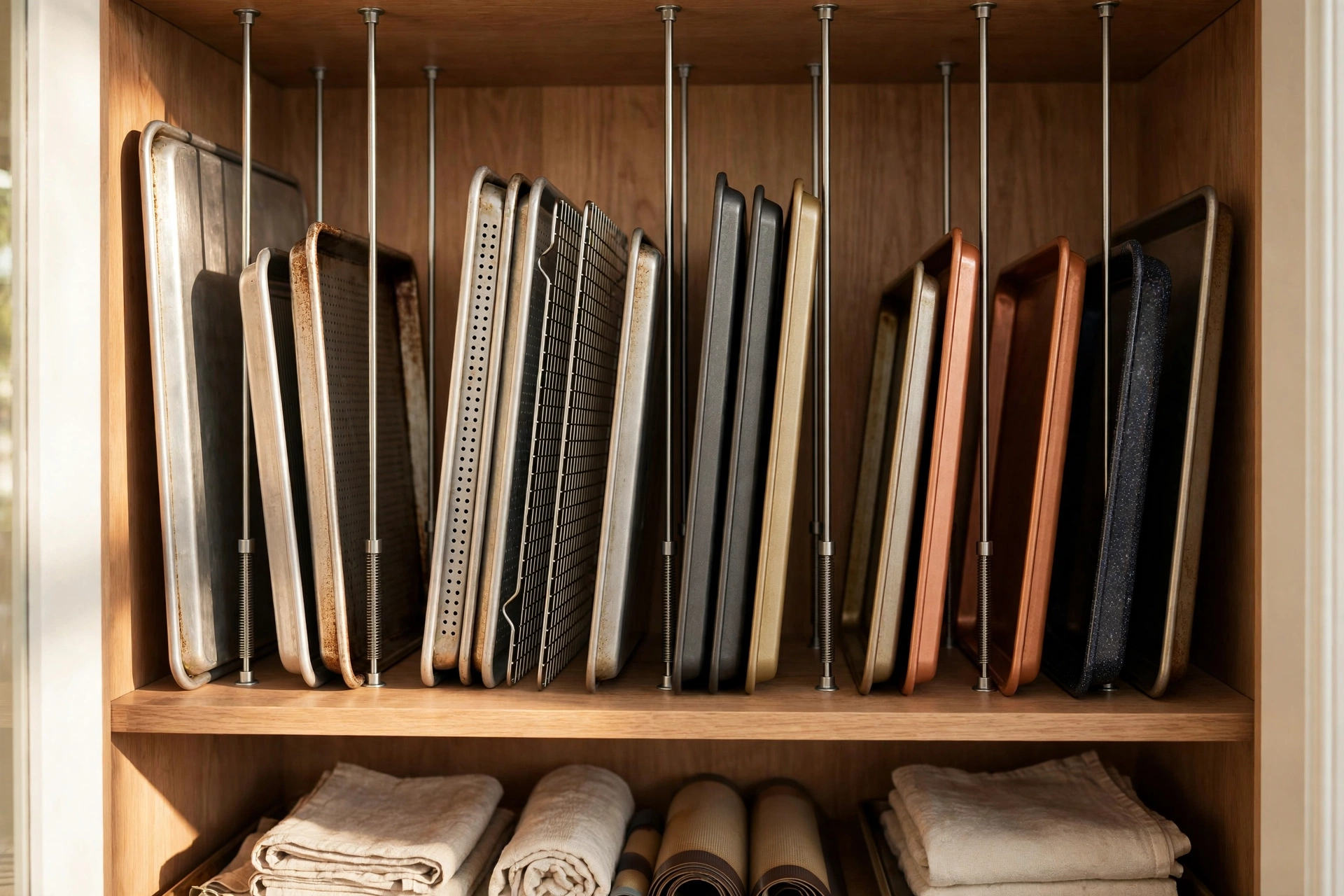
Stand baking sheets, cutting boards, and trays upright by wedging tension rods across a deep shelf to create slots. Flat items stop sliding and piling in the back.
Tip: Two rods — one near the front, one near the back — keep tall items from tipping backward.
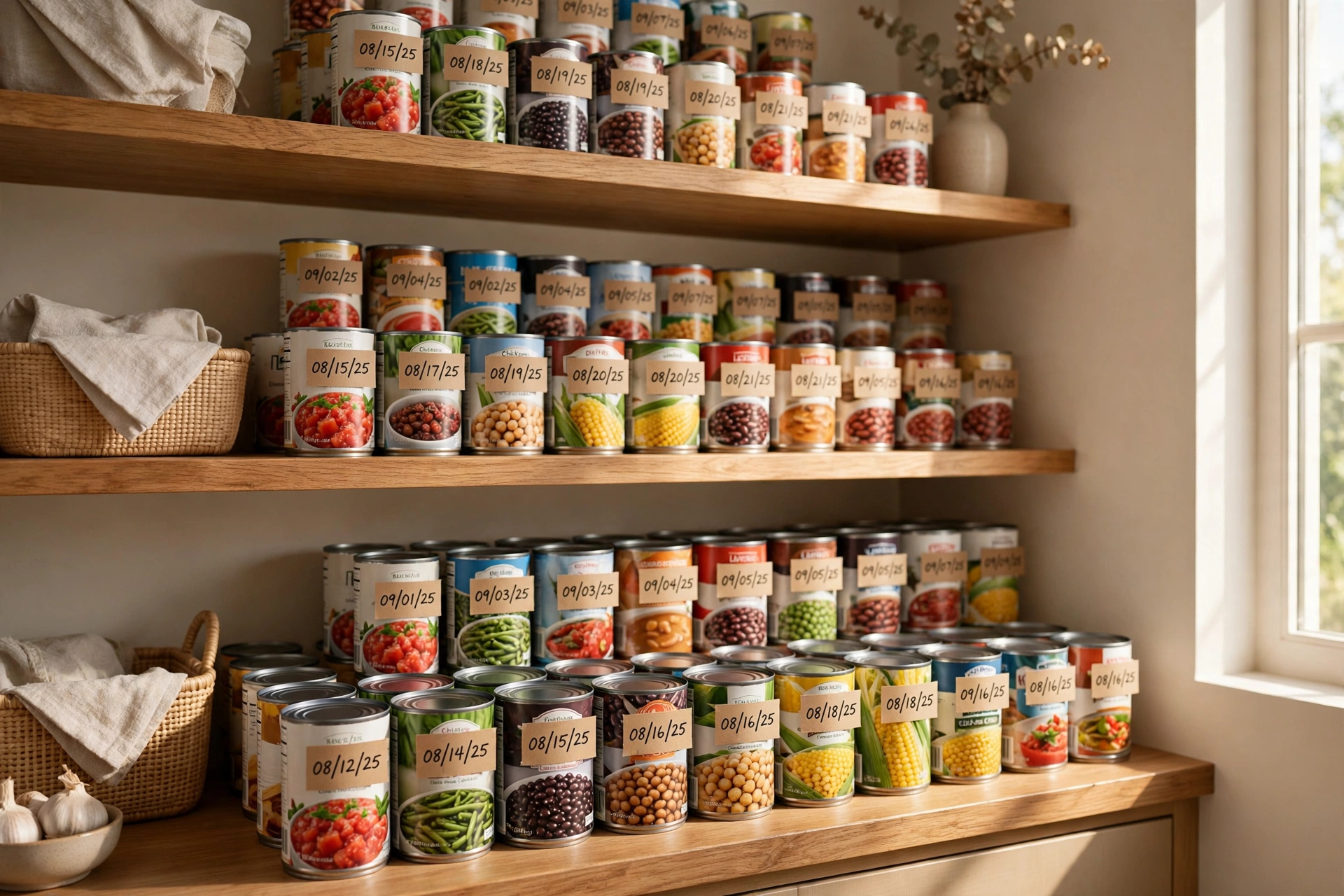
11. Practice FIFO for Perishables
First in, first out: always place new items behind older ones so the oldest gets used first. On deep shelves this simple habit prevents expired cans lurking in the back.
Tip: Write the purchase month on the lid with a marker so the oldest item is obvious at a glance.
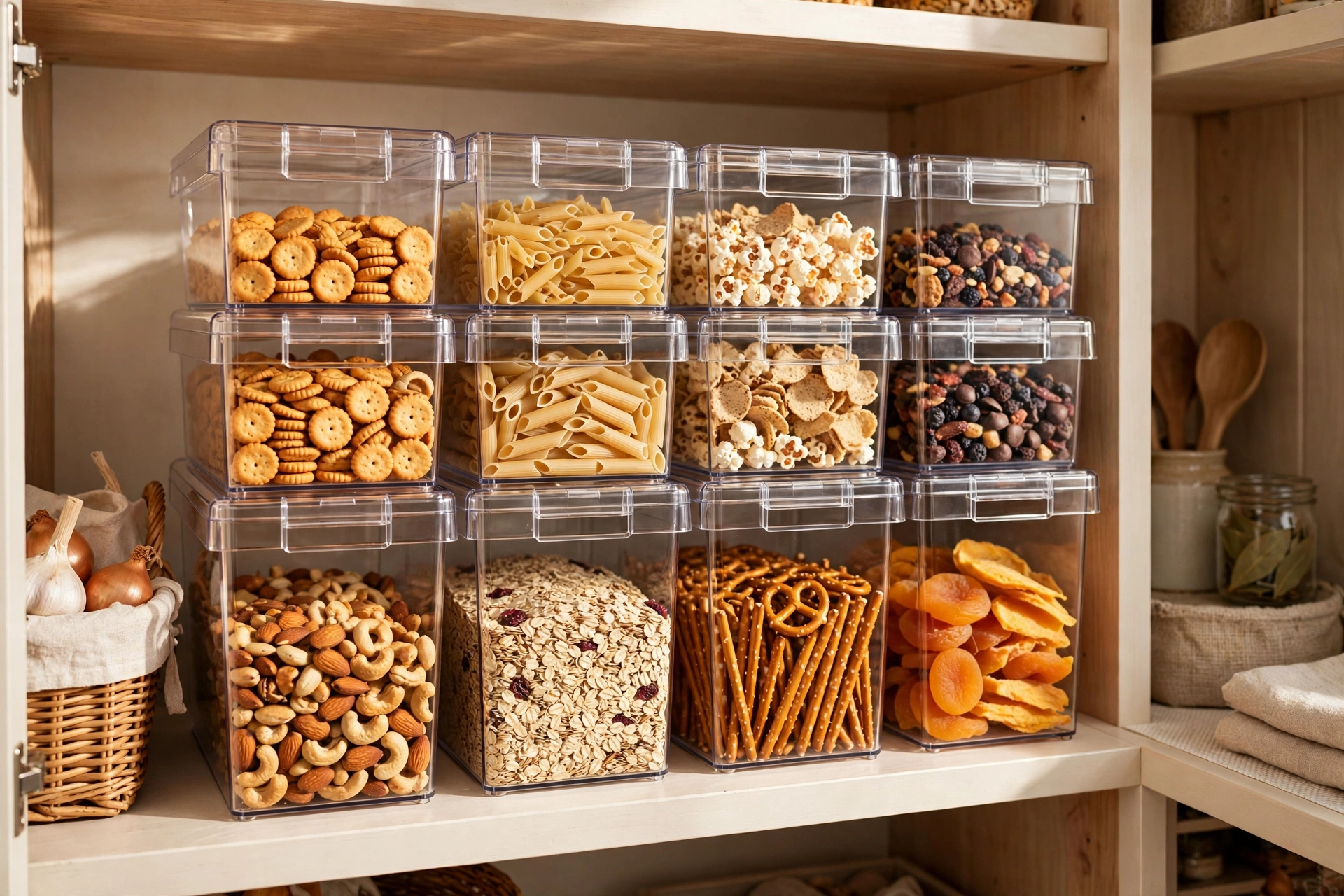
12. Try Stackable Storage Bins
Stackable bins use the vertical space above shorter items, turning one deep shelf into two organized layers. Clear fronts keep the lower layer from becoming a mystery.
Tip: Stack no more than two high — three deep layers defeat the purpose on already-deep shelves.
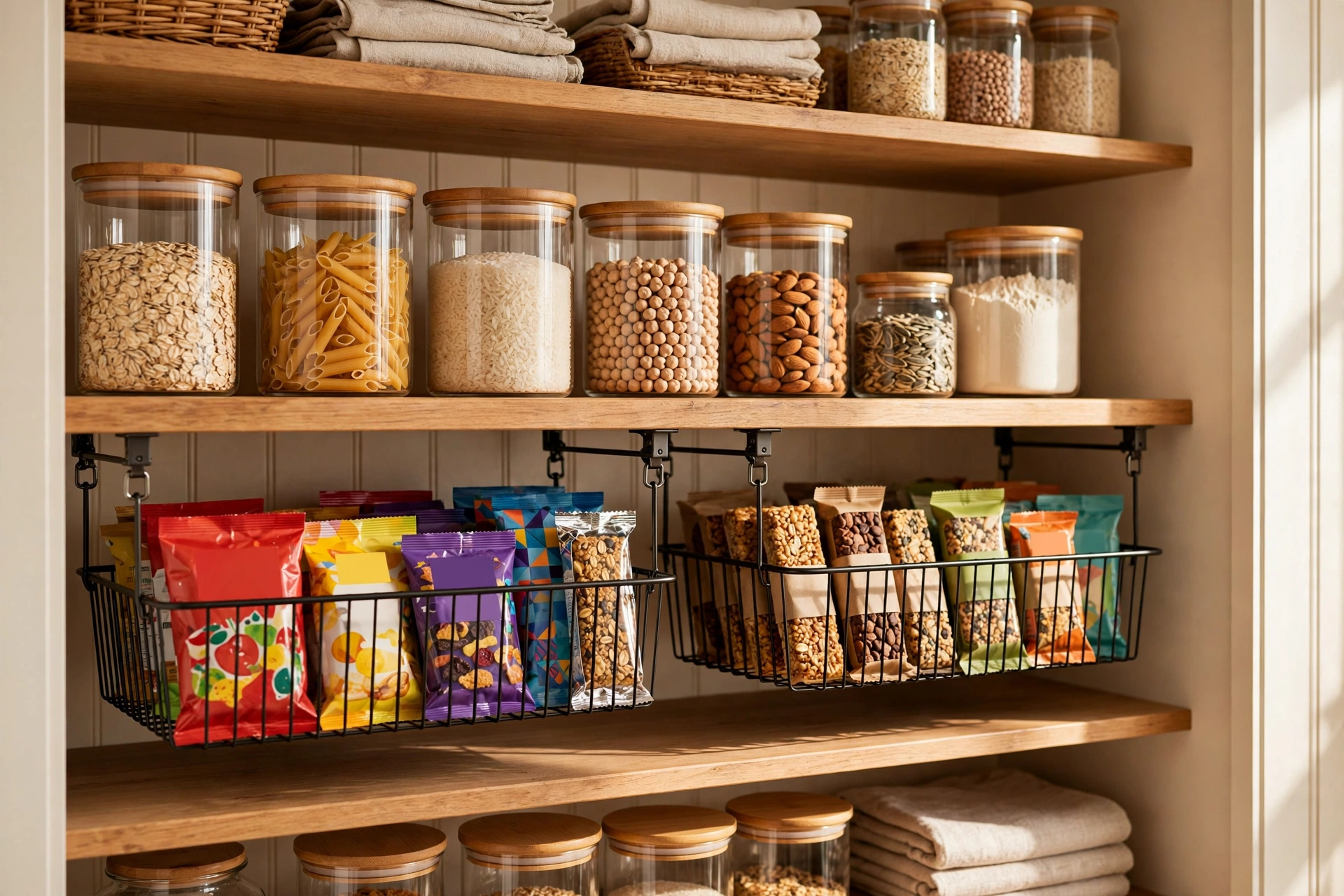
13. Clip On Under-Shelf Baskets
Wire baskets that clip onto the shelf above create bonus storage that hangs just under the surface — perfect for packets, snack bags, and small extras in the front half.
Tip: These work best on wire shelving; for solid shelves use adhesive or screw-mounted versions.
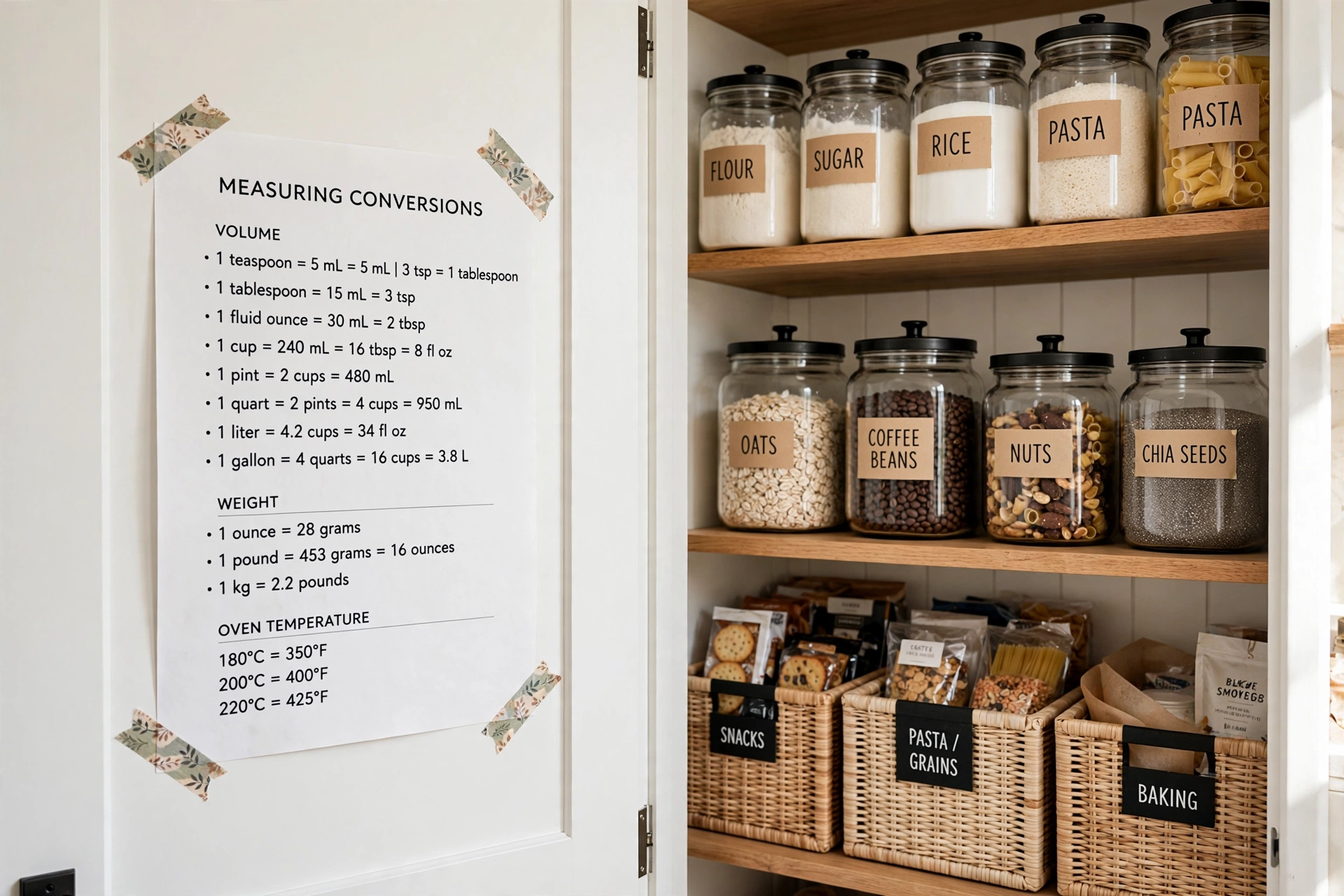
14. Put a Measuring Cheat Sheet Inside the Door
Tape a conversions chart inside the pantry door where you can always see it. It saves counter space and keeps the door storage intentional instead of cluttered.
Tip: Laminate the chart so flour dust and splashes wipe right off.
15. Light the Shelves with Puck Lights
Deep pantries are dark, and dark corners are where food goes to be forgotten. Stick-on motion-sensor puck lights make every shelf — back included — visible.
Tip: Battery puck lights with remote controls are cheap and take seconds to install.
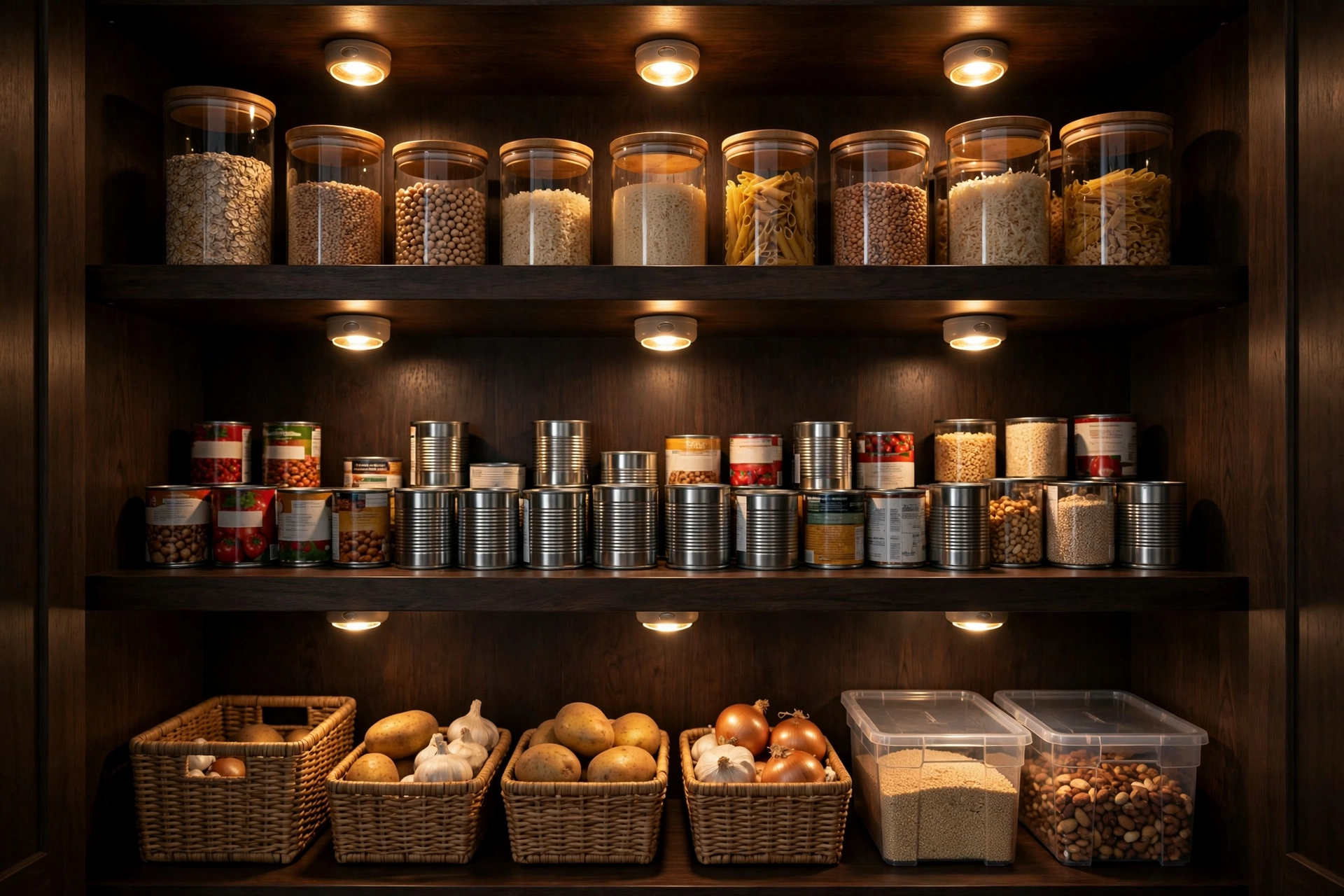
16. Keep an Expiry Inventory on a Notepad
A simple clipboard or dry-erase board on the door listing items and expiry dates means you never dig through deep shelves wondering what’s still good.
Tip: Update it the same day you grocery shop so the list stays accurate without extra effort.
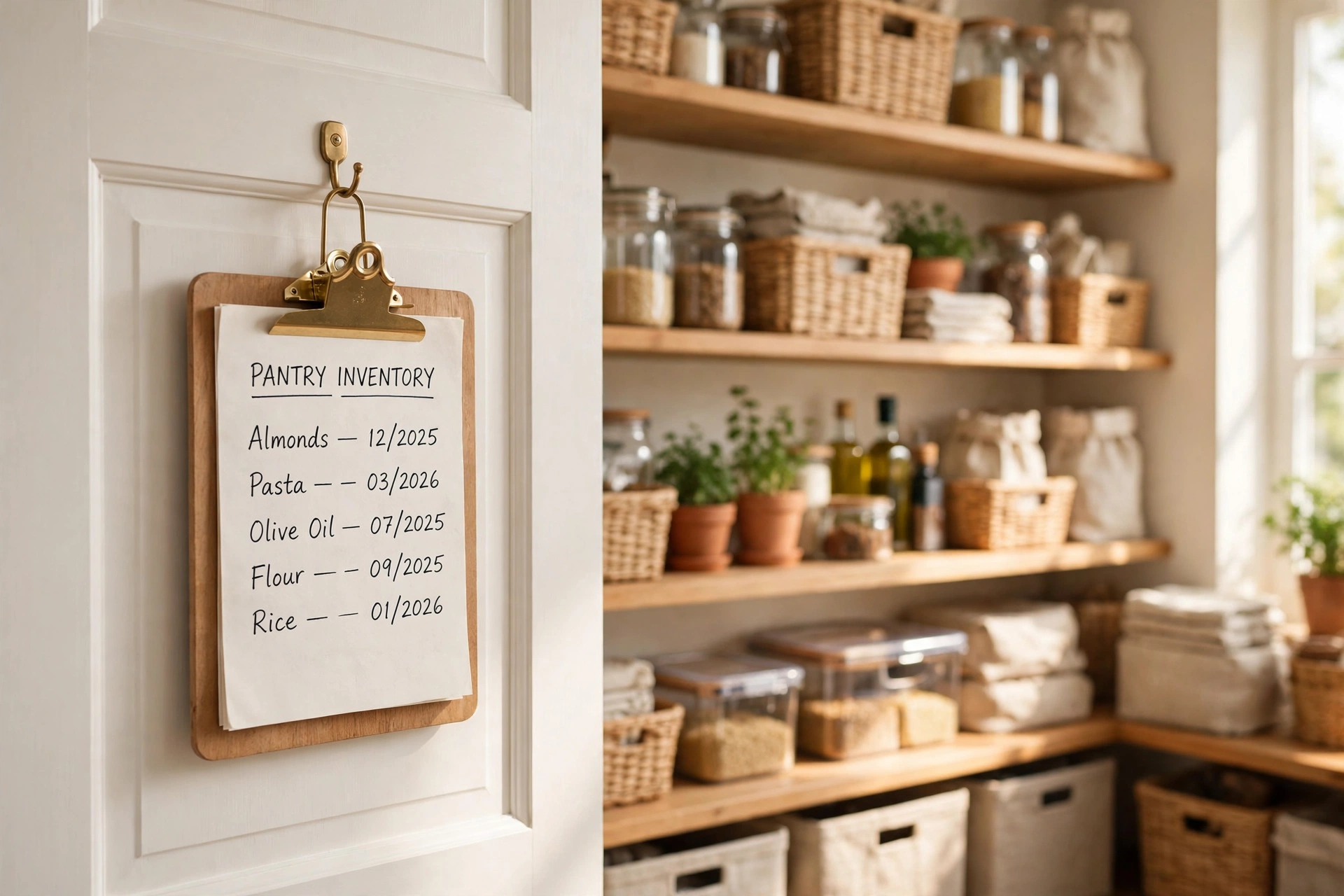
17. Use Riser Shelves for Spices at the Front
A small three-step riser at the front of a deep shelf puts everyday spices on display while taller items live behind. Daily cooking gets faster immediately.
Tip: Alphabetize the front row of spices so you grab the right one in one second.
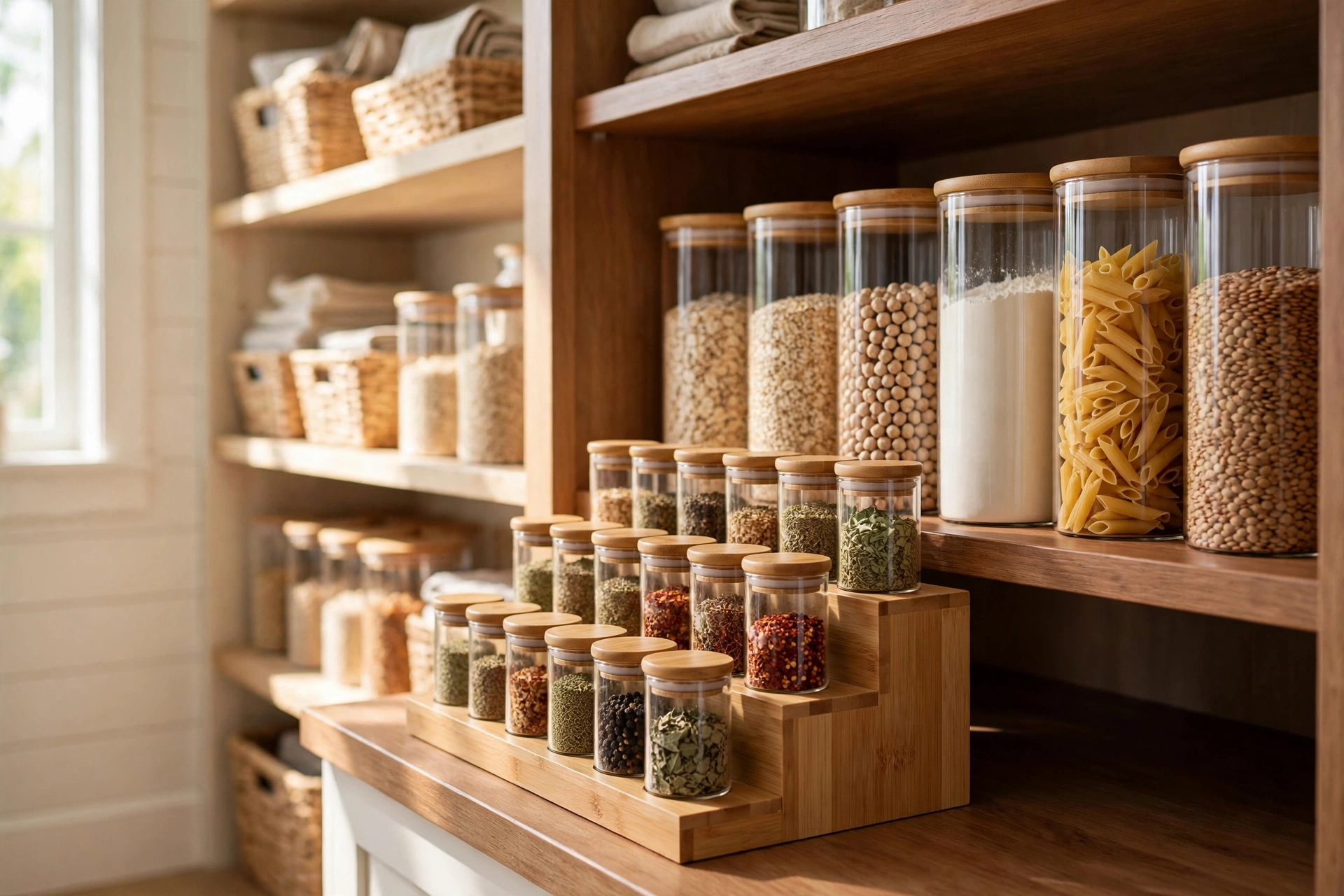
18. Declutter Ruthlessly Before You Organize
No organizer fixes a pantry stuffed with expired food. Pull everything out, toss what’s old, and only put back what you actually use — a half-empty deep shelf is easy to organize.
Tip: Sort into keep, toss, and donate piles as you pull items out so nothing goes back by default.
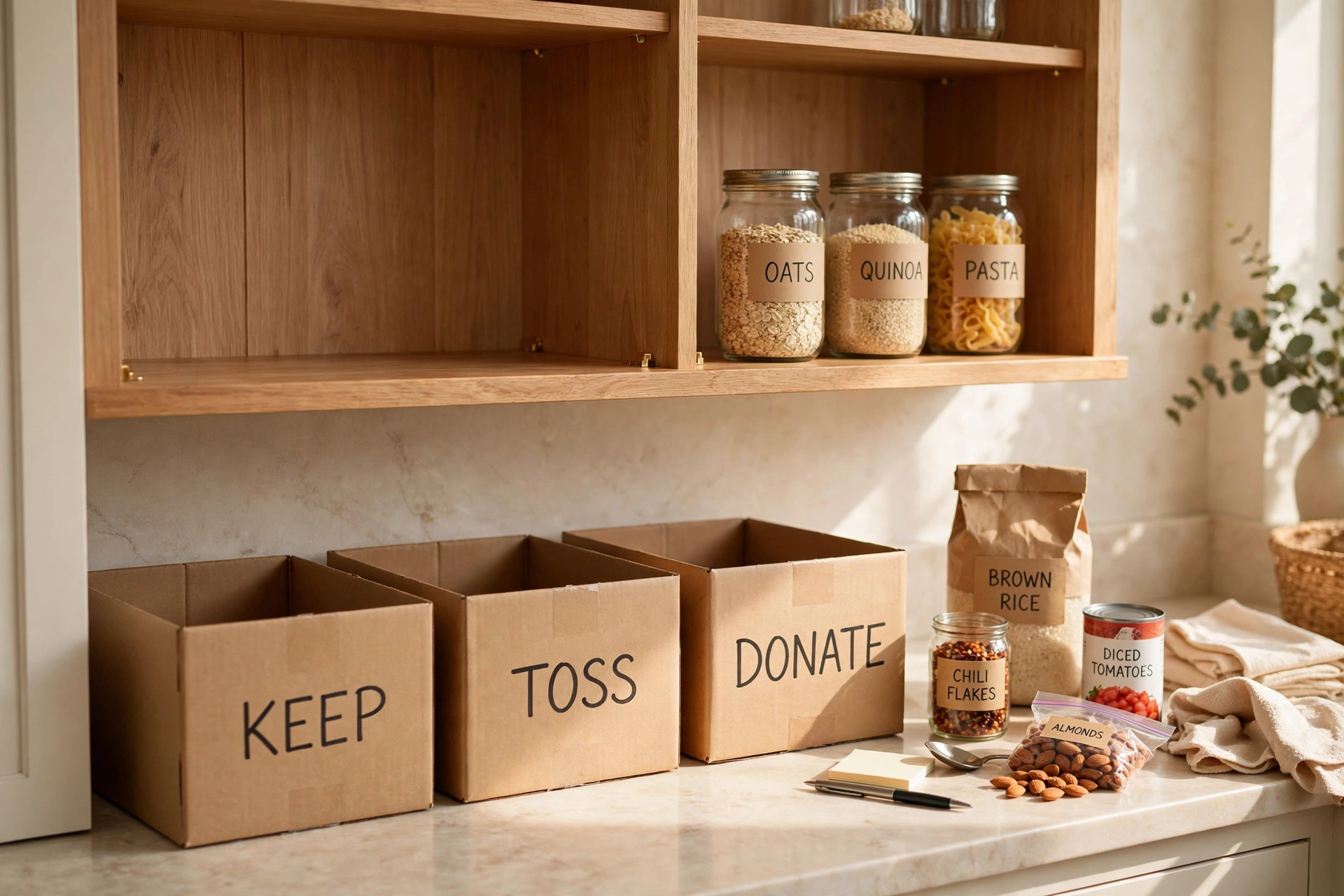
Quick Tips for Deep Pantry Shelves
- One trip in, one trip out: when something new enters the pantry, something old gets used or tossed.
- Keep a small step stool nearby so the top of deep shelves stays usable, not ignored.
- Group tall items in the back and short items in front so every layer stays visible.
- Line shelves with easy-wipe liners — deep shelves are harder to clean, so prevention wins.
- Reassess your zones once a season; what you store changes and the system should change with it.
Frequently Asked Questions
How do you reach items at the back of deep pantry shelves?
The best fix is making the back come to you: use pull-out wire baskets, lazy Susans, or tiered risers. If you prefer no gadgets, dedicate the deep back to backstock you rarely need and keep daily items up front.
What is the best way to organize a small deep pantry?
Zone by category, decant into clear containers, and add visibility helpers like tiered risers and puck lights. Label everything so the system survives busy weeks without drifting into chaos.
Should I use baskets or containers in a deep pantry?
Use both: sealed clear containers for dry goods that go stale, and open baskets for grouping snacks, packets, and canned goods. Pull-out baskets work especially well because they slide the back of the shelf toward you.
How often should I reorganize my pantry?
A deep clean and expiry check twice a year is plenty, with a quick 10-minute tidy each month. If you keep an expiry list on the door, the big clean-outs stay small.
Wrap Up
Learning how to organize small pantry deep shelves comes down to two principles: bring the back into view and give everything a labeled home. With a few risers, baskets, and lights, that frustrating cave of a pantry becomes one of the easiest spaces in your kitchen to keep tidy. Pick three ideas, try them this weekend, and enjoy never losing another can to the void again.