21 Small Pantry Organization Ideas That Actually Work

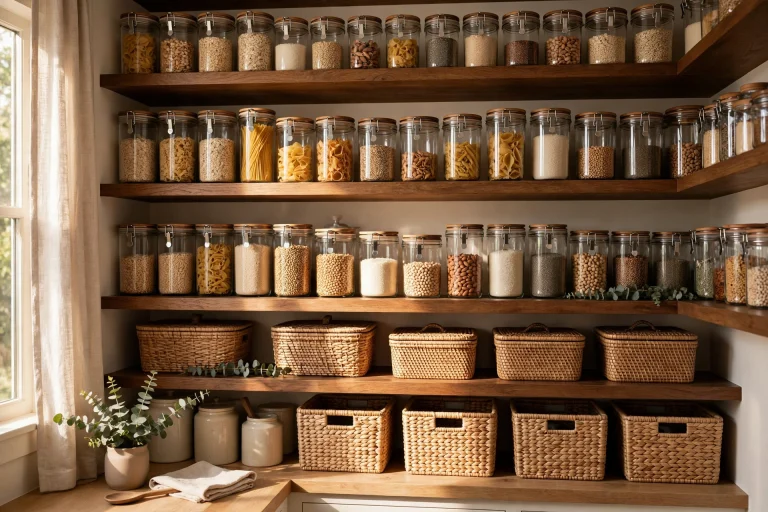
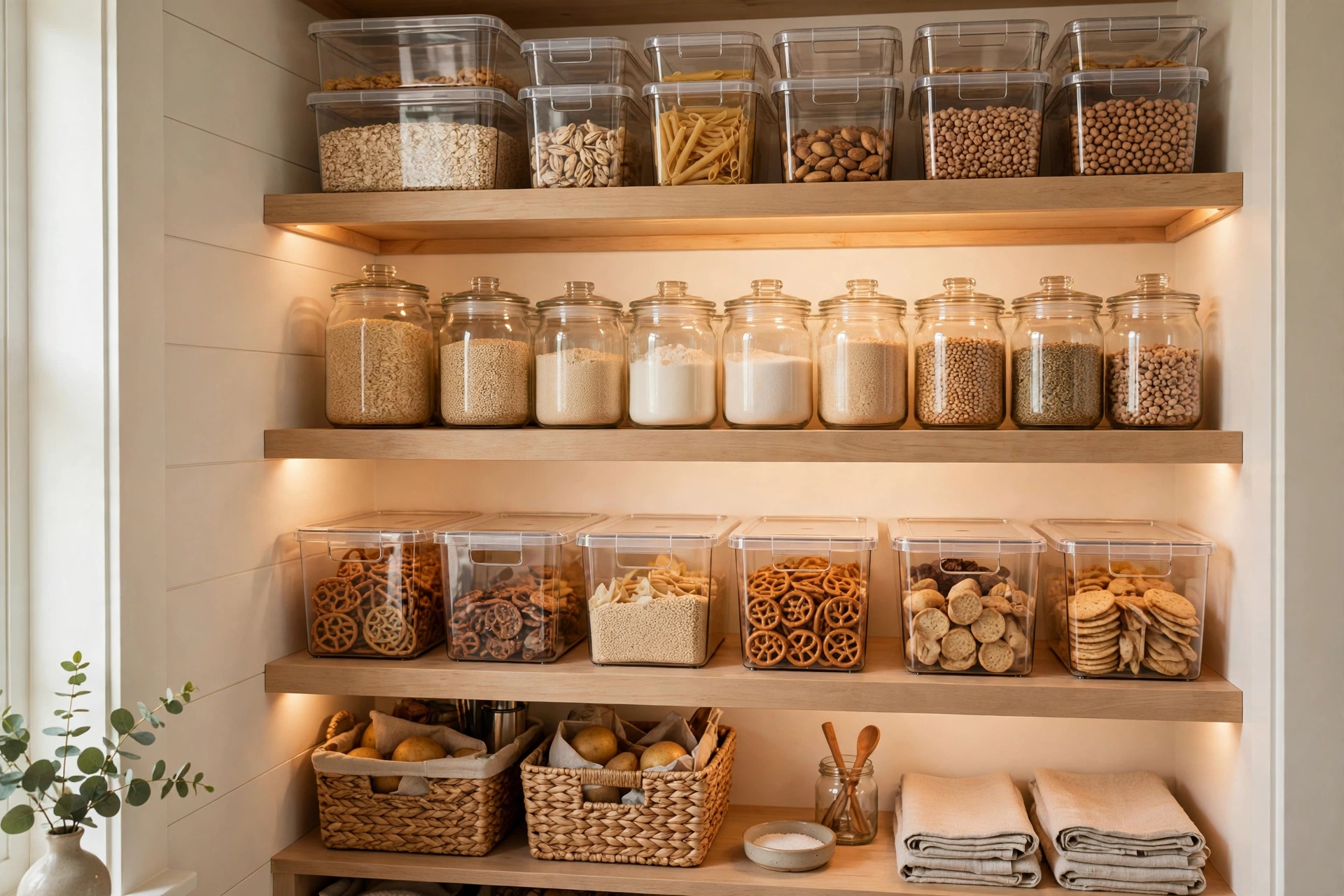
A small pantry can feel like a daily puzzle: everything you need is crammed onto a few shelves, and finding one spice means unstacking half of them. The good news is that small pantry organization ideas are less about having more space and more about making every inch work harder. With the right zones, bins, and a few simple swaps, even the tiniest pantry can run like a well-oiled machine.
In this guide, we rounded up 21 practical ideas that actually fit real pantries — no fantasy walk-in required. Whether you are working with a single cabinet, a pull-out nook, or a narrow reach-in closet, these strategies will help you see everything you own, reach everything you use, and keep it tidy long after the organizing day is over.
1. Zone Your Shelves by Category
Group breakfast foods, snacks, baking supplies, and canned goods into their own zones so every item has a neighborhood. This one habit ends the random stacking that makes pantries feel chaotic. Once zones are set, everyone in the household knows where things live and where to put them back.
Tip: Keep the most-used zone at eye level so daily items are grab-and-go.
2. Use Clear Stackable Bins for Dry Goods
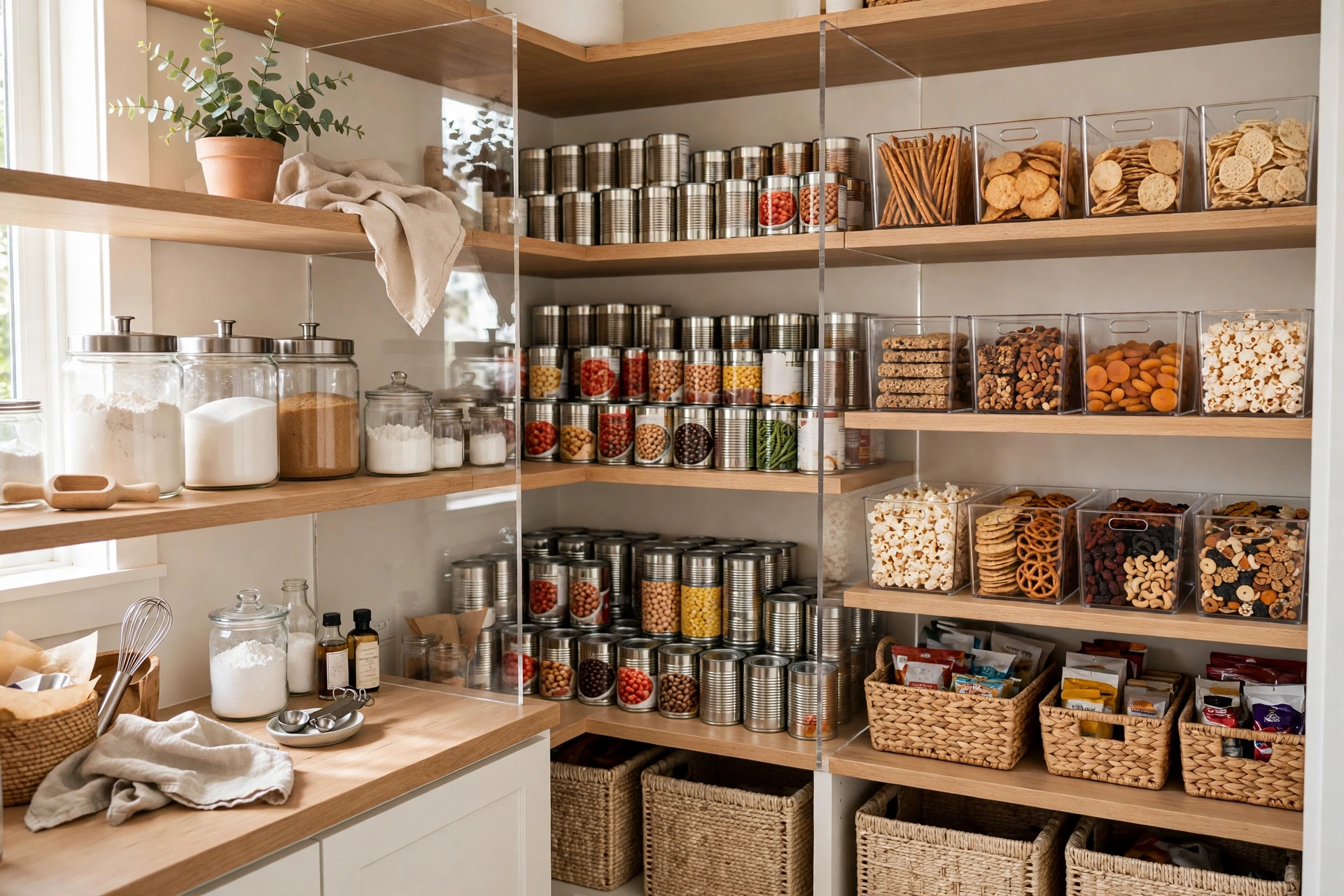
Clear bins turn deep shelves into visible, pull-out drawers you can actually see into. Group pastas, rice, and baking ingredients together, and stack bins to use vertical space without losing visibility. Label the front of each bin so the system survives busy weeks.
Tip: Measure shelf height before buying so stacked bins still clear the lip.
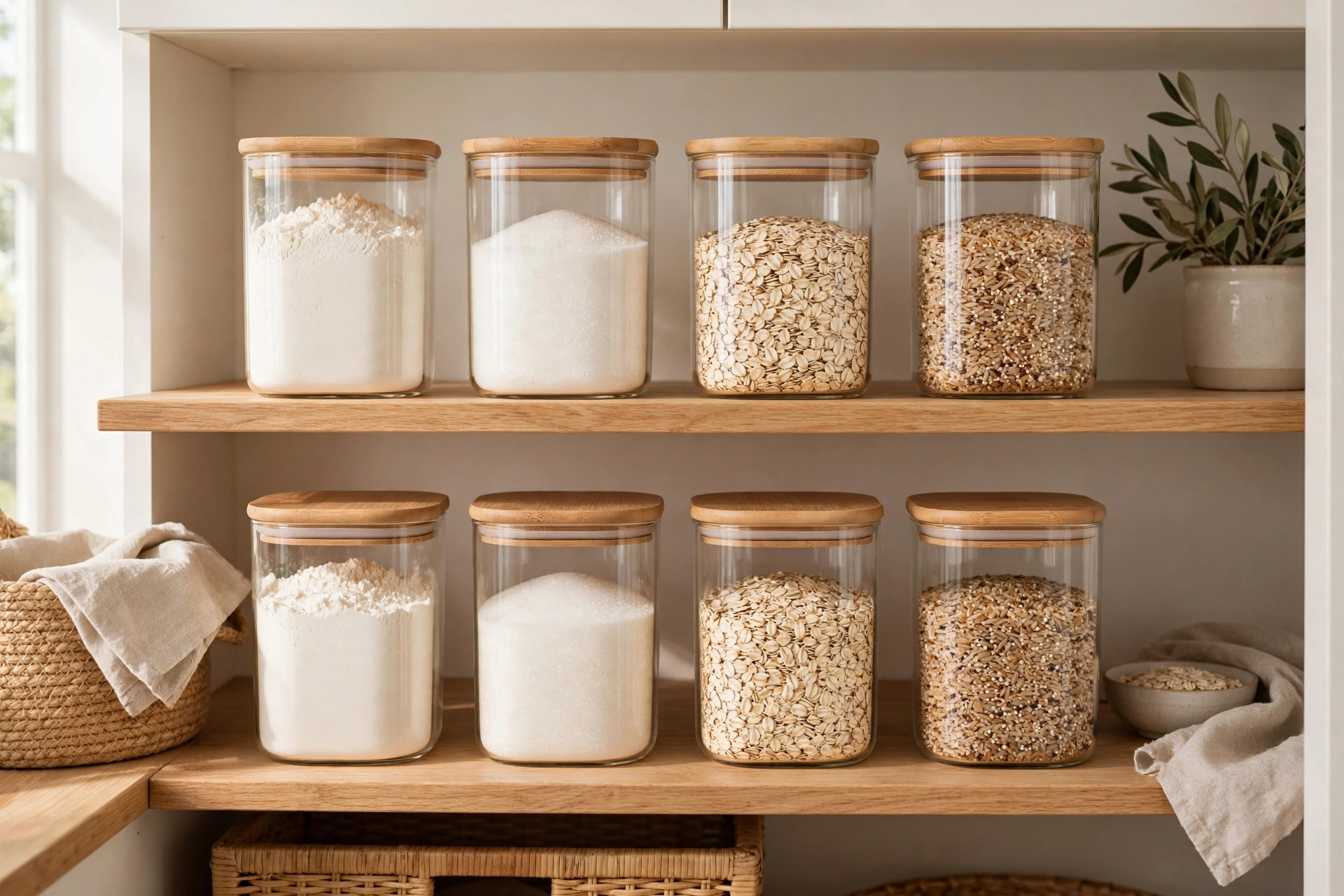
3. Decant Into Matching Airtight Containers
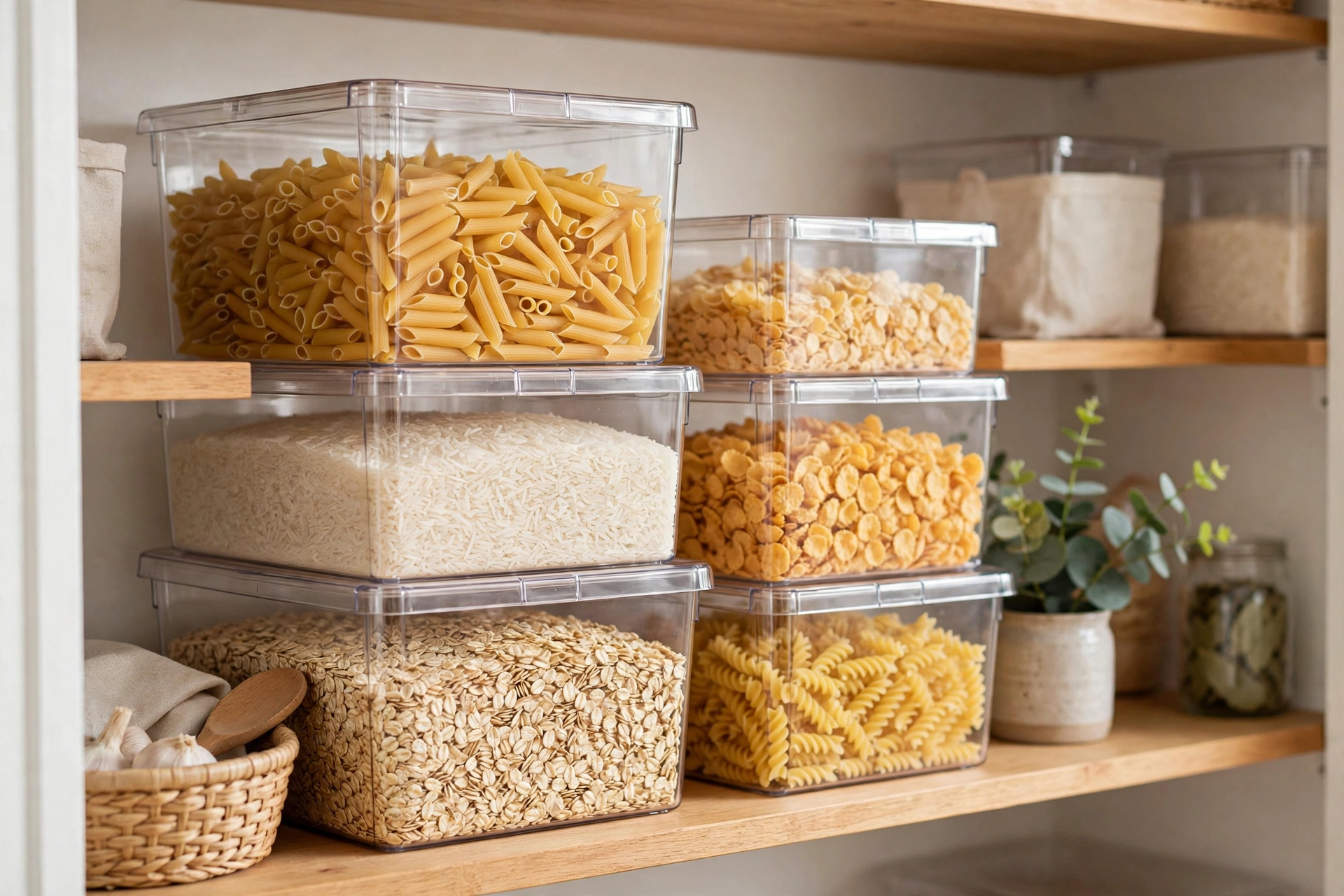
Transferring flour, sugar, cereal, and grains into uniform containers instantly makes a small pantry look calmer and neater. Airtight lids keep staples fresher longer, and matching containers stack cleanly with zero wasted air gaps. It is one of the fastest visual upgrades you can make.
Tip: Choose square or rectangular containers — they waste far less shelf space than round ones.
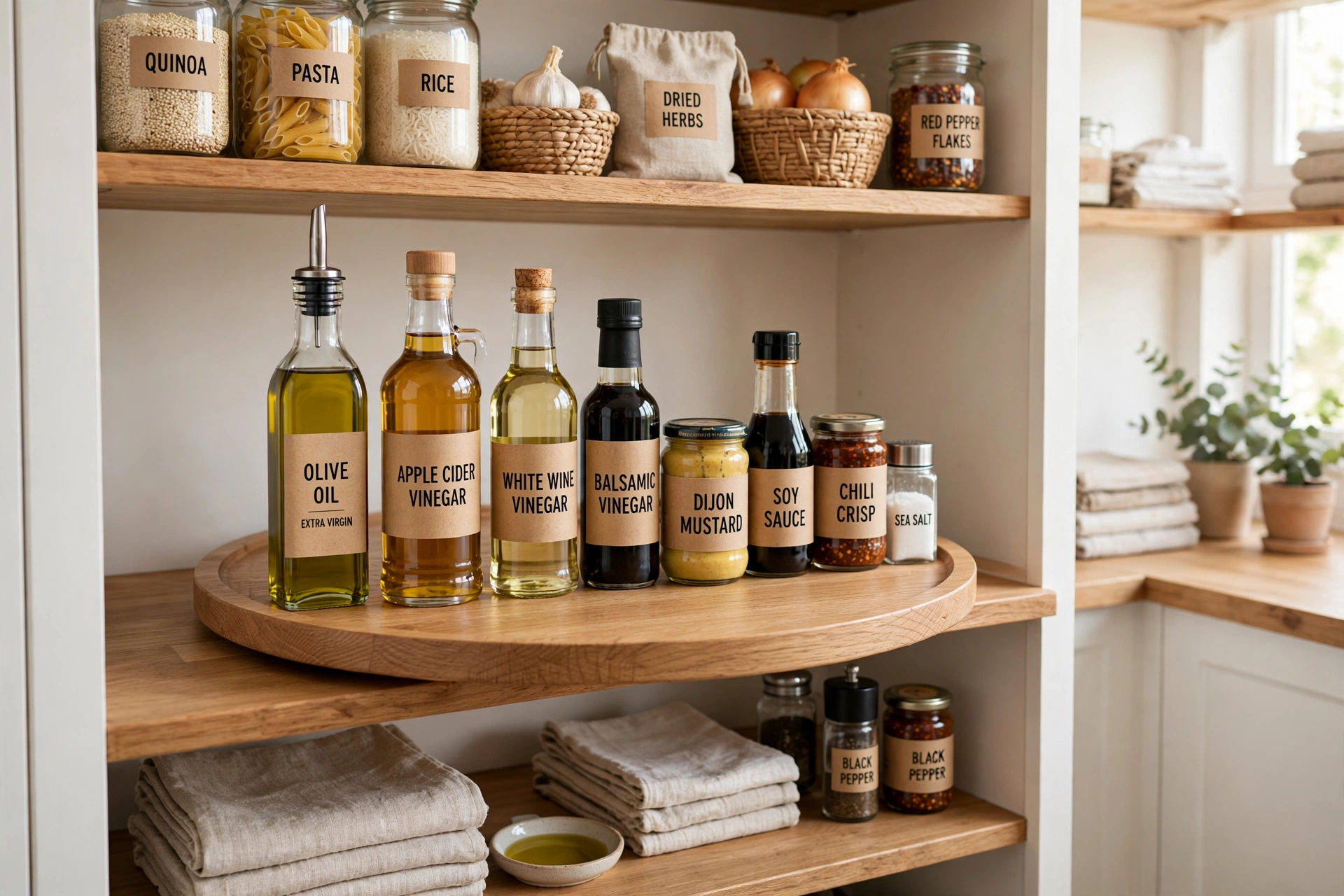
4. Add a Lazy Susan for Oils and Condiments
Oils, vinegars, and sauces are classic pantry black holes, hiding behind each other on deep shelves. A lazy Susan lets you spin to exactly what you need without knocking anything over. Pick a raised-edge version so tall bottles stay put while it turns.
Tip: One lazy Susan per shelf zone keeps sauces, dressings, and syrups separated.
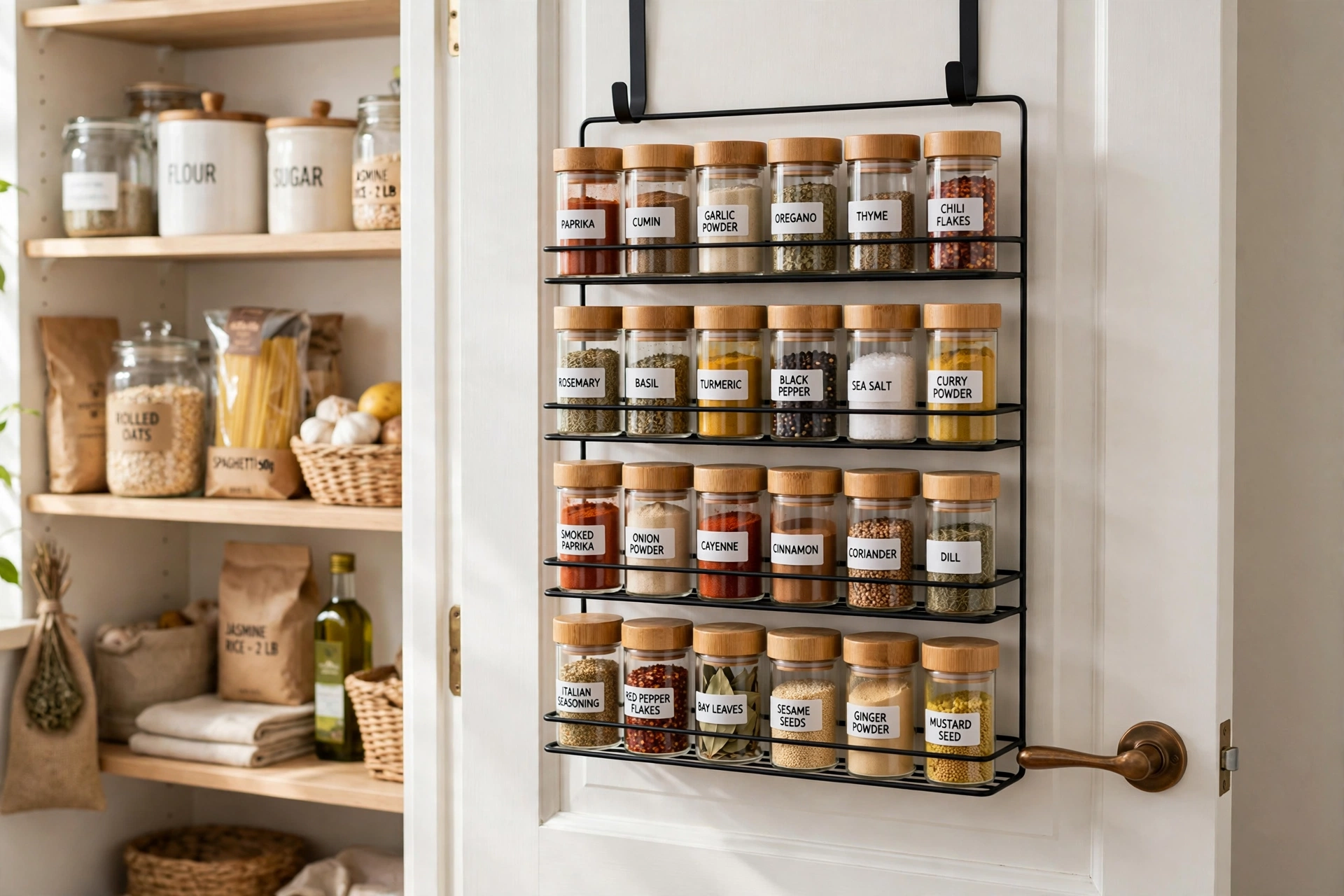
5. Install an Over-the-Door Rack
The inside of the pantry door is free real estate most people forget. A slim over-the-door rack holds spices, packets, wraps, and small bottles that would otherwise clutter shelves. Look for adjustable baskets so the rack adapts as your stock changes.
Tip: Check the door clearance first — racks thicker than two inches can hit the frame.
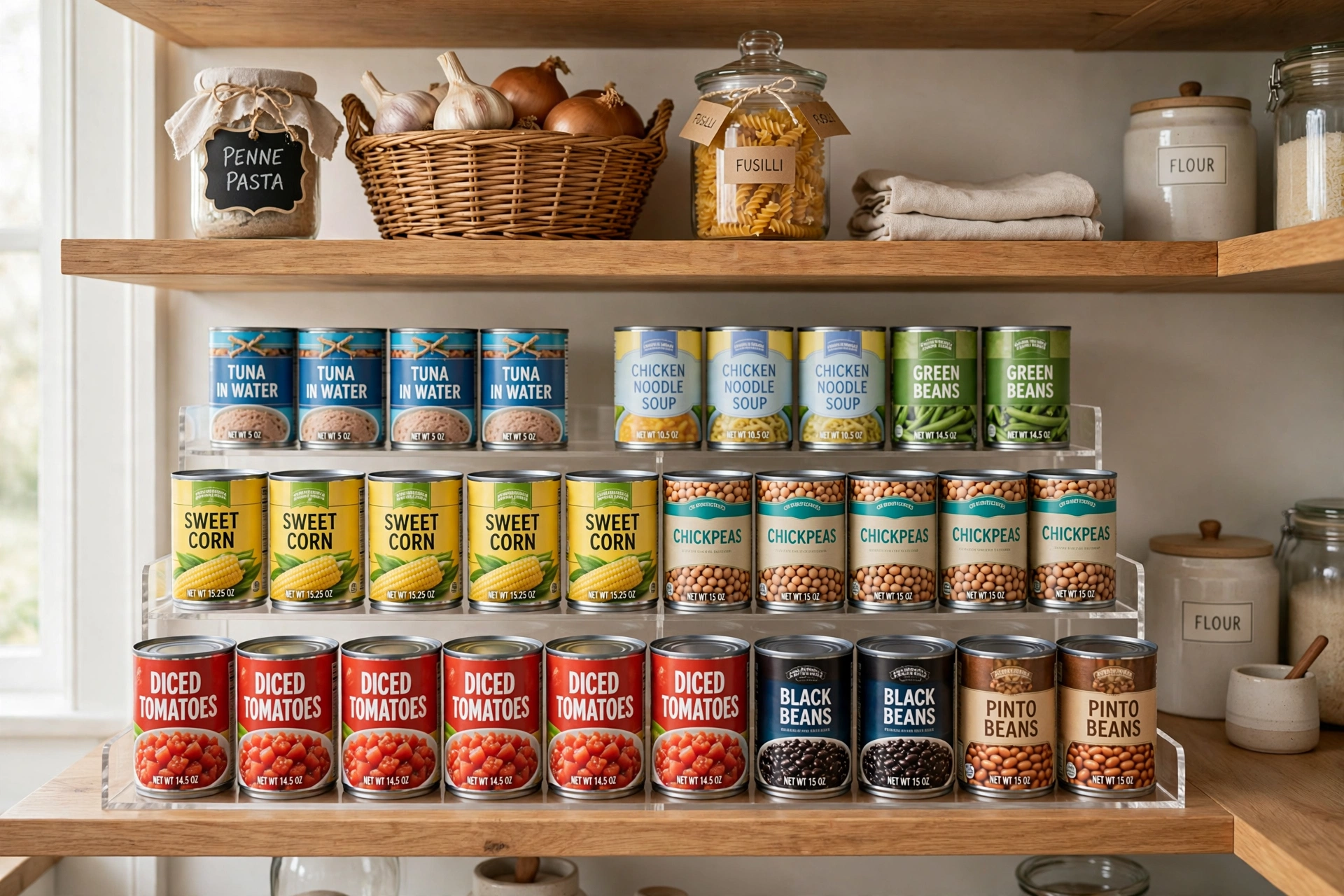
6. Use Tiered Shelf Risers for Cans
Cans lined up single-file bury the back rows completely. Tiered risers create bleacher-style steps so every label is visible at a glance. They are inexpensive, and they instantly double the usable frontage of a shelf.
Tip: Face all labels forward when you stock up — future-you will be grateful.
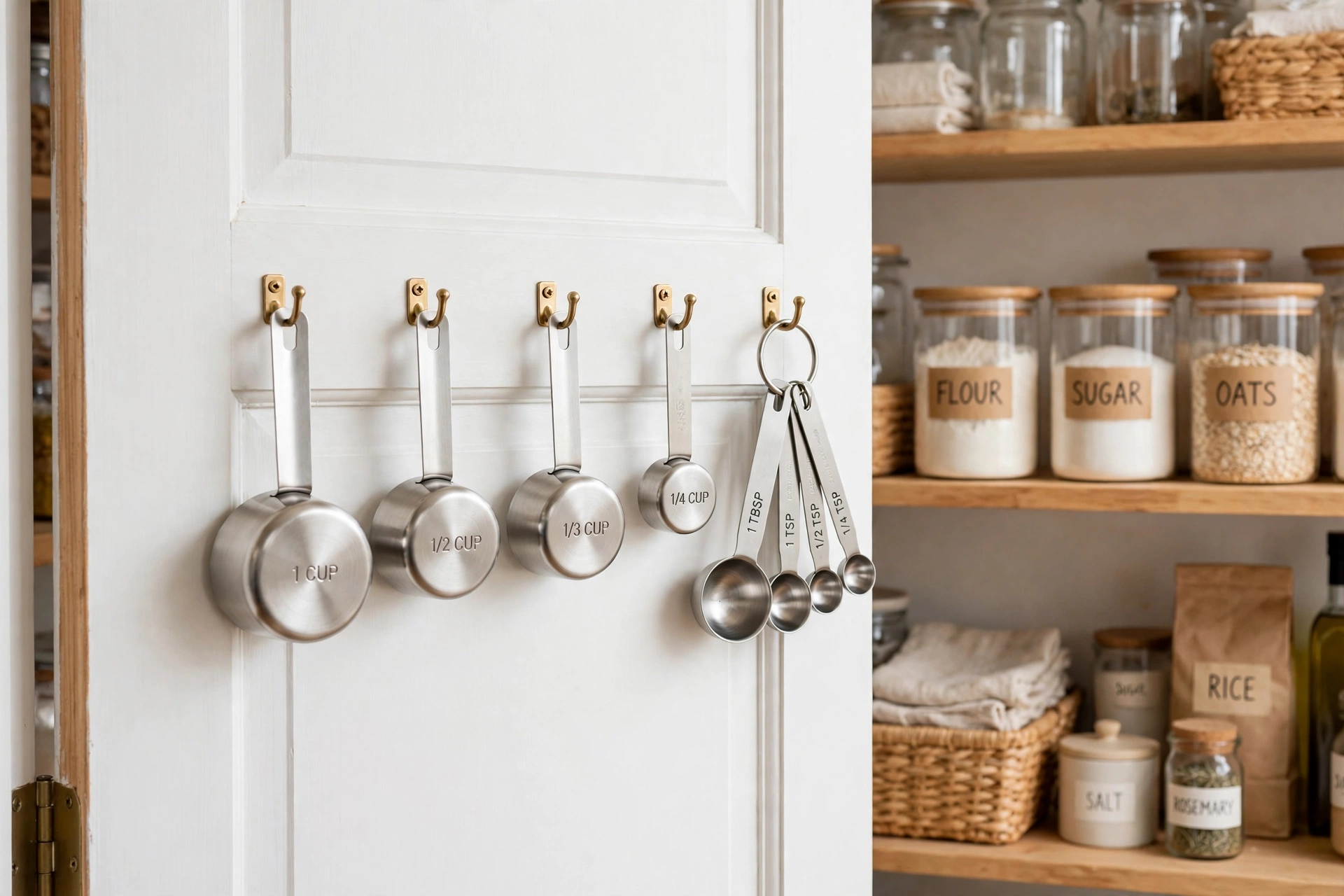
7. Hang Hooks on the Door for Measuring Tools
Measuring cups, funnels, and grocery bags do not need shelf space. A row of small adhesive or screw-in hooks on the door keeps them hanging neatly and within reach. This frees up surprising amounts of shelf depth for the food itself.
Tip: Use the hook backs to label bag sizes with a small chalk marker.
8. Create a Backstock Bin
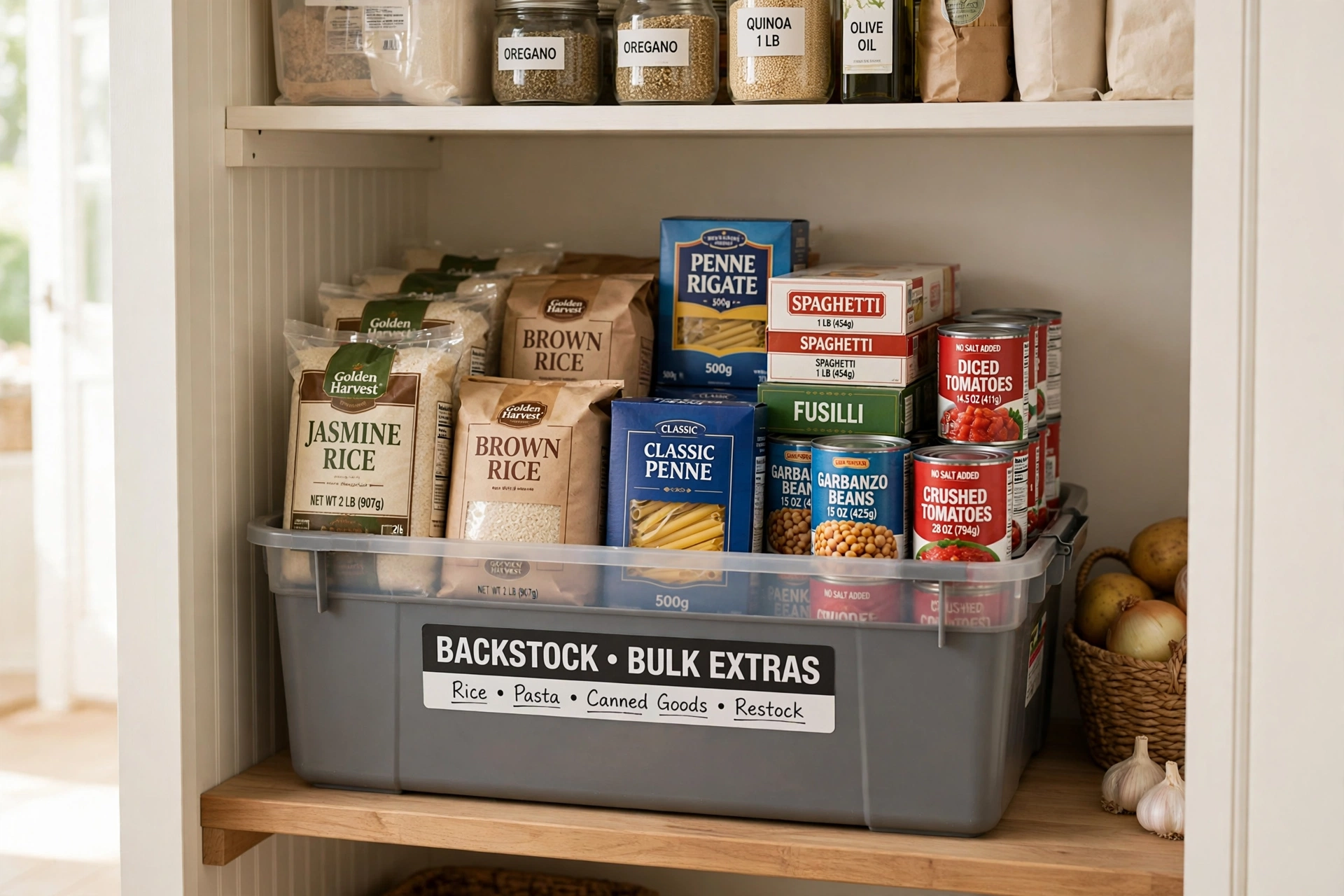
Bulk buys and duplicates are what quietly eat small pantries alive. Corral extras into one clearly labeled backstock bin on the highest or lowest shelf, and only refill the working zones when something runs out. One bin keeps overstock visible but contained.
Tip: Toss a small inventory list on the bin lid so you stop buying what you already have.
9. Use Slim Baskets on Deep Shelves
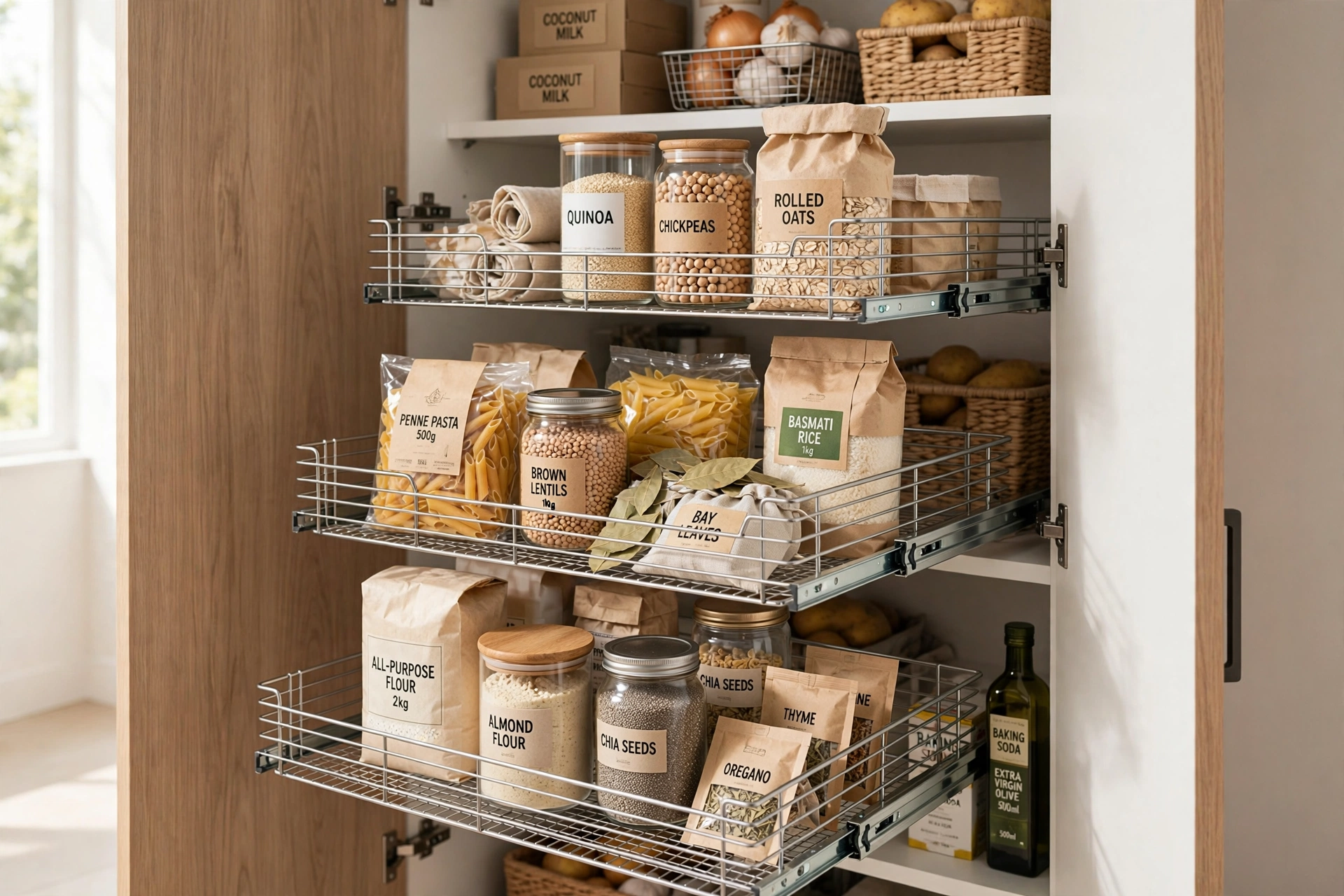
Deep pantry shelves are notorious for losing items at the back. Narrow, long baskets act like drawers you can pull forward, bringing the back of the shelf to you. Dedicate one basket each to snacks, breakfast items, or kids’ lunch supplies.
Tip: Handles matter — choose baskets with cutouts or handles for easy pulling.
10. Label Everything With a Consistent System
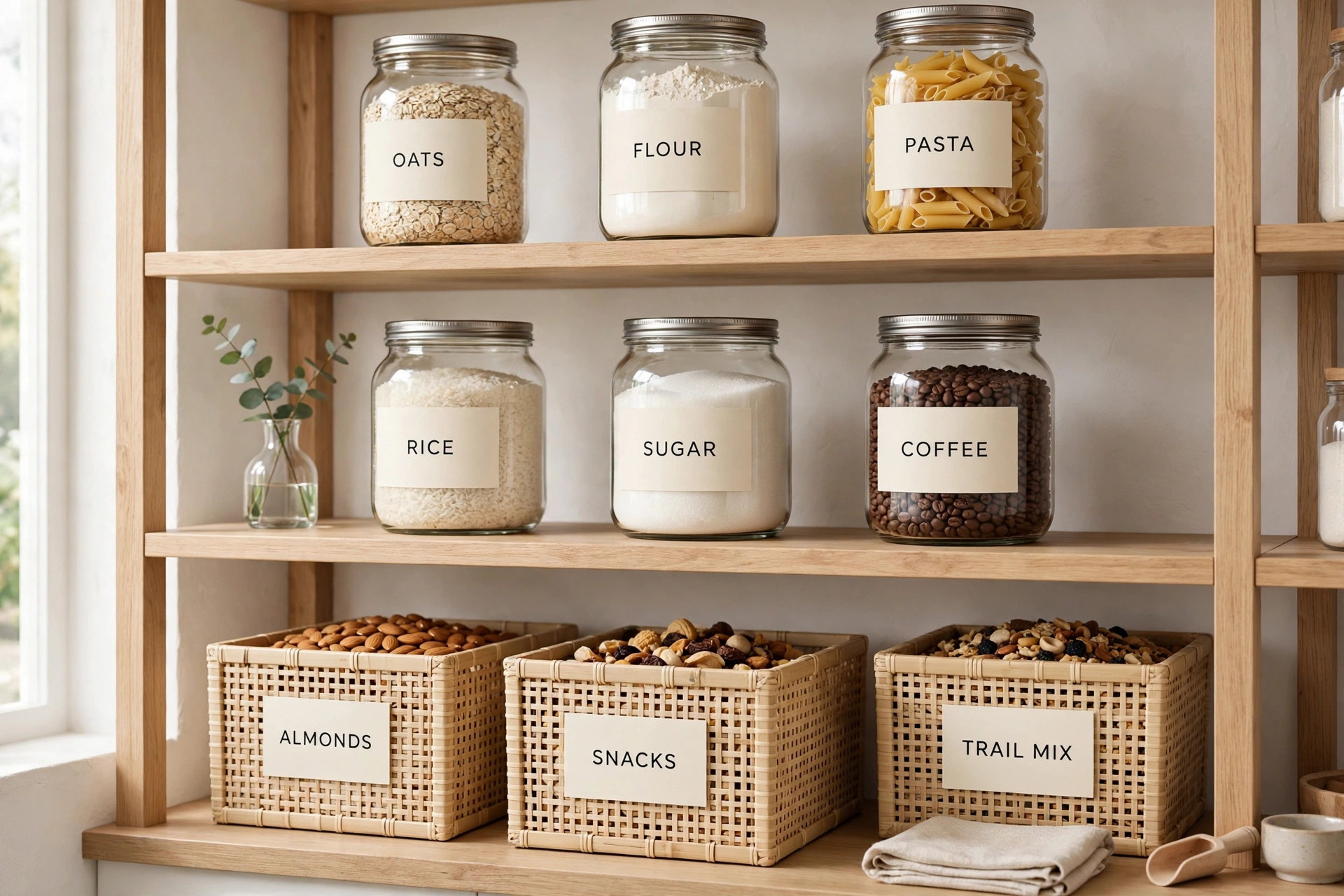
Labels are the glue that keeps any organizing system working. Whether you use a label maker, chalk labels, or simple tape, keep the style consistent so the pantry reads clearly at a glance. Labels also stop other household members from “reorganizing” your zones.
Tip: Add the expiry date to labels for perishables like baking powder and nuts.
11. Stack Under-Shelf Baskets for Extra Layers
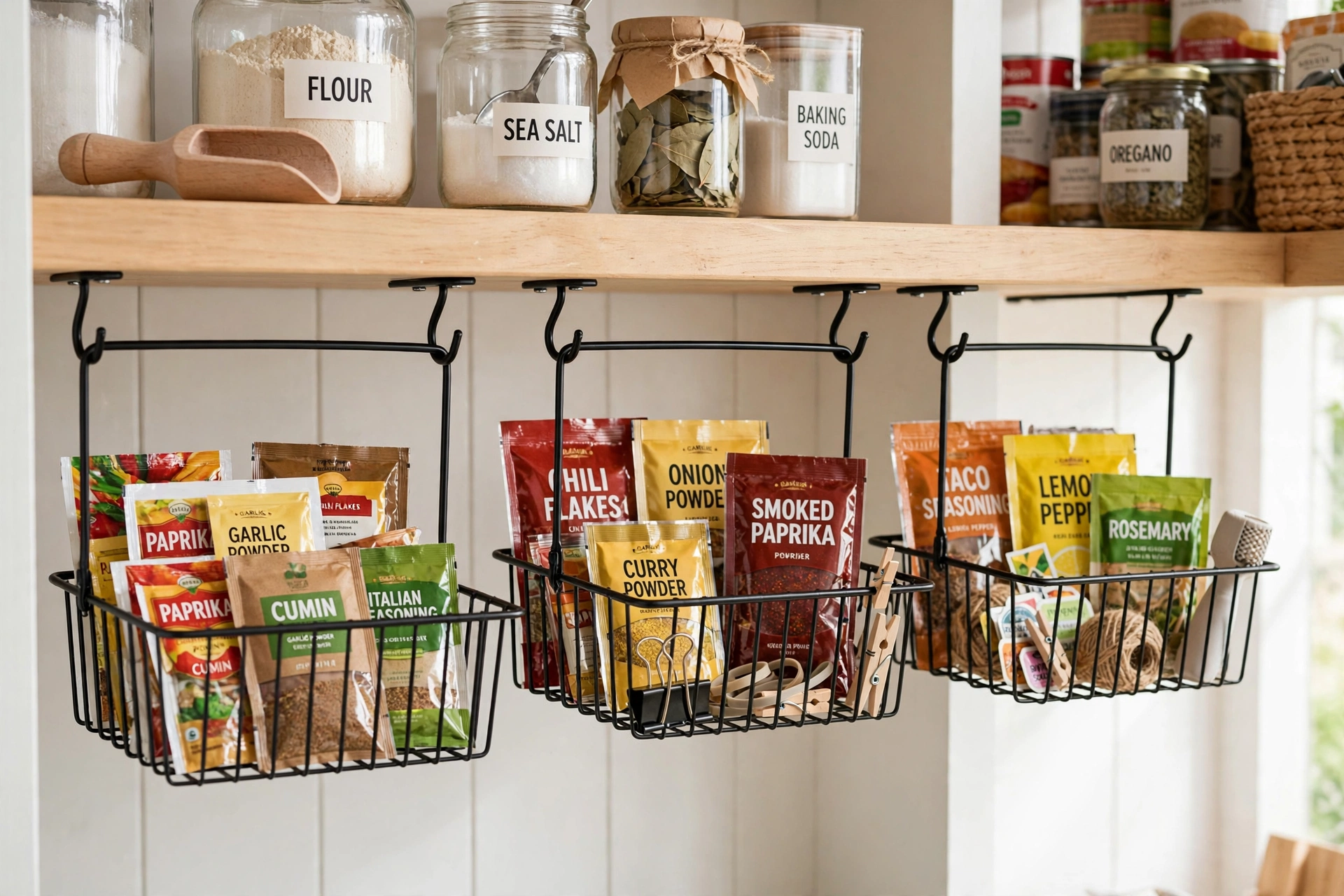
There is often a full hand’s width of unused air between shelves. Wire under-shelf baskets clip onto the shelf above and create a bonus layer for wraps, packets, or produce bags. They add storage without a single new hole in the wall.
Tip: Reserve under-shelf baskets for light items so shelves never bow.
12. Corral Snacks in One Kid-Friendly Bin
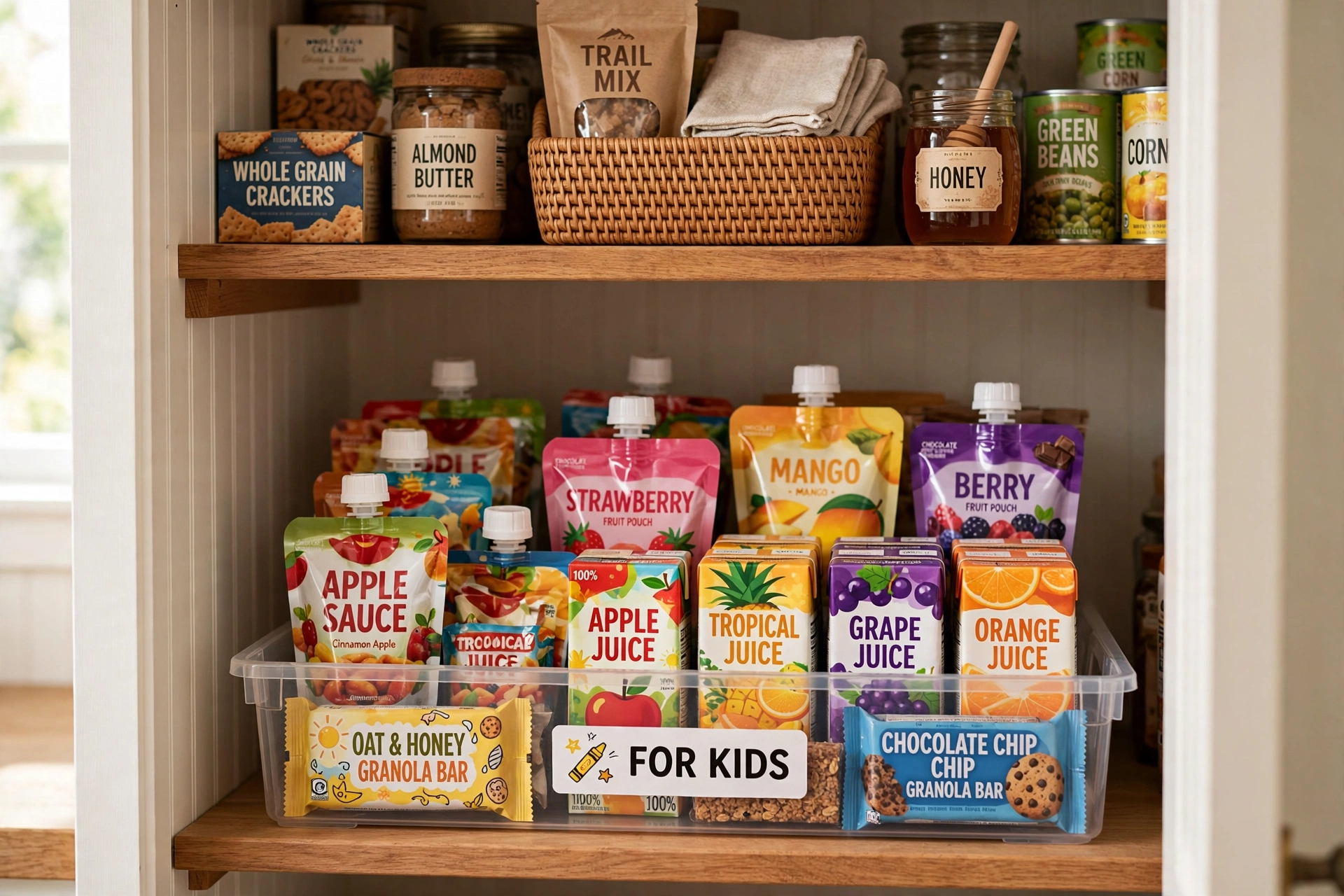
Snack chaos is real when every wrapper has its own home. One dedicated bin for grab-and-go snacks keeps them together and makes restocking a two-minute job. Place it low enough that kids can reach it without climbing.
Tip: Decant small snacks into a clear caddy inside the bin for extra order.
13. Use Vertical File Organizers for Packets and Wraps
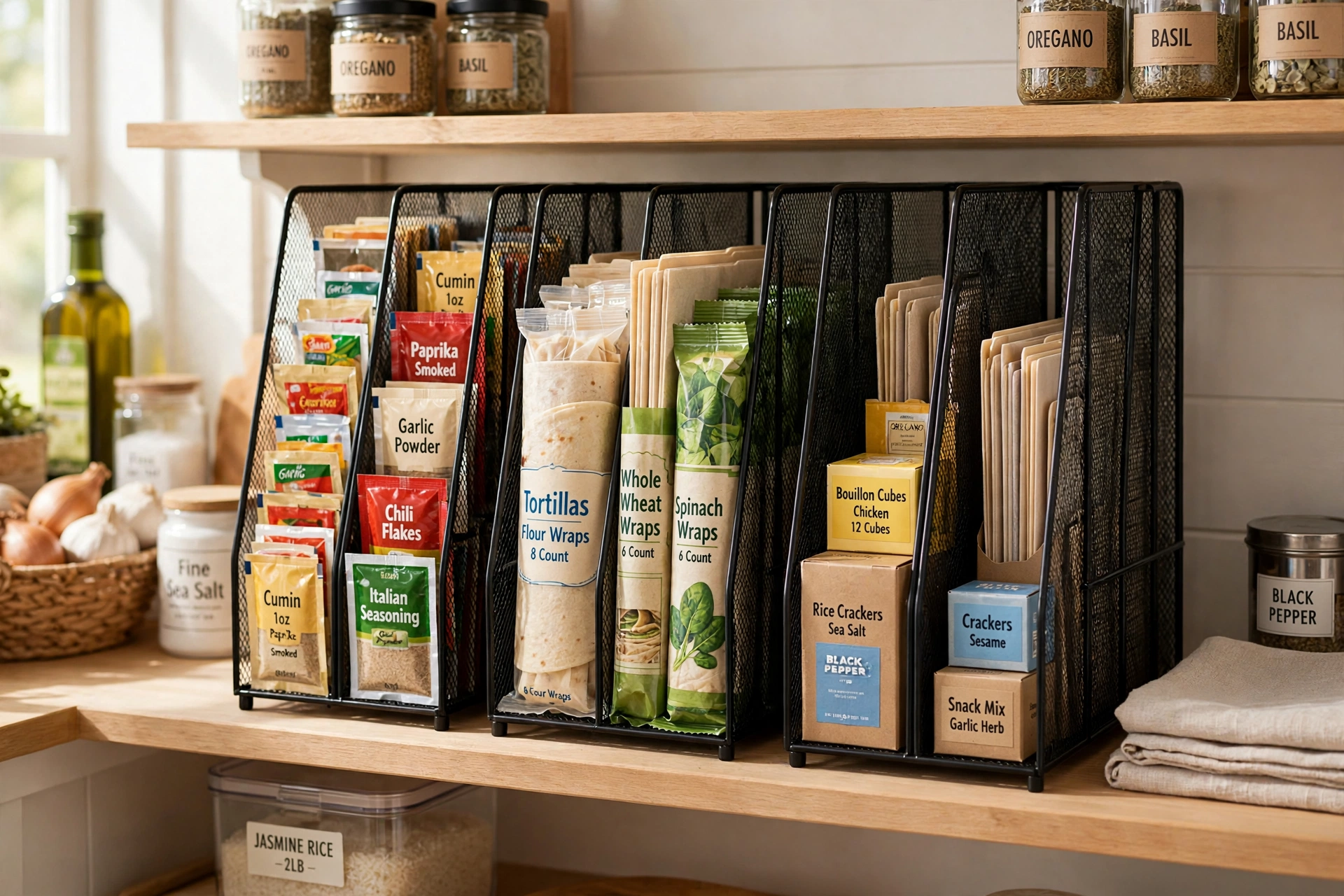
Upright file organizers are secretly perfect for taco seasoning, gravy mixes, tea bags, and cling wrap boxes. Storing them vertically keeps every packet visible and stops the pile from collapsing sideways. They slot neatly beside taller items on any shelf.
Tip: Label the front spine of each file so you can grab the right category fast.
14. Add a Tension Rod for Spray Bottles
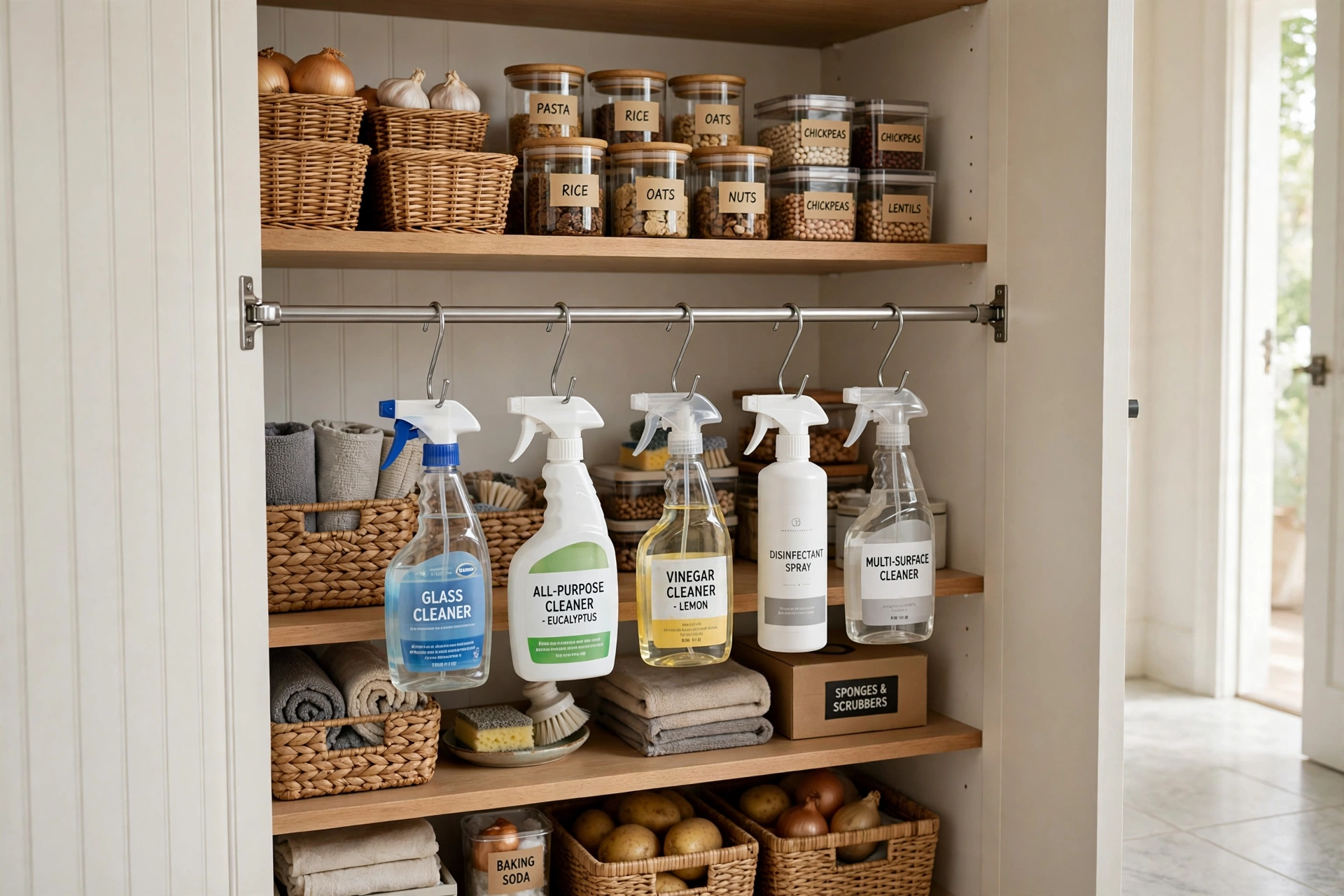
If your pantry doubles as cleaning storage, a tension rod creates a hanging rail for spray bottles in seconds. Bottles hang by their triggers above the shelf, freeing the surface below for food. No tools, no damage, completely removable.
Tip: Position the rod toward the back so bottles do not block the food in front.
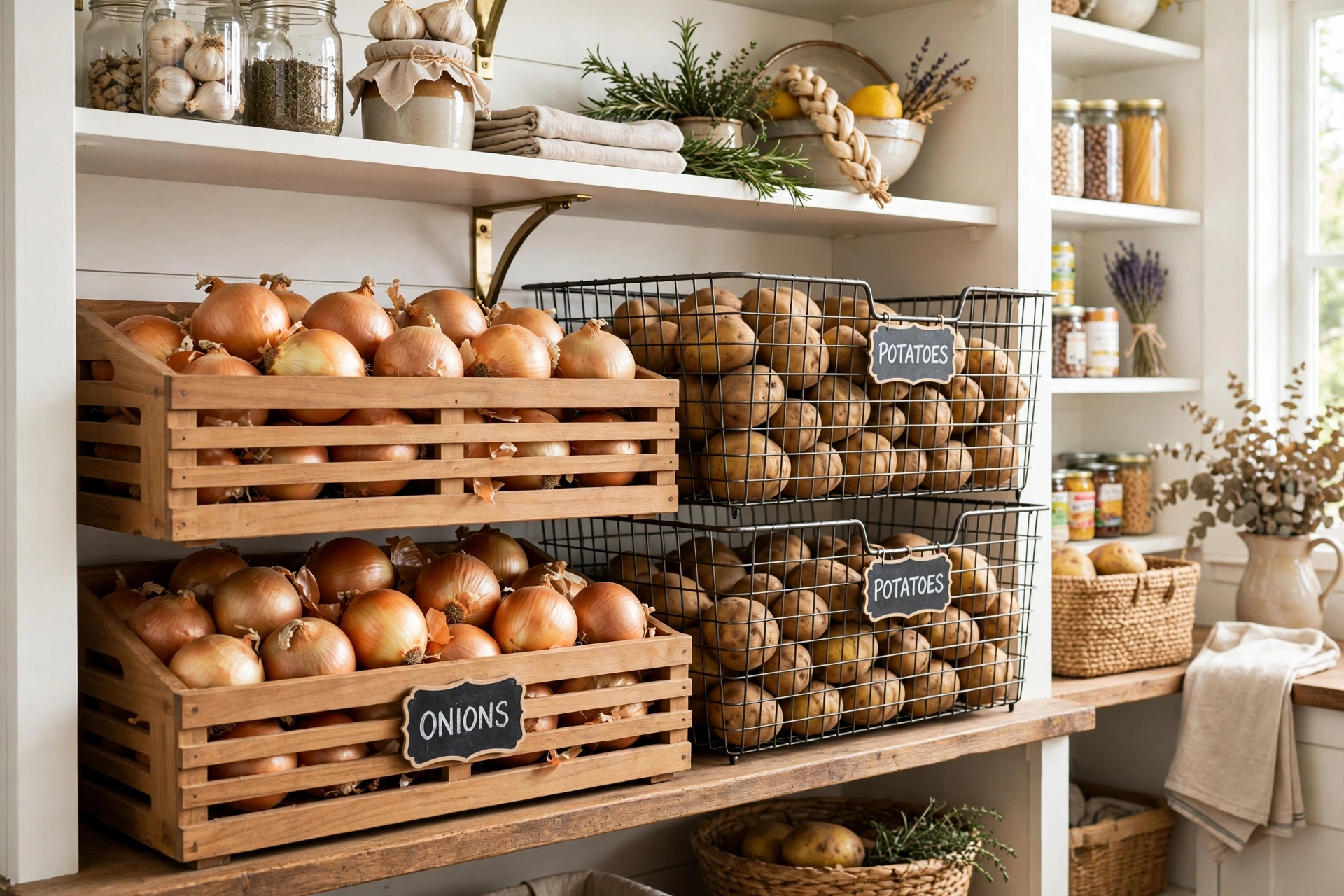
15. Store Produce in Ventilated Stacking Bins
Onions, potatoes, and garlic do not belong in the fridge, but they do clutter pantry floors. Ventilated stacking bins give them a dedicated, breathable home that keeps air circulating. Stack two or three to use vertical space on a single shelf.
Tip: Keep potatoes away from onions — they make each other spoil faster.
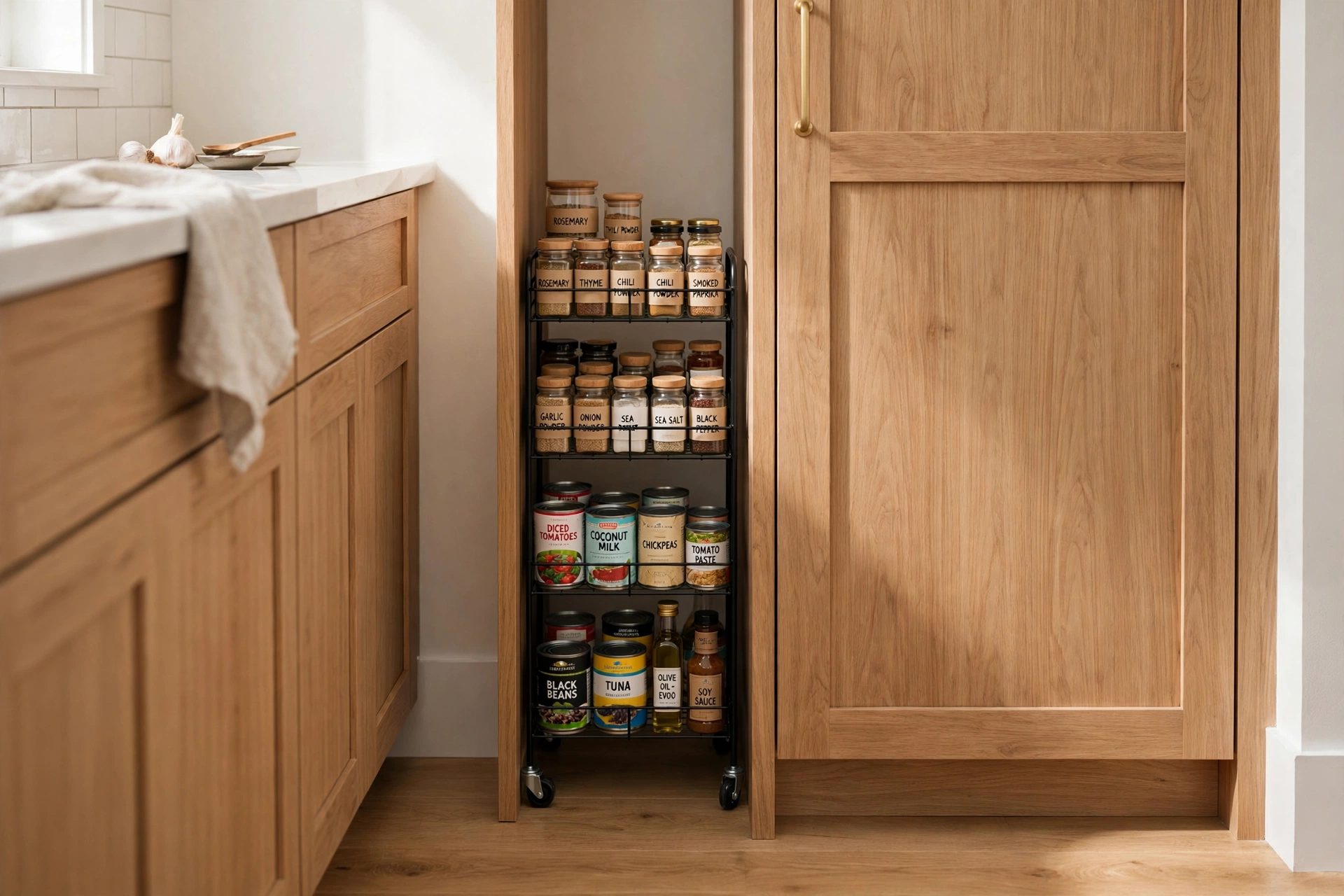
16. Use the Floor Space With a Rolling Cart
That awkward gap between the lowest shelf and the floor can hold a slim rolling cart. Load it with baking supplies, pet treats, or paper goods, and roll it out whenever you need access. It is hidden storage that moves when you do.
Tip: Measure the gap before buying — carts as slim as seven inches exist.
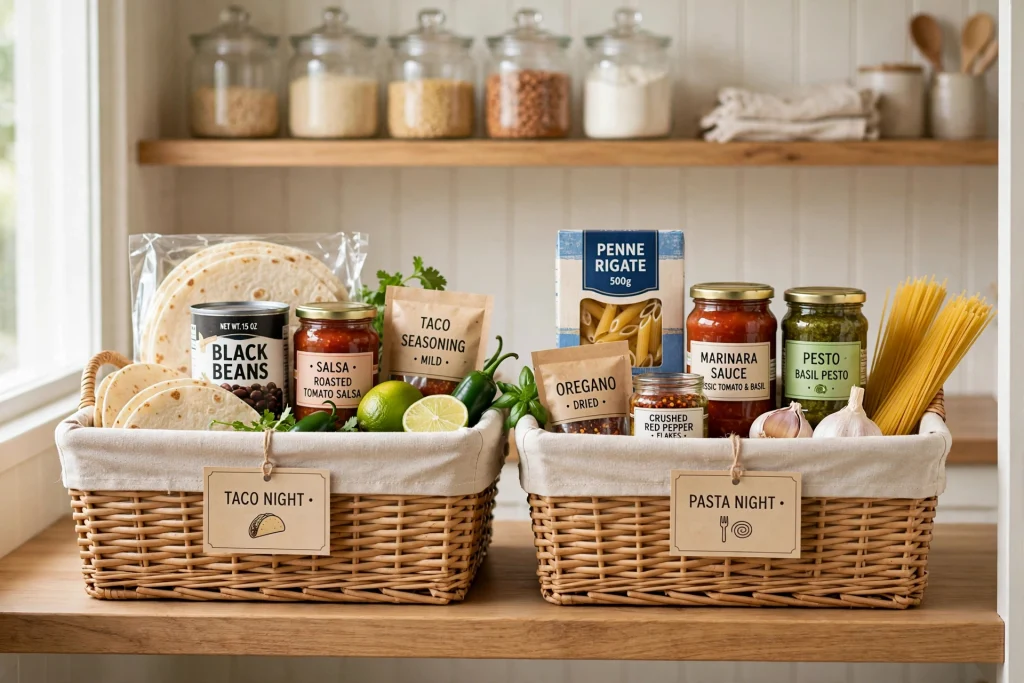
17. Group by Meal, Not Just by Type
Instead of grouping all sauces together, try grouping what you use together: taco night fixings in one bin, pasta night ingredients in another. Meal-based grouping cuts cooking prep time because everything you need is in one spot. It works especially well in small pantries where every move counts.
Tip: Limit meal bins to your three or four most-cooked dinners to avoid sprawl.
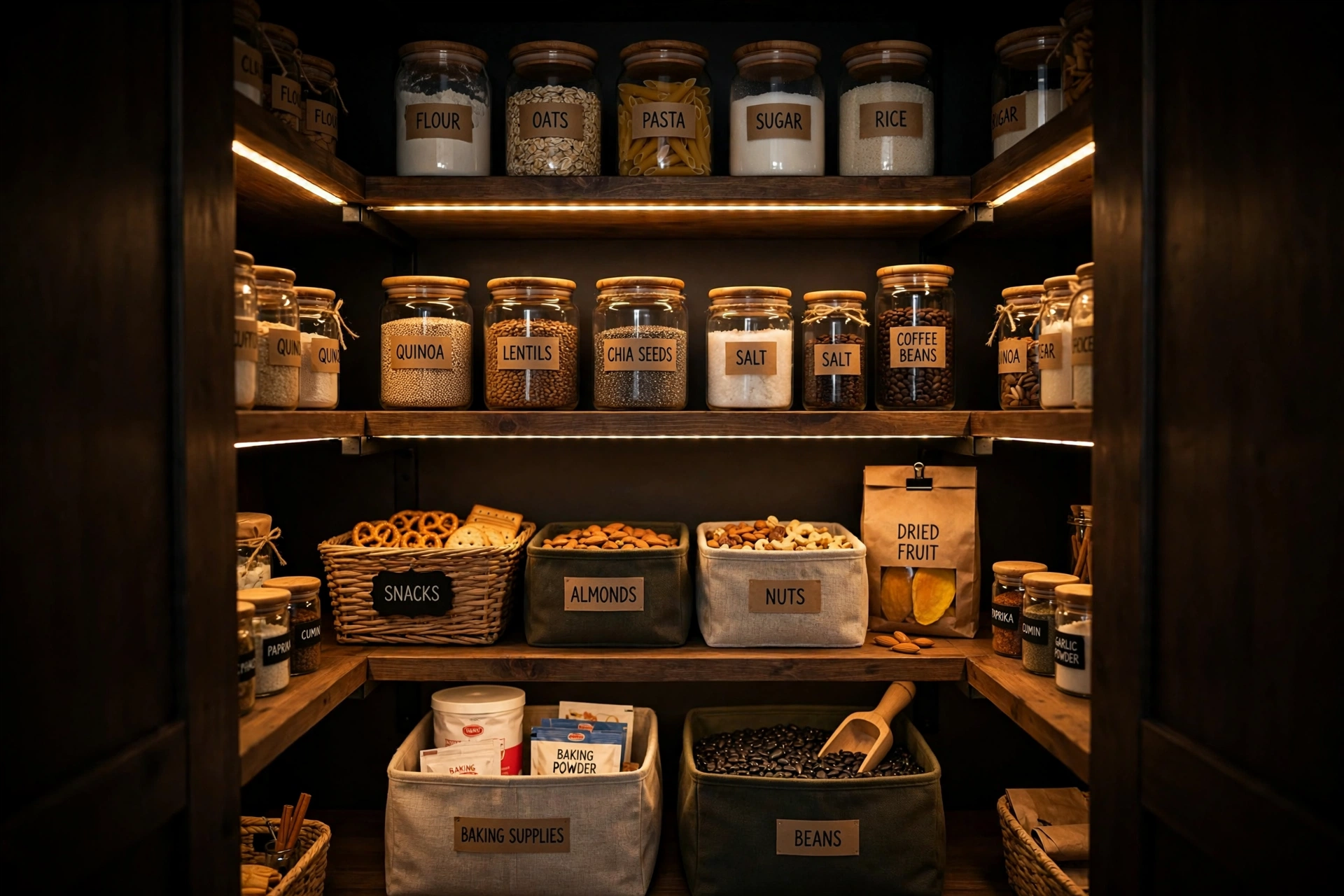
18. Add LED Strip Lights to Dark Shelves
Small pantries are often dim, and dark shelves hide whatever sits behind the front row. Battery-powered LED strips along the shelf undersides light every layer so nothing gets forgotten. Motion-sensor versions turn on the moment the door opens.
Tip: Warm white light shows food labels more accurately than cool white.
19. Mount a Spice Rack on the Wall or Door
Spices scattered across a shelf eat space and disappear behind larger items. A slim wall- or door-mounted spice rack puts every jar on display in a single vertical column. Tiered racks keep labels readable without leaning or stacking.
Tip: Alphabetize once, and maintaining the order becomes effortless.
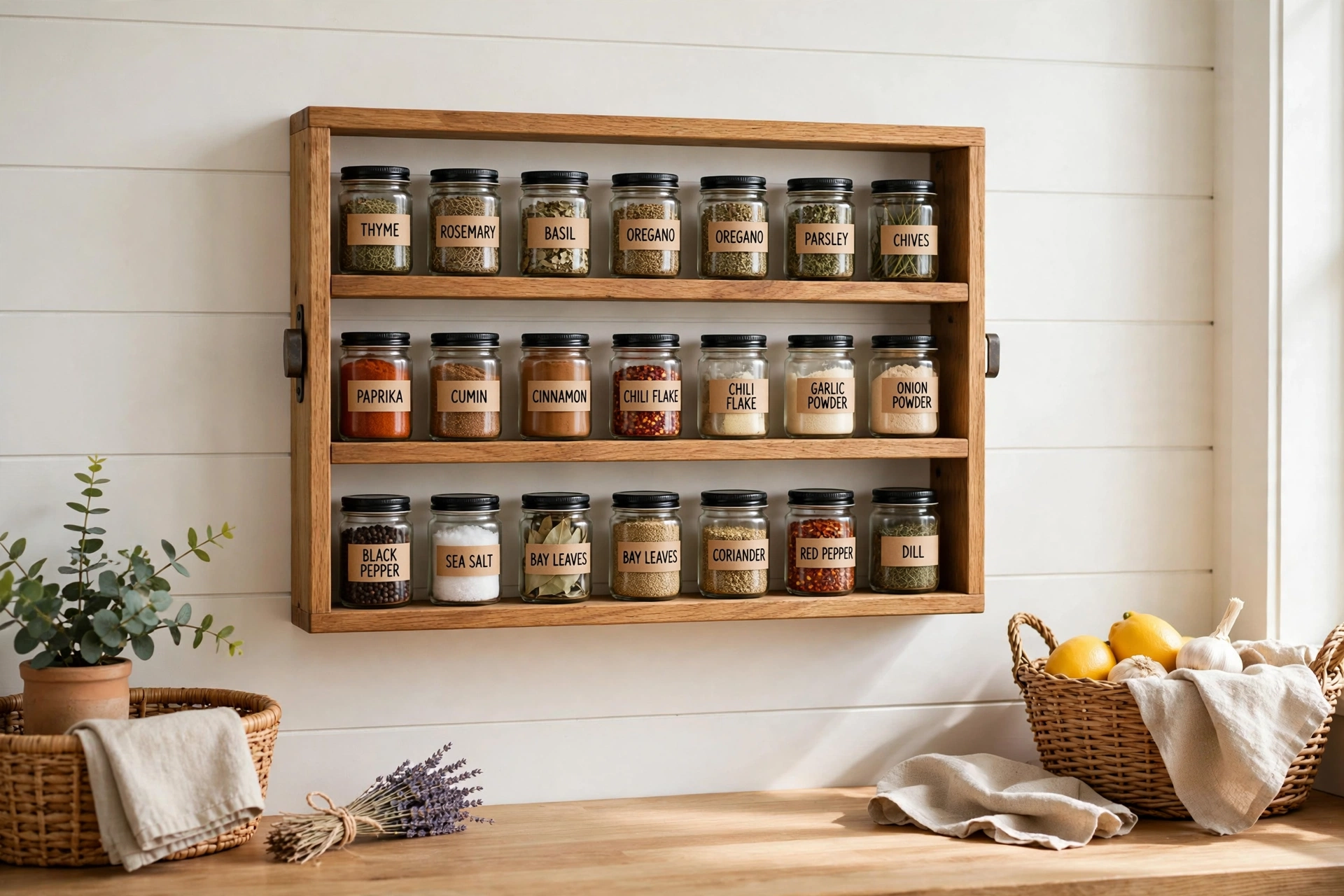
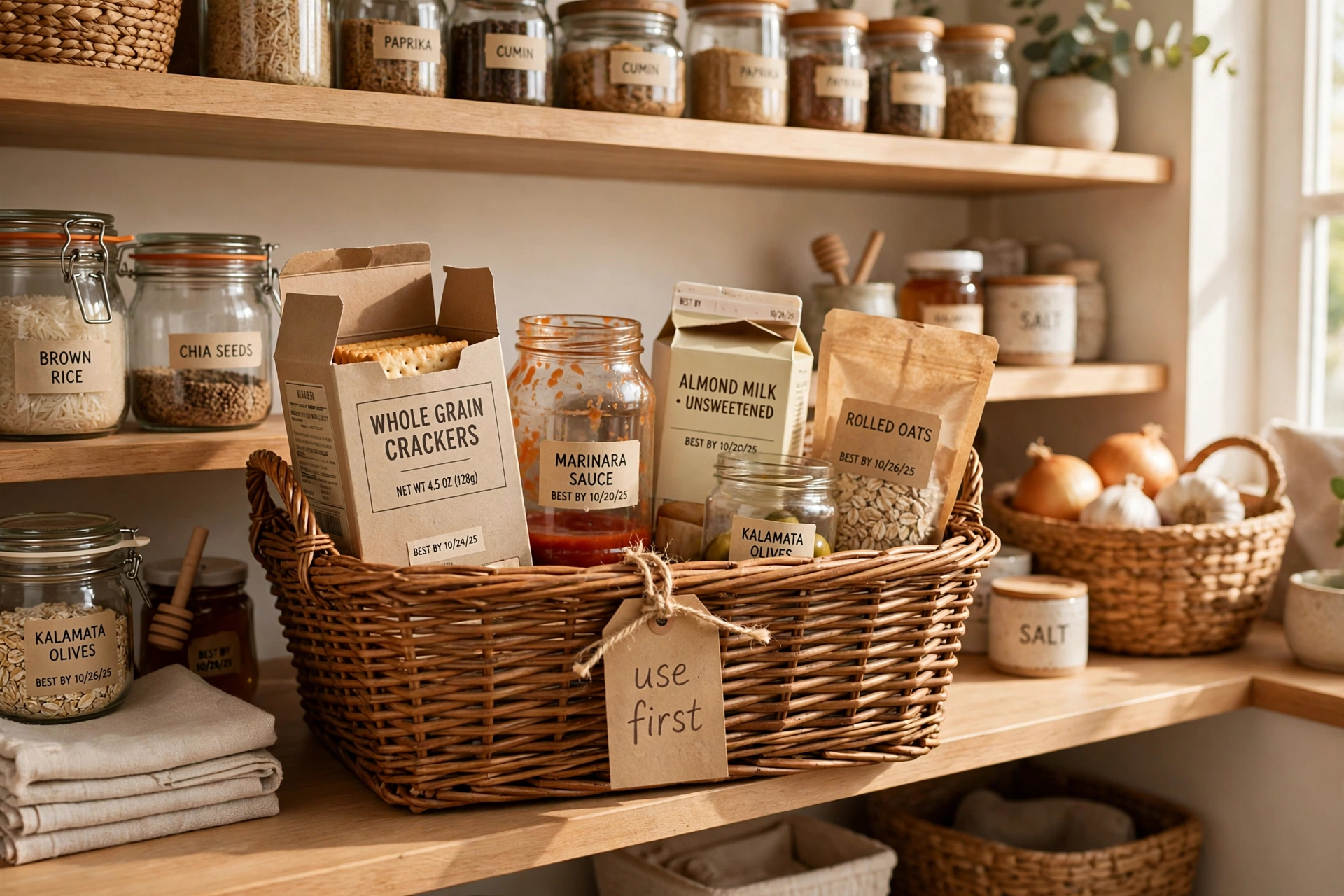
20. Keep a “Use First” Basket for Expiring Items
Food waste often starts with items hiding in the back. A small “use first” basket at the front holds anything expiring soon or opened and half-used. Check it when meal planning and you will throw away far less.
Tip: Move items into this basket the moment you open them or notice a close date.
21. Do a Seasonal Five-Minute Reset
Even the best system drifts. Set a five-minute timer once a season to toss expired items, wipe a shelf, and nudge bins back into zones. A tiny, regular reset keeps the pantry working year-round without ever needing another full overhaul.
Tip: Pair the reset with a grocery run so restocking follows immediately.
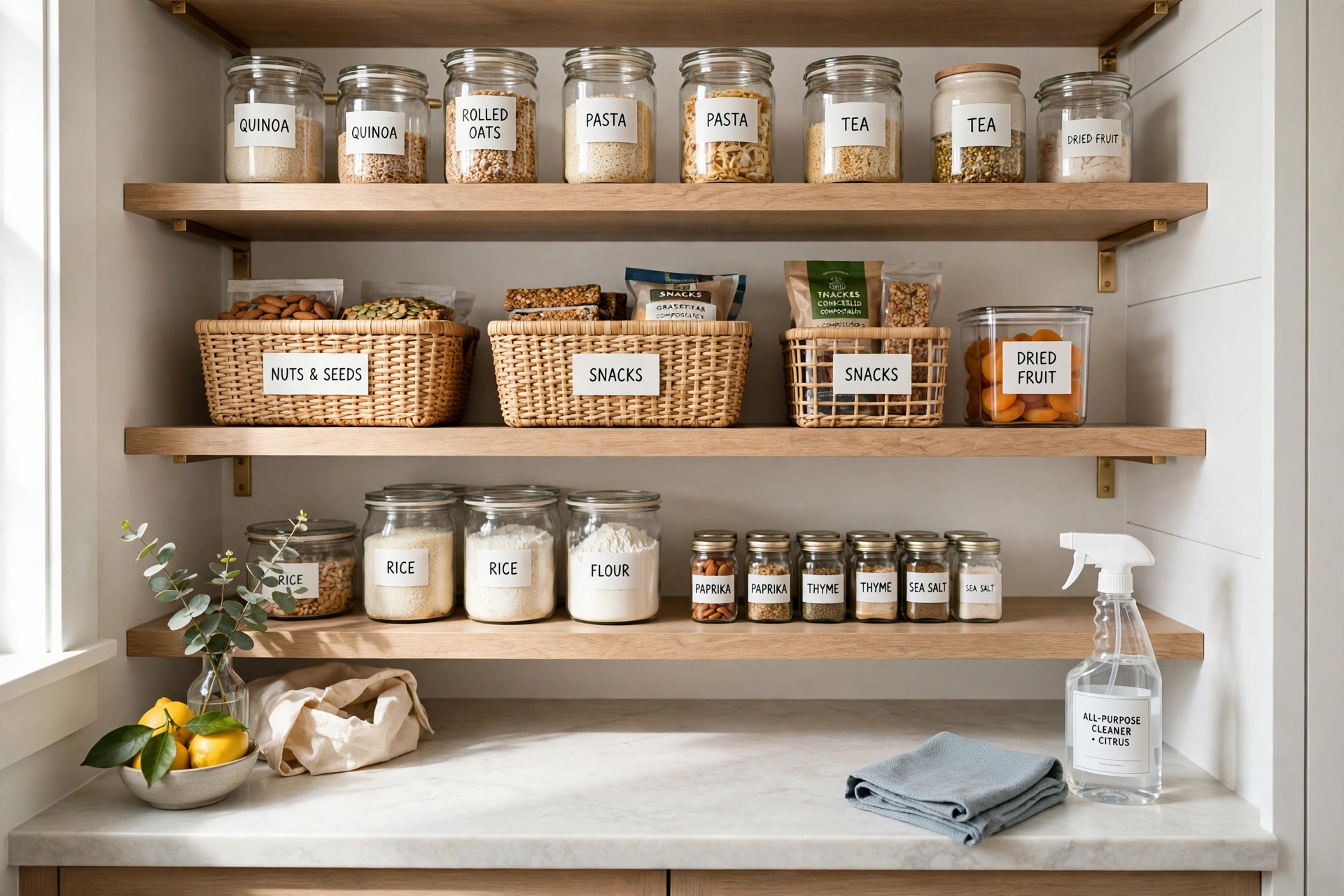
Small Pantry Organization Tips That Keep It Working
- Shop your pantry first: check what you have before every grocery trip to stop duplicates from piling up.
- Keep a running restock list on the door so empty items get replaced before the shelf goes bare.
- Give every category a home — items without a zone are what restart the clutter cycle.
- Use the “one in, one out” rule for bulky duplicates so the pantry never overflows again.
- Keep daily-use items between knee and eye level; banish rarely used items to the top and bottom shelves.
Frequently Asked Questions
How do I organize a very small pantry with deep shelves?
Deep shelves are the hardest to keep functional. Use long, narrow baskets that pull out like drawers so the back of the shelf comes to you, and add tiered risers or lazy Susans for anything that would otherwise hide. The key is making every item retrievable without moving five others.
What containers work best for a small pantry?
Square or rectangular airtight containers make the most of limited shelf space because they stack cleanly with no wasted gaps. Pair them with clear bins for grouped items so you can see contents at a glance. Measure your shelves first so everything you buy actually fits.
How can I keep my small pantry organized long term?
Systems survive when they are simple: clear zones, consistent labels, and a backstock bin for extras. Do a quick five-minute reset each season to toss expired items and realign bins. The less decision-making the system needs, the longer it lasts.
Where do I put bulk buys in a small pantry?
Keep one backstock bin for bulk extras on the highest or lowest shelf, and only refill your working zones from it as things run out. This keeps overstock visible and contained instead of spreading across every shelf.
Wrap Up
A small pantry does not need to stay a source of daily frustration. With zones, clear containers, and a few smart add-ons like lazy Susans and under-shelf baskets, you can fit more, find things faster, and keep it all tidy with almost no effort. Pick three or four ideas from this list to start, and watch your pantry transform from chaotic to calm.