20 Under Kitchen Sink Organization Ideas Worth Copying

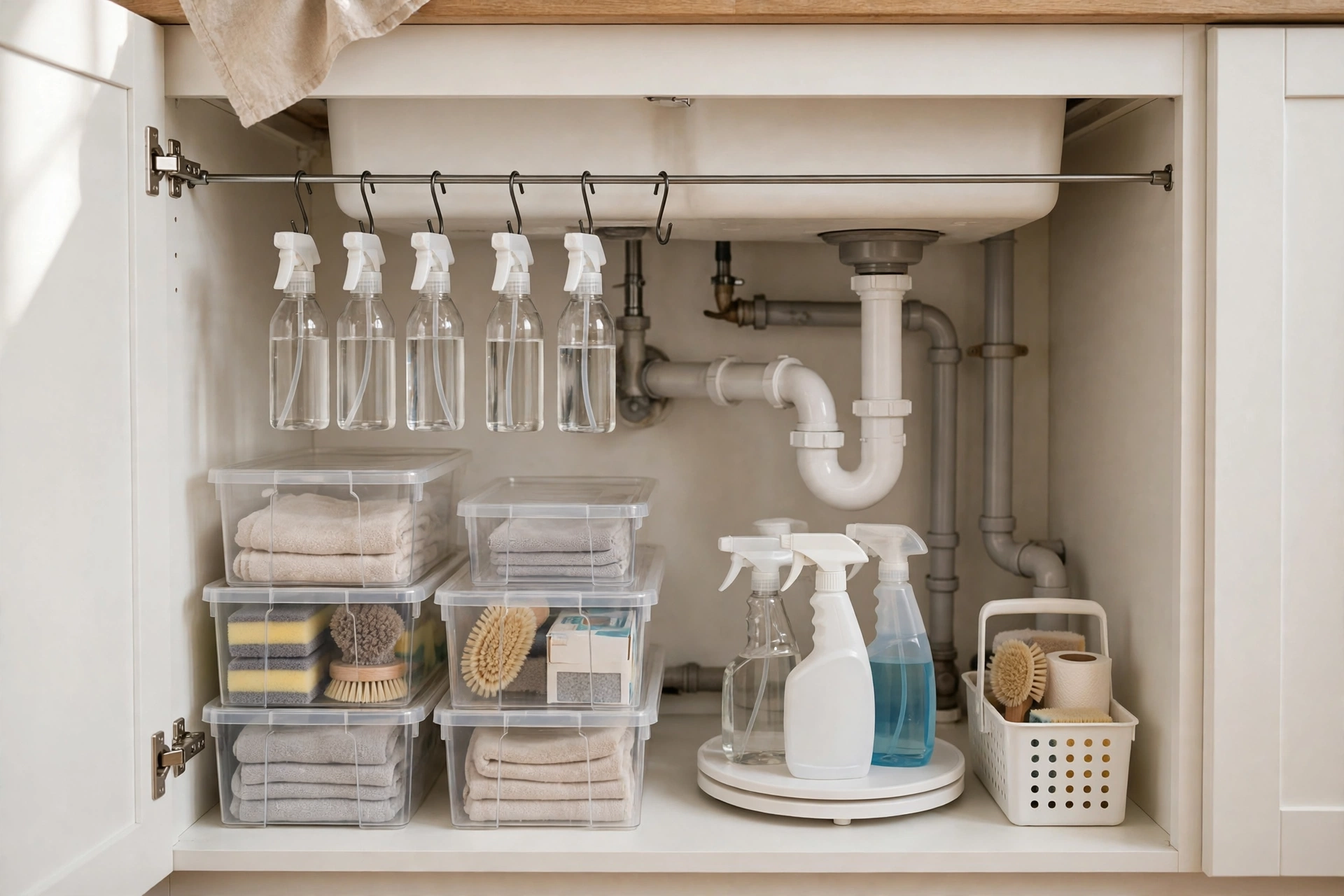
The cabinet under the kitchen sink is one of the most used and most neglected spots in the entire house. It holds the dish soap, the sponge, the garbage bags, and half a dozen half-empty spray bottles — yet because of the pipes and the garbage disposal, it almost always ends up as a dark, damp pile of clutter. These under kitchen sink organization ideas turn that awkward space into a tidy, easy-to-reach zone where every bottle and brush actually has a home.
Most of these under kitchen sink organization ideas cost very little and take under an hour to put in place. From stackable bins and over-door caddies to simple lazy susans and tension rods, each idea below works around the plumbing instead of fighting it. Pick three or four that fit your cabinet’s layout, and the difference will be instant.
1. Start With a Waterproof Cabinet Liner
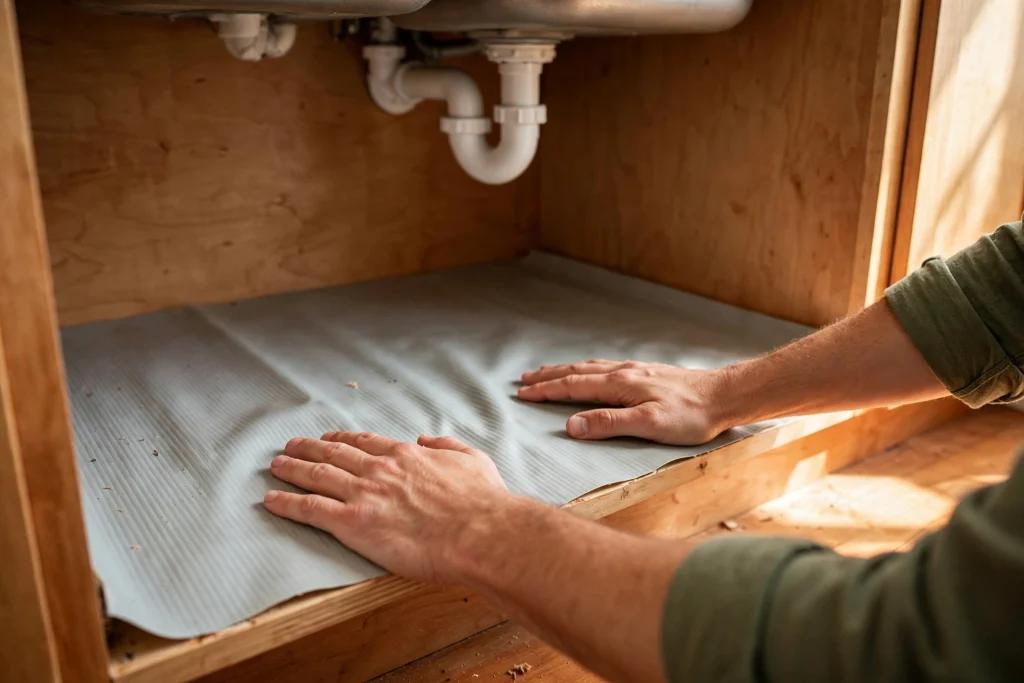
Before organizing anything, lay down a waterproof liner on the cabinet floor. Under-sink cabinets see more drips and leaks than anywhere else in the kitchen, and a wipeable liner protects the wood or laminate from warping. Look for a cushioned liner with a raised lip so small spills stay contained.
Tip: Choose a liner that can be pulled out and rinsed in the sink — it makes yearly clean-outs far less painful.
2. Use Stackable Bins to Build Upward
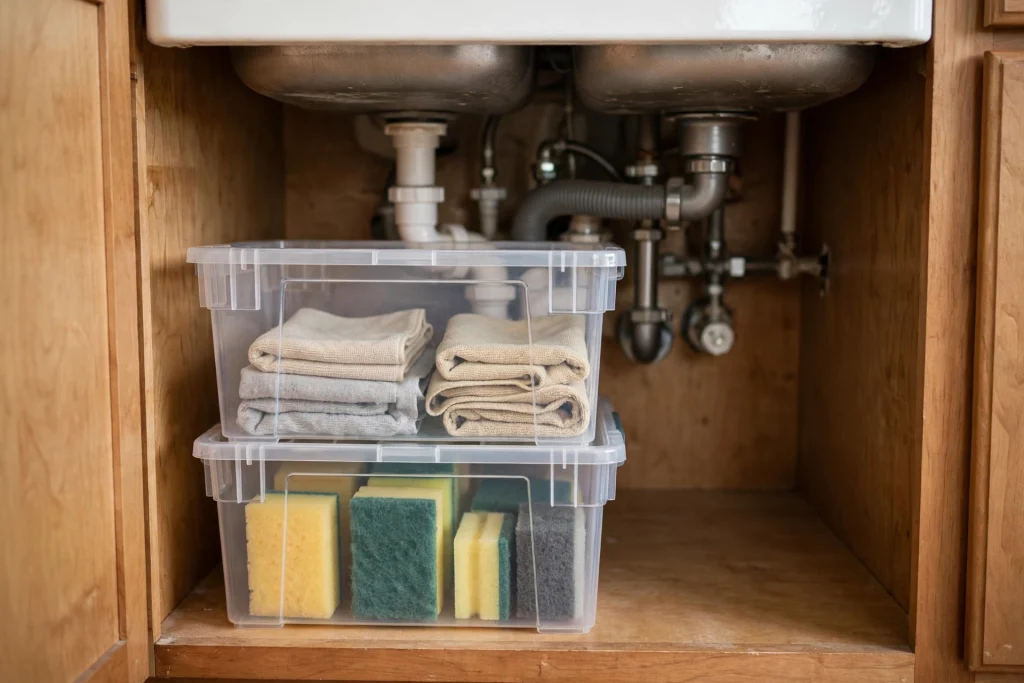
The biggest waste of space under the sink is the empty air above the bottles. Stackable clear bins let you build a second level for extra sponges, bags, and refills. Keep the everyday cleaners on the bottom tier and the backups up top.
Tip: Measure the clearance above your tallest spray bottle before buying bins — tall bottles are the usual surprise.
3. Add a Turntable for Sprays and Bottles
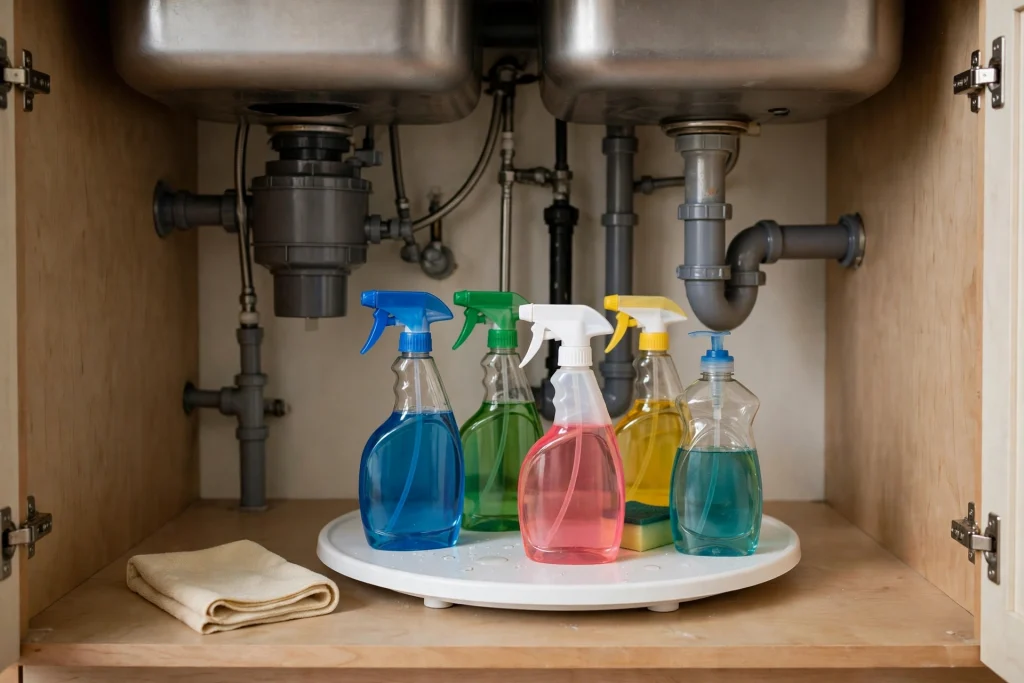
A lazy susan turntable is one of the fastest under kitchen sink organization ideas you can try. Spinning a tray beats crouching and reaching into the dark corner every time. One turntable handles all your everyday sprays; a second one can hold dish soap, scrubs, and vinegar.
Tip: Pick a turntable with a raised rim so bottles can’t slide off while you spin it.
4. Mount an Over-Door Caddy on the Cabinet Door
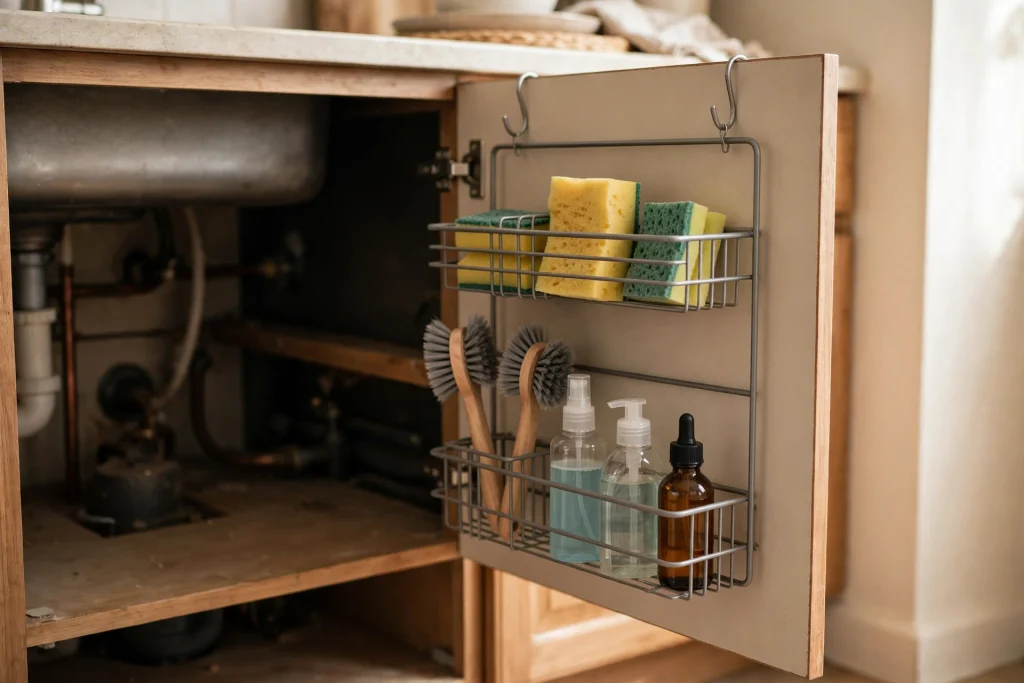
The inside of the cabinet door is free real estate. An over-door caddy or basket turns it into storage for sponges, brushes, gloves, and small bottles. It keeps the floor of the cabinet clear and puts daily tools right at your fingertips.
Tip: Make sure the caddy sits high enough that it doesn’t knock into the bins when you close the door.
5. Install a Tension Rod for Spray Bottles
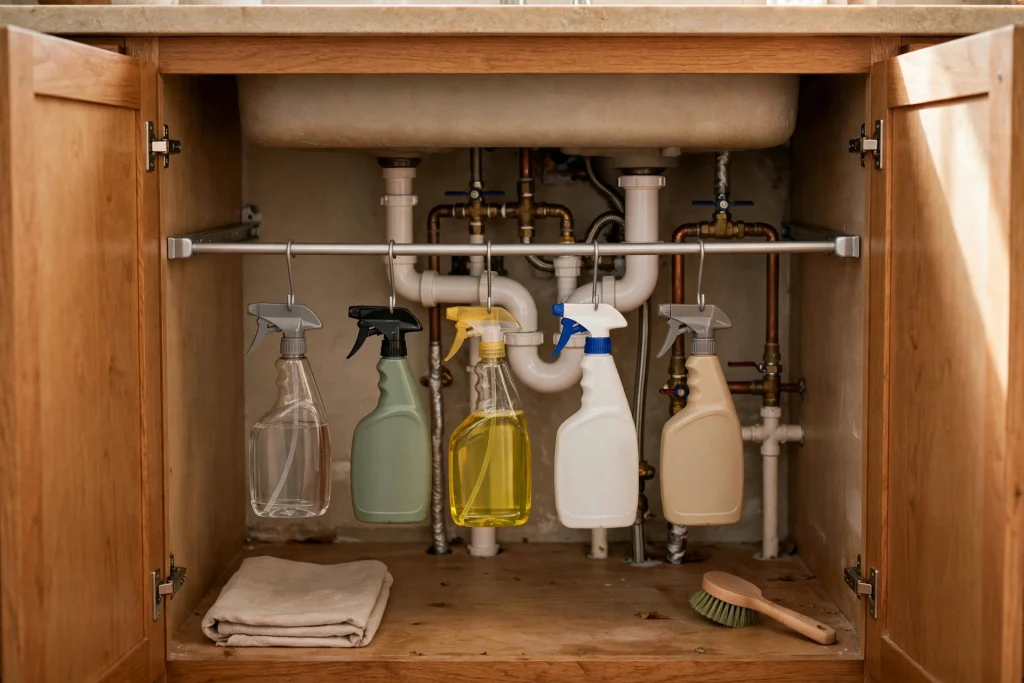
A simple spring tension rod fitted across the cabinet turns spray bottles into hanging storage — just hook the triggers over the rod. This is one of the cleverest under kitchen sink organization ideas because it uses vertical space the pipes leave unused. No screws, no drilling, totally renter-friendly.
Tip: Hang the heaviest spray bottle on the end closest to the cabinet wall for the most stable setup.
6. Corral Cleaning Supplies in a Pull-Out Caddy
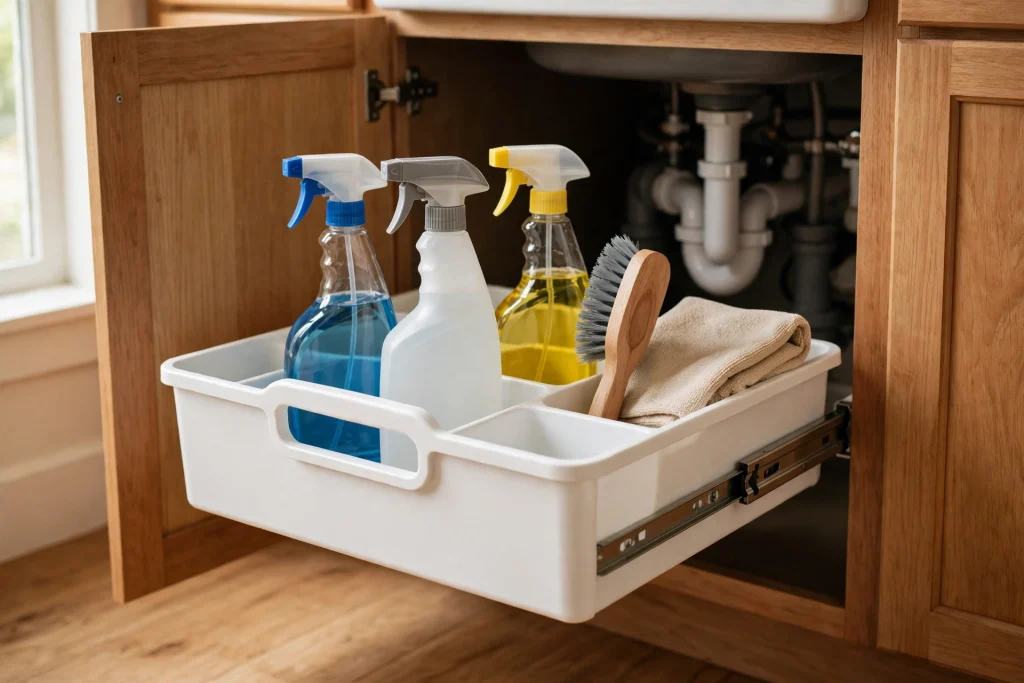
A single handled caddy that holds all your under-sink cleaners means you can grab everything and carry it to the bathroom in one trip. Group spray bottles, scrub brushes, and a cloth into one carrier instead of scattering them. When you’re done, the whole caddy slides back under the sink.
Tip: Keep only the cleaners you actually use weekly in the caddy — store the rest elsewhere to avoid overcrowding.
7. Add a Two-Tier Sliding Organizer
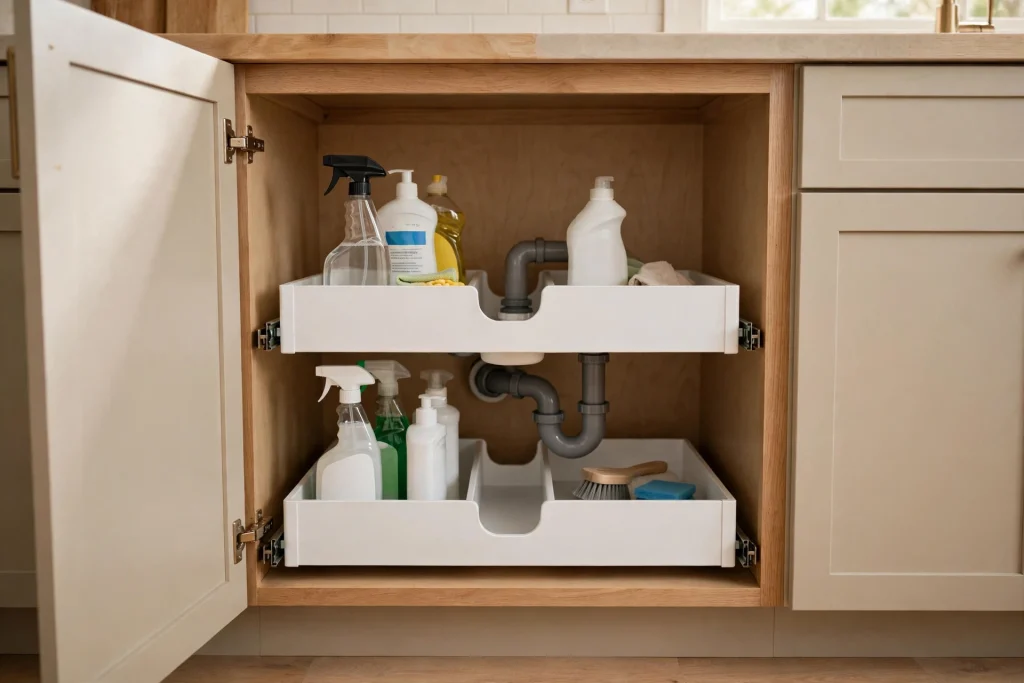
Two-tier sliding under-sink organizers are made specifically for the pipe problem, with U-shaped cutouts that fit around plumbing. The top shelf holds smaller items while the bottom handles tall bottles, and sliding trays pull out for easy access. It’s the closest thing to custom pull-out drawers.
Tip: Assemble the organizer inside the cabinet — it’s often too wide to fit through the open door once built.
8. Sort Trash Bags and Liners by Size
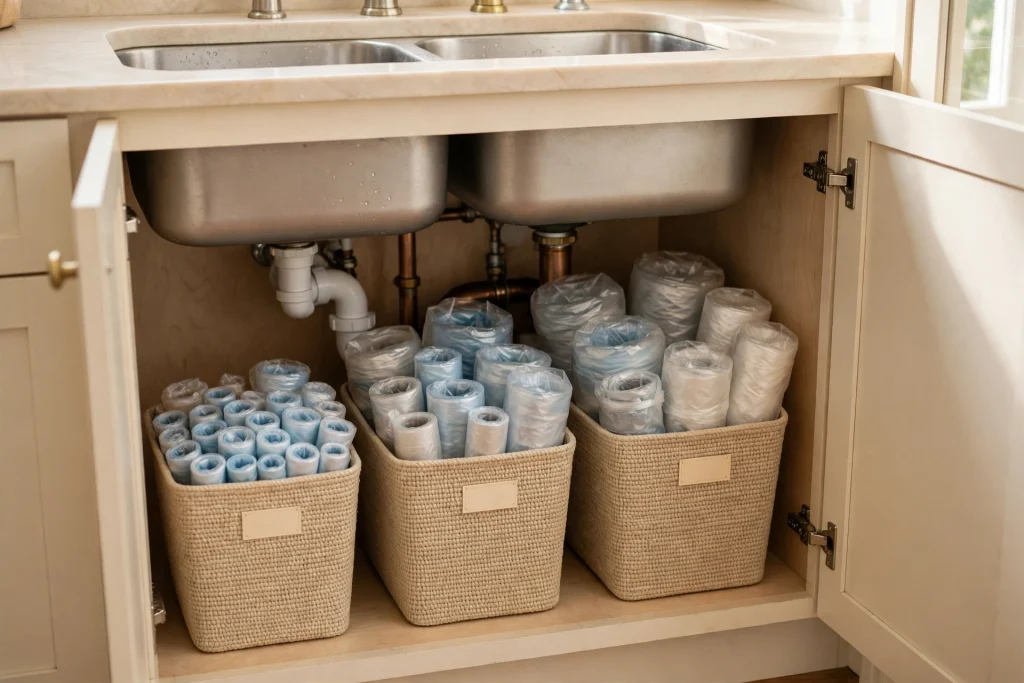
Garbage bags, recycling bags, and compost liners pile up fast under the sink. Sort them by size into separate small bins or bag dispensers instead of tossing them in loose. Label each bin so you can grab the right size without digging through a tangled mess.
Tip: A wall-mounted bag dispenser on the inside of the door keeps rolls tidy and within reach.
9. Use a Small Bin for the Plumbing Toolkit
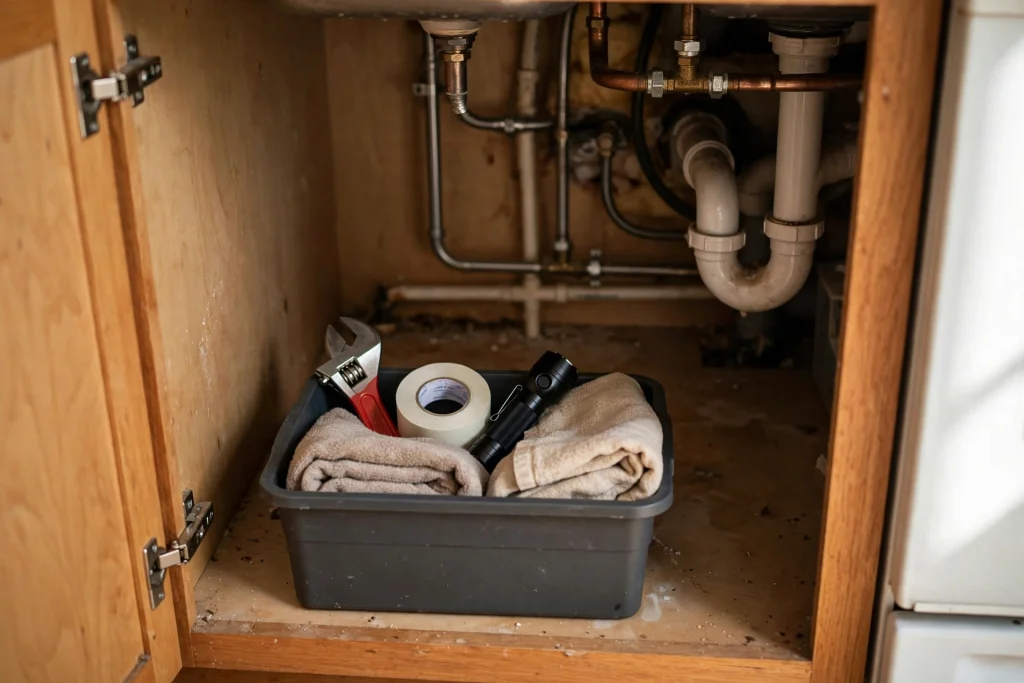
Plunger parts, a small wrench, pipe tape, and a flashlight deserve their own little bin — not a scattered corner. When a leak or clog happens, you want those tools in one grabbable spot. This small move turns an emergency from a panic into a quick fix.
Tip: Tuck a few old towels into the toolkit bin so you always have something dry to reach for.
10. Store Dishwasher Pods in an Airtight Container
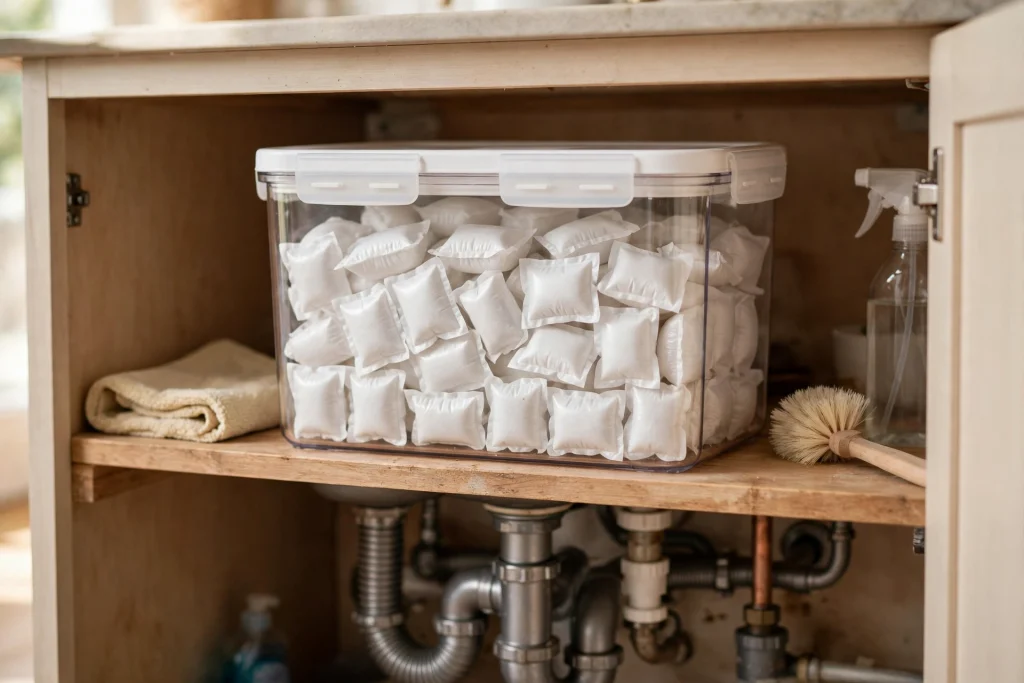
Dishwasher pods left in their flimsy packaging under a humid sink absorb moisture and stick together. Transfer them to an airtight container with a snap lid and the problem disappears. Keep the container on a raised shelf, not the cabinet floor, to avoid any leak splashes.
Tip: Add a small desiccant packet inside the container for extra protection against dampness.
11. Hang a Small Basket for Sponges and Brushes
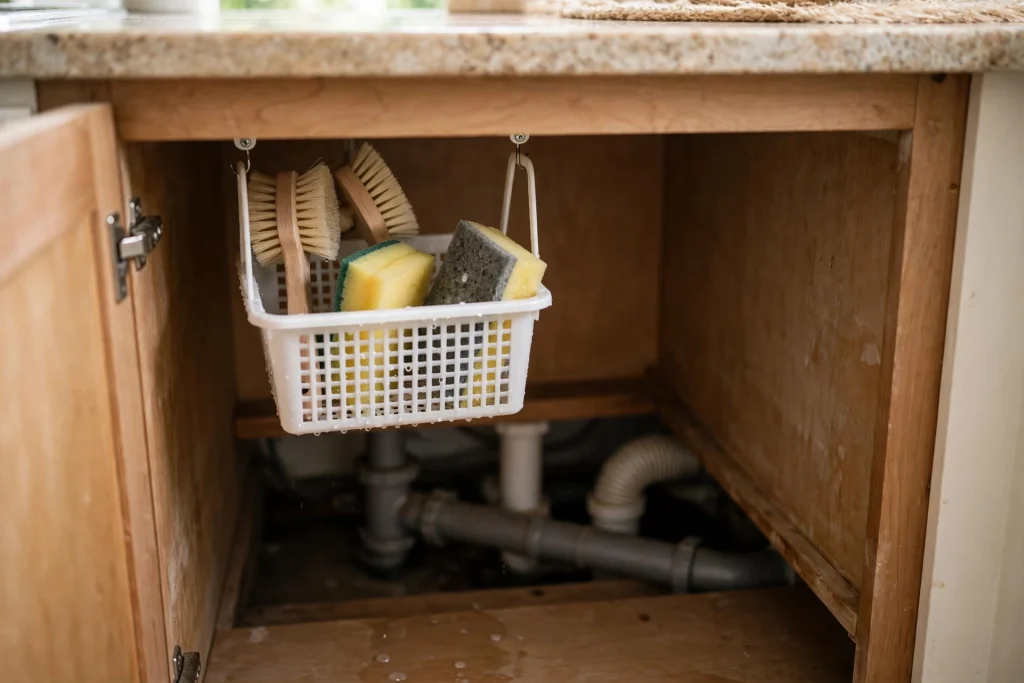
Wet sponges and brushes left on the cabinet floor stay soggy and gross. A small ventilated basket hung on the door or a tension rod lets them air-dry between uses. Choose one with drainage holes so water doesn’t pool underneath.
Tip: Give the basket a quick weekly rinse to stop soap scum and mildew from building up.
12. Label Everything So It Stays Organized
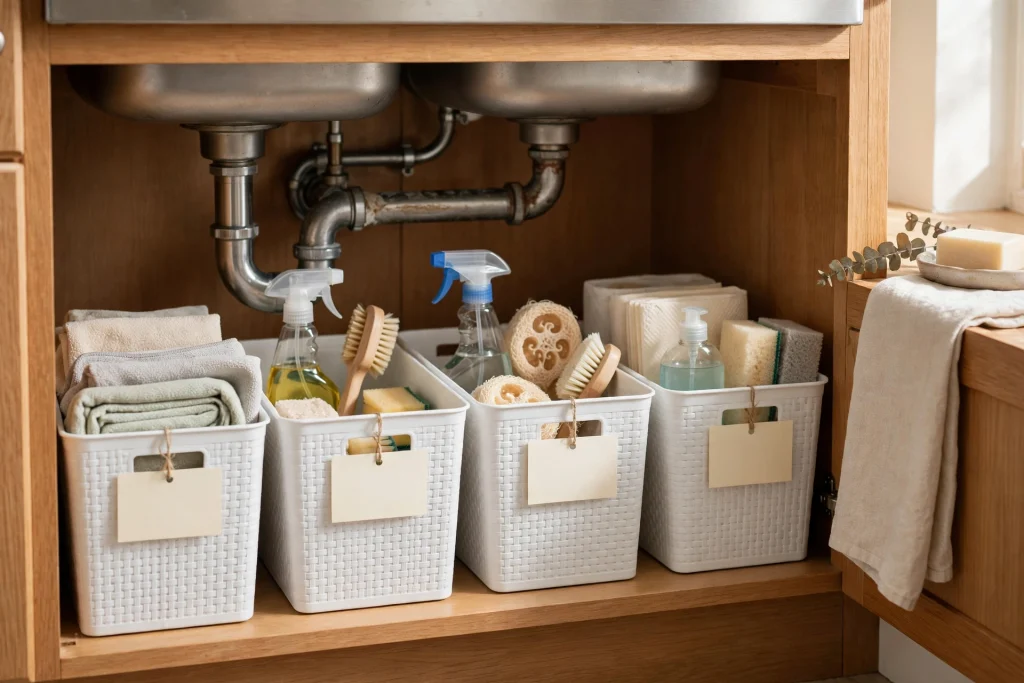
Labels are the difference between an organized cabinet and one that falls apart in a month. A label maker or a set of waterproof labels on each bin tells everyone in the house exactly where things belong. It makes putting items back automatic, not optional.
Tip: Label the front of each bin, not the top, so you can read them without pulling bins out.
13. Keep a Dedicated Bin for Refills and Backups
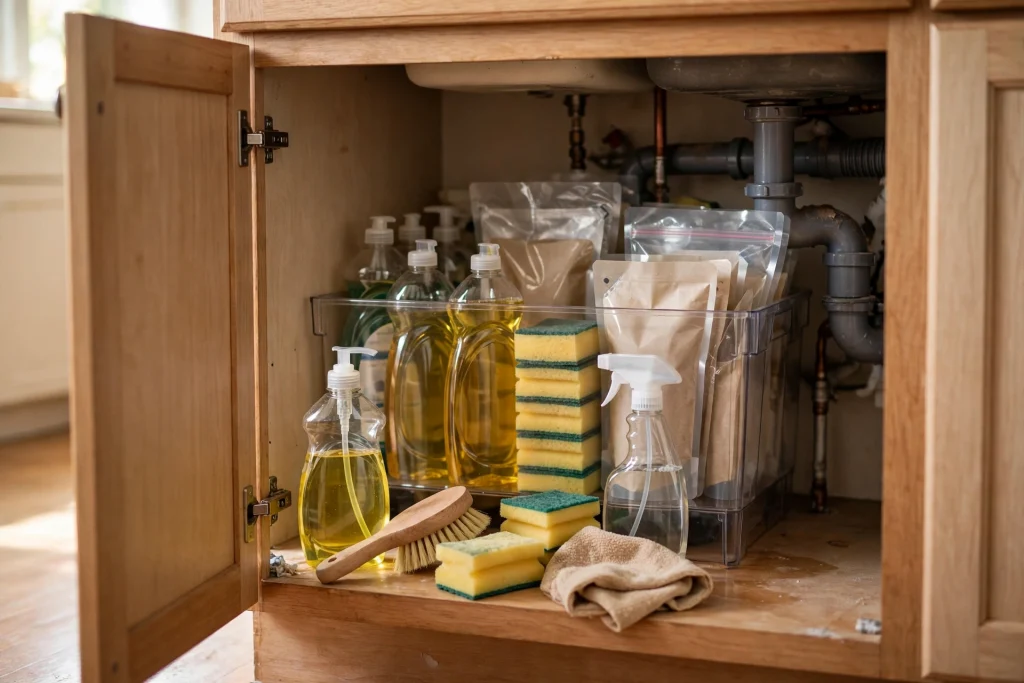
Buying in bulk is great, but backup bottles don’t belong mixed in with the daily lineup. Dedicate one bin to refills — backup dish soap, extra sponges, replacement bags — and keep it at the very back. When the front-row bottle empties, you know exactly where the next one is.
Tip: When the backup bin has one item left, add its replacement to your shopping list that day.
14. Add a Battery Motion-Sensor Light
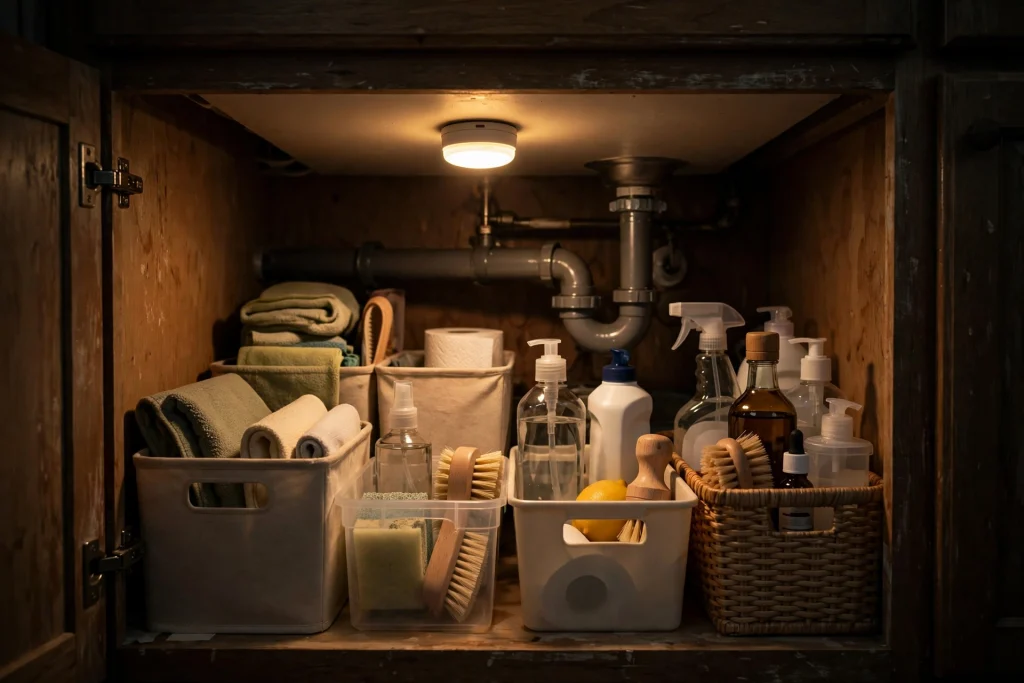
You can’t organize what you can’t see. A small battery-powered motion-sensor puck light stuck to the top of the cabinet turns the dark under-sink void into a space you can actually navigate. It’s a five-minute upgrade that makes every other idea on this list work better.
Tip: Place the light toward the front of the cabinet so it illuminates the back corners when you open the door.
15. Use a Shelf Riser for Short Bottles
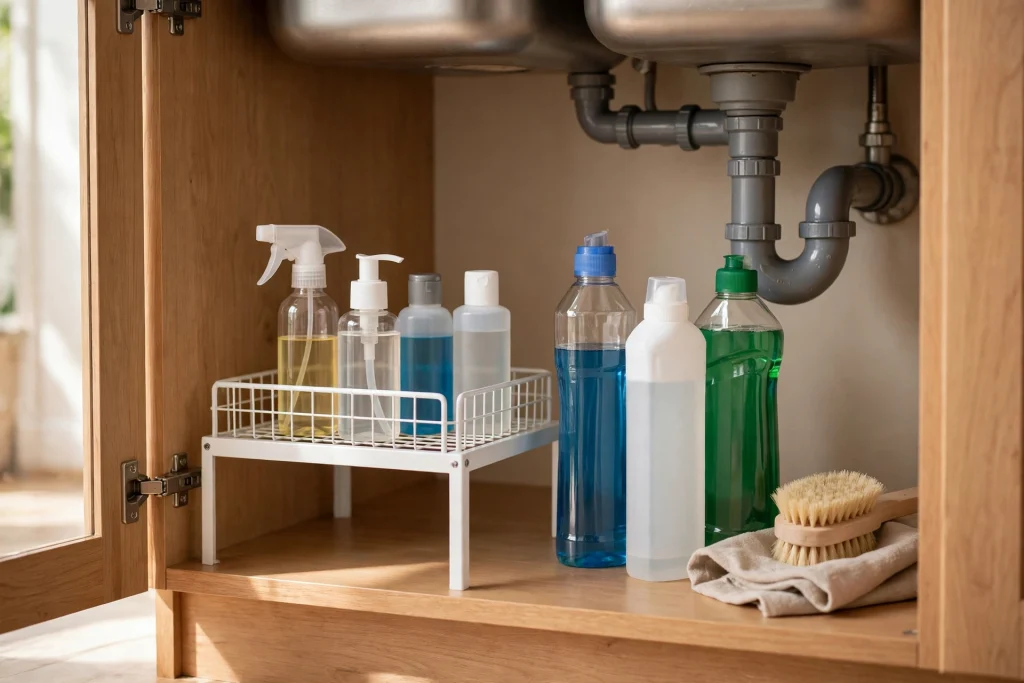
Short bottles and small containers disappear behind taller ones. A small shelf riser lifts them to a visible second level so nothing hides. It also doubles the usable surface on one side of the cabinet — instant storage without changing the plumbing.
Tip: Keep the riser low enough that the bottles on top still clear the cabinet’s front lip.
16. Dedicate a Zone for Dish Drying Extras
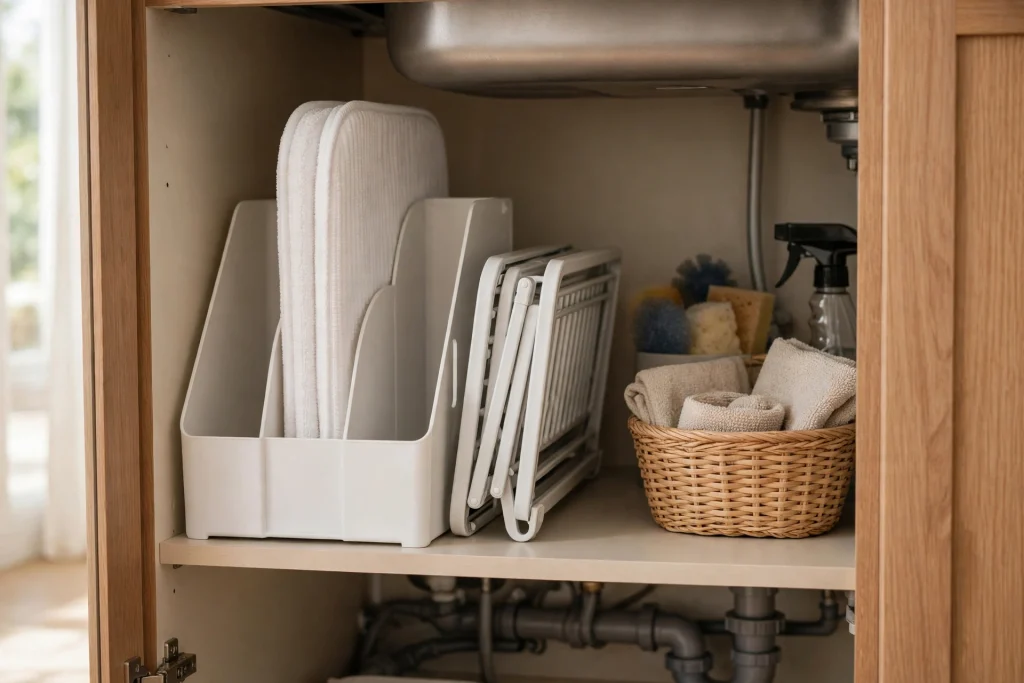
Dish racks, drying mats, and drain boards often migrate under the sink between uses. Give them a dedicated zone — a vertical slot or one side of the cabinet — so they don’t sprawl across everything. Storing them upright saves a surprising amount of floor space.
Tip: A file sorter turned on its side makes an excellent vertical slot for drying mats and trays.
17. Protect Against Leaks With a Drip Tray
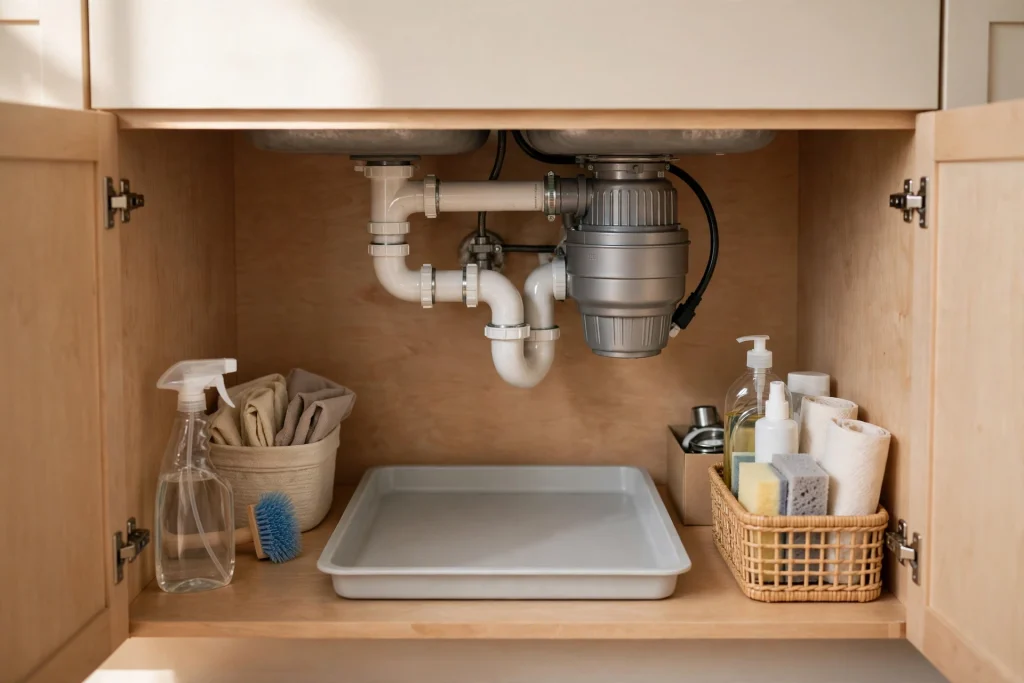
Even with a liner, a small drip tray under the drain and garbage disposal gives you an early warning system. If a tray starts collecting water, you’ll spot it on the next reach-in instead of discovering a swollen cabinet floor months later. It’s cheap insurance for your whole setup.
Tip: Check the tray once a month when you take out the garbage — thirty seconds that can save a cabinet.
18. Store Compost and Food Scrap Supplies Separately
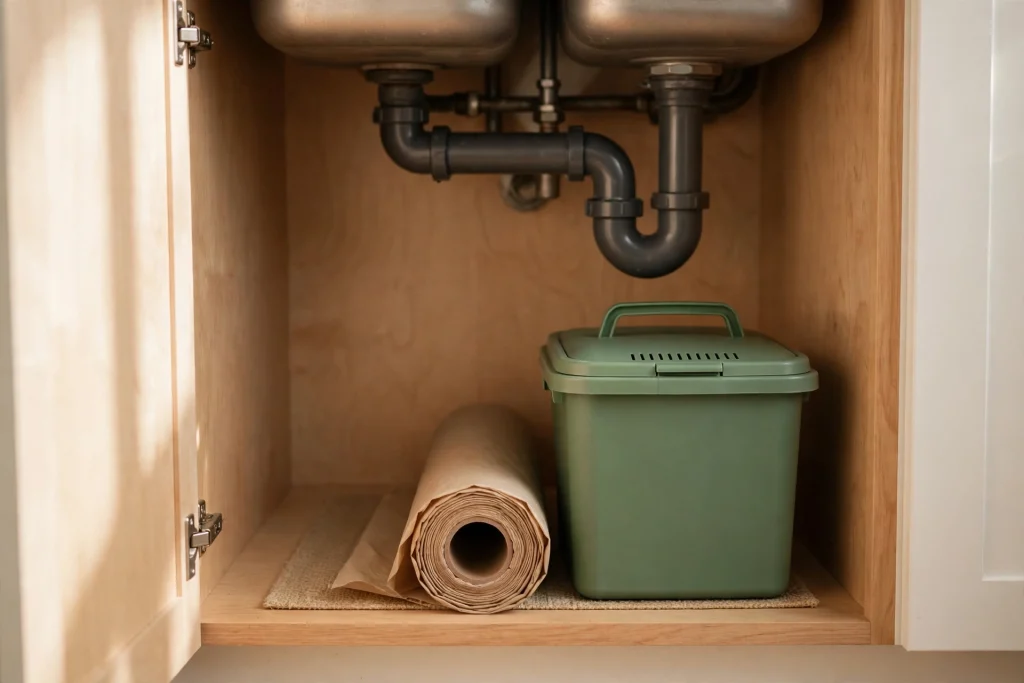
If you compost, the bags, filters, and countertop caddy deserve their own small zone under the sink — not scattered among the bleach and sprays. A compact bin keeps compost supplies together and easy to grab. Keep the food scraps sealed so they don’t attract pests.
Tip: Store replacement compost filters right next to the caddy so you never forget a swap.
19. Keep Pet Supplies in One Pull-Out Drawer
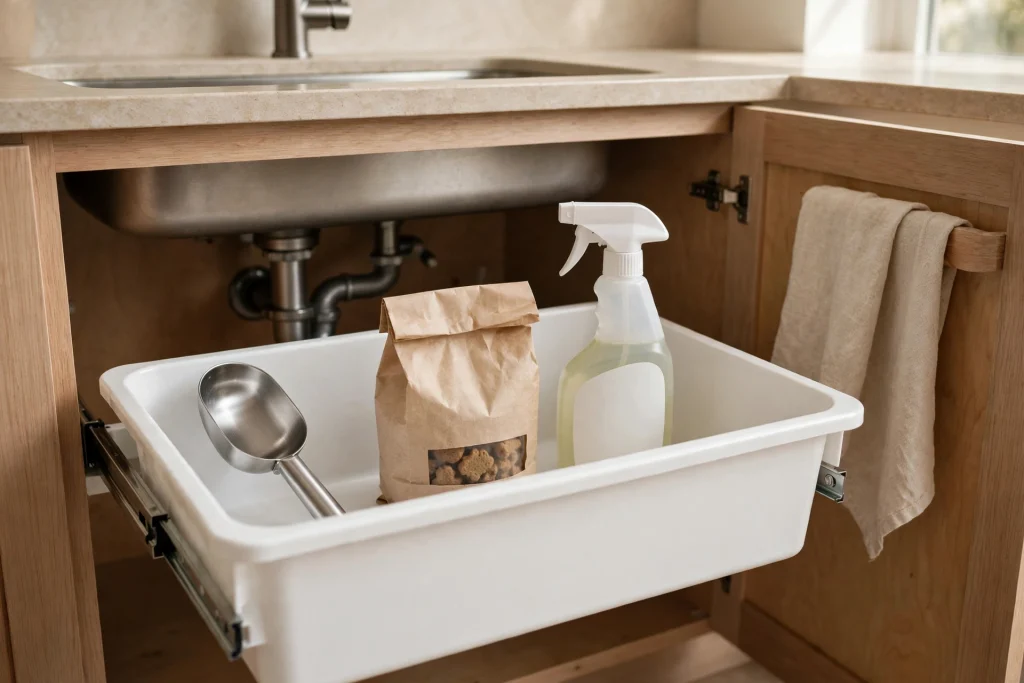
Pet food scoops, bowls, treats, and stain remover often end up scattered across the kitchen. One pull-out drawer or bin under the sink gathers them into a single pet zone. It’s especially handy if the pet’s feeding spot is near the kitchen.
Tip: Use a bin with a lid if your pet is the curious type — nobody wants spilled treats under the sink.
20. Do a Quarterly Purge to Keep It Tidy
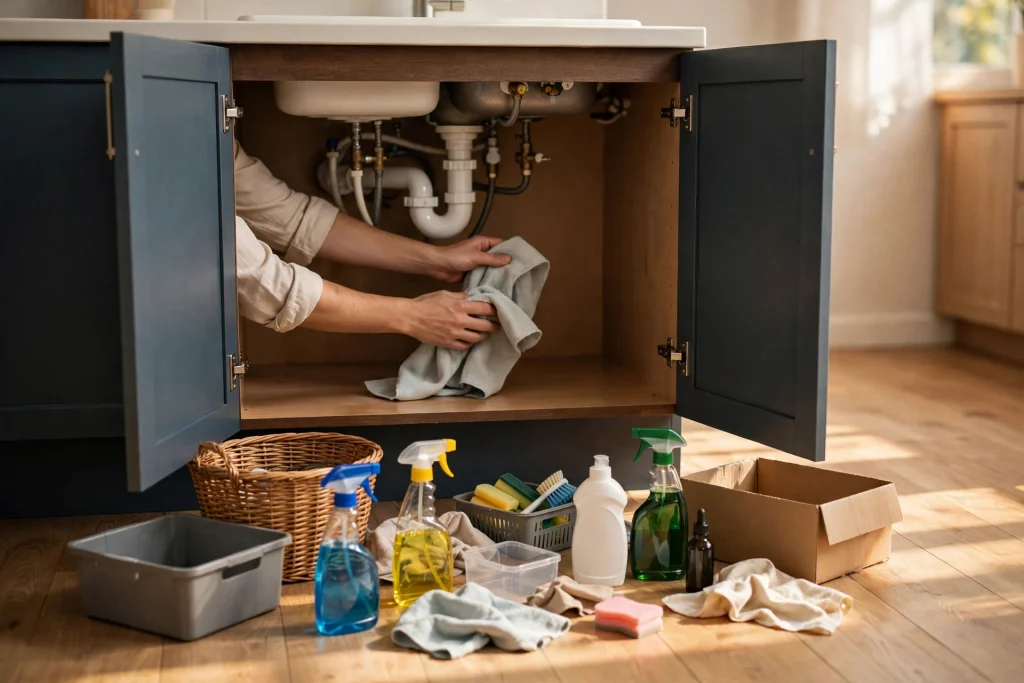
The best of these under kitchen sink organization ideas only work if the cabinet doesn’t slowly refill with junk. Every three months, pull everything out, toss the empty bottles and dried-up sponges, and wipe the liner. You’ll be done in fifteen minutes and the system stays intact.
Tip: Set a phone reminder for the first day of each new season so the purge actually happens.
Under Kitchen Sink Organization Tips
- Measure around the pipes and garbage disposal before buying any organizer — plumbing placement varies wildly between cabinets.
- Always start with a waterproof liner or drip tray; leak protection comes before pretty bins.
- Group items by task (dish care, surface cleaning, trash supplies) instead of by size so grabbing what you need is one motion.
- Keep daily-use items at the front and refills, backups, and rarely used tools at the back or up high.
- Add a small light or motion sensor if your cabinet is dark — visibility is half of staying organized.
Frequently Asked Questions
What is the best way to organize under the kitchen sink?
Start by pulling everything out and laying a waterproof liner. Then work around the plumbing with a two-tier sliding organizer or stackable bins, add a turntable for sprays, and use the inside of the door with an over-door caddy. Grouping items by task and labeling every bin keeps the system working long-term.
How do I organize under the sink with pipes in the way?
Choose organizers designed to fit around plumbing — two-tier sliding shelves with U-shaped cutouts are made for exactly this. Tension rods fitted between the pipes turn vertical dead space into hanging storage, and slim bins fill the gaps on either side of the drain without touching the pipes.
What should not be stored under the kitchen sink?
Avoid storing anything that moisture or chemical fumes can damage: paper towels, important documents, and food items (unless sealed airtight). Keep cleaning chemicals away from anything a child or pet could reach — a childproof latch is worth it if little ones are around.
How do I keep under the sink from smelling?
Most under-sink odors come from damp sponges and trapped moisture. Let sponges air-dry in a ventilated basket, wipe up drips promptly, and add a small odor absorber like baking soda or charcoal. A quarterly purge clears out anything festering in the back.
Wrap Up
The cabinet under the kitchen sink doesn’t have to be the black hole of your kitchen. With a liner, a few stackable bins or a turntable, and smart use of the door and vertical space, every bottle and brush finally has a place. Pick the under kitchen sink organization ideas that fit your cabinet’s plumbing, label what you build, and enjoy a reach-in that actually feels calm instead of chaotic.